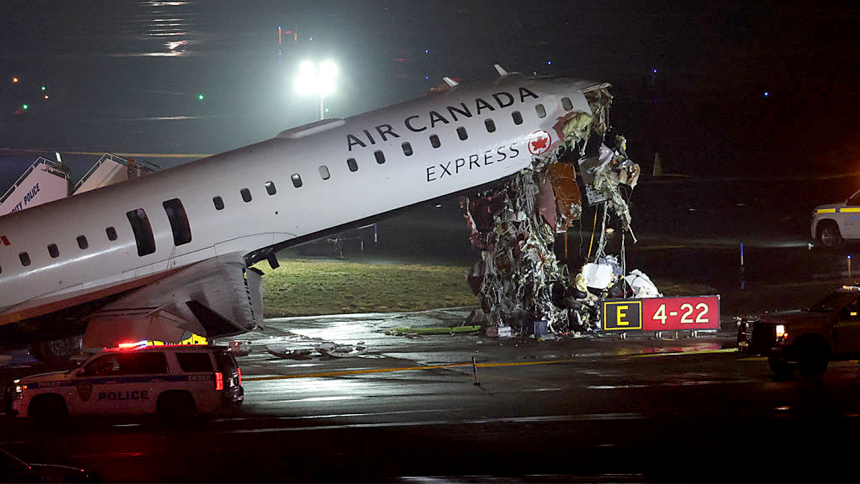
Headline: Tragedy at LaGuardia: Plane Collision with Truck Claims Two Lives
In a devastating incident at New York’s LaGuardia Airport, a small plane collided with a maintenance truck on Tuesday afternoon, resulting in the deaths of two individuals. The collision occurred on the tarmac around 3 PM, prompting an immediate response from emergency services. Eyewitness accounts suggest that the aircraft was taxiing when it struck the parked vehicle, leading to a fiery scene that has left many in shock. Authorities are currently investigating the circumstances leading up to the tragic accident, which highlights ongoing safety concerns at one of the nation’s busiest airports.
As the investigation unfolds, officials are working to gather information related to the plane’s flight path and the activities of the airport maintenance team. The victims have been identified as both crew members of the aircraft, raising questions about how such a calamity could occur in a controlled environment. The Federal Aviation Administration (FAA) and the National Transportation Safety Board (NTSB) have both announced they will be investigating the incident.
The primary concern revolves around safety protocols at LaGuardia Airport, which has a reputation for congestion and operational challenges. In recent years, the airport has faced scrutiny regarding its infrastructure and the efficiency of its operations. The ongoing renovation and modernization efforts aimed at improving passenger experience and increasing safety measures may be put to the test following this tragic event.

Airport operations came to a halt as emergency crews conducted their response procedures, with several flights delayed or diverted. Passengers were evacuated from the terminal as a precaution, and airport authorities worked to clear the scene. Reports from passengers indicated a mix of confusion and concern after learning about the collision.
“This is a shocking event, and my heart goes out to the victims’ families,” said New York Governor Kathy Hochul in a statement. “We will cooperate fully with federal officials as they investigate the circumstances that led to this tragic collision.”
Despite the chaos at LaGuardia Airport, other operations began to resume within hours as airport staff worked diligently to restore normal functionality. However, the emotional impact of the incident lingered, with many passengers expressing their fears about the safety of air travel.
One eyewitness, Sarah Mitchell, described the scene as terrifying. “I was in the terminal when we heard a loud crash followed by flames coming from the tarmac. It was surreal and horrifying to witness,” she recounted. “I could hardly believe what was happening.”
Air traffic has always been a concern at LaGuardia, which is located in the borough of Queens, surrounded by residential neighborhoods. The airport’s layout and concentration of air traffic routes often lead to complex interactions between various types of aircraft and ground vehicles. This incident raises significant questions about how well safety measures are integrated with operational procedures.
There have been numerous calls from safety advocates for increased training for airport personnel, particularly those responsible for ground operations. In light of the collision, airport officials will likely face intense scrutiny regarding their adherence to safety protocols. The looming question remains whether current procedures are adequate to prevent such tragic events from happening in the future.
In response to this incident, several aviation safety experts have come forward to discuss potential reforms to airfield safety practices. “It is essential that airport authorities implement rigorous training programs and comprehensive operational checks to ensure that all personnel are prepared for emergencies,” said aviation safety consultant Dr. Mark Jennings. “Collisions like this can be mitigated through dedicated safety initiatives.”
Additional measures, such as improved signage, communication systems between ground crews and pilots, and enhanced training, could play vital roles in preventing future accidents. LaGuardia is not alone in addressing these challenges, as safety improvements across various U.S. airports have been a focal point for regulators in recent years.
As investigations continue, the families of the deceased victims have begun to seek answers regarding the events that led to their loved ones’ untimely deaths. Emotional tributes have poured in from colleagues and friends who describe the victims as dedicated professionals devoted to their roles in the aviation industry.
The implications of this tragic accident extend beyond just the immediate loss of life. The aviation community is looking for ways to ensure that safety remains the highest priority. Industry leaders are calling for a comprehensive evaluation of existing safety protocols at airports across the country.
In the weeks and months following this incident, awareness of aviation safety will likely increase, and stakeholders may push for more stringent regulations. The importance of collaboration among regulatory bodies, airport management, and the aviation workforce has never been more apparent.
As LaGuardia Airport begins to heal from this tragedy, it will be essential for all involved to focus on actionable solutions that foster a safer, more resilient aviation environment. The investigation findings will undoubtedly include critical lessons for the entire industry, emphasizing the importance of commitment to safety and operational excellence.
In the wake of this incident, the priority remains on supporting the victims’ families and finding ways to ensure that air travel can be navigated safely and efficiently. While the tragic collision has raised concerns, it also serves as a poignant reminder of the shared responsibility of all professionals in the aviation sector to foster a culture of safety.
As LaGuardia evaluates its operational protocols, aviation experts believe that transparency in the investigation process will be vital to restoring public confidence in air travel safety. The focus will remain on understanding what went wrong and how to guarantee something like this never happens again. The emphasis on making improvements to airport operations will undoubtedly shape conversations about air travel safety in the future.