


National Unrest Deepens Amid Political and Legal Disputes – Portland, OR, and Chicago, IL
ST. LOUIS, MO (STL.News) National Unrest – Protests in Portland, Oregon, and Chicago, Illinois, reignited this past weekend as clashes erupted between demonstrators, federal agents, and local authorities. What began as peaceful gatherings opposing immigration enforcement and federal intervention spiraled into nights of confrontation, raising new questions about state sovereignty, federal power, and the ongoing national divide over immigration and public order.
While both cities have long histories of protest movements, this weekend marked a significant escalation following a series of controversial actions by the federal government, including the use of National Guard troops and aggressive federal raids. The unrest highlights how deeply polarized the United States remains, as federal and state leaders battle not only over policy but also over authority itself.
National Unrest – Portland: Legal Rulings and Street Clashes
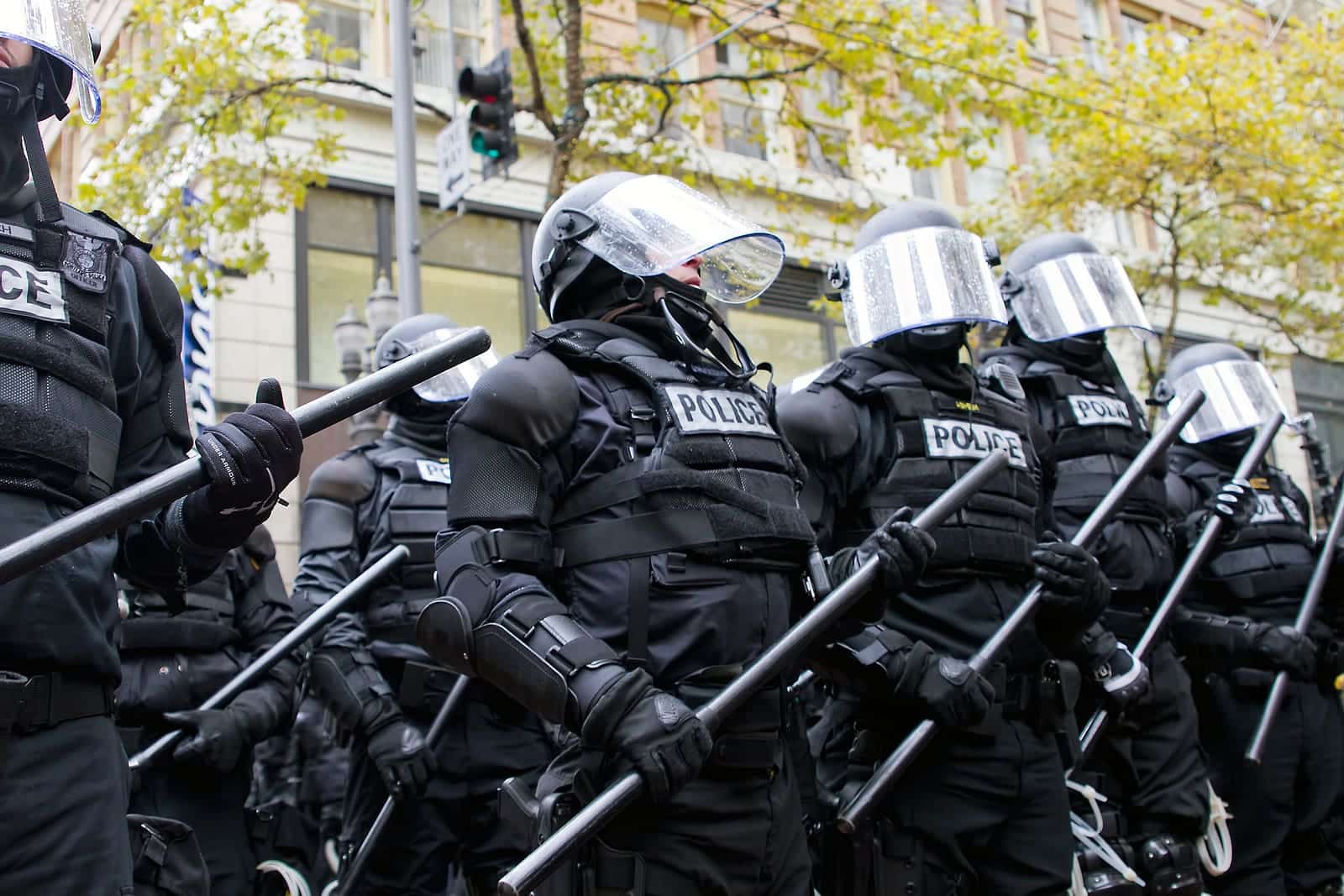
In Portland, hundreds of protesters marched from Elizabeth Caruthers Park to the ICE (Immigration and Customs Enforcement) facility, carrying banners and chanting slogans demanding an end to federal crackdowns. The demonstrations began peacefully but turned volatile as federal officers responded with tear gas and crowd control measures.
Witnesses described the scene as tense but organized. Protest leaders urged participants not to engage in violence, emphasizing that the movement’s strength lies in peaceful resistance. Still, the atmosphere shifted as federal agents, stationed near the ICE facility, began advancing toward the crowd in response to thrown projectiles and makeshift barricades.
Hours earlier, a federal judge temporarily blocked President Trump’s plan to deploy Oregon National Guard troops to Portland. The ruling stated that there was insufficient justification for the use of military personnel in a civilian law enforcement capacity. Within hours of that decision, observers reported an escalation in federal tactics against demonstrators.
Local authorities appeared to distance themselves from direct intervention, as city leaders have repeatedly instructed Portland Police to take a limited role in federal protest zones. That policy left most of the weekend’s confrontation between protesters and federal agents—creating a familiar standoff reminiscent of Portland’s summer protests in years past.
Despite scattered property damage and several arrests, many residents described the demonstrations as an expression of deep frustration with both political parties, accusing leaders of “weaponizing the justice system” and “treating dissent as terrorism.”
National Unrest – Legal Tensions: Federal Authority vs. Local Control
The most pressing issue in Portland is the constitutional battle over federal versus state authority. Local officials maintain that deploying National Guard troops without state consent is unconstitutional. Federal leaders, however, insist that the deployment is necessary to protect federal property and personnel from violent attacks.
After Oregon’s deployment was blocked, the Trump administration announced plans to send 300 California National Guard members in its place. Critics called this a political maneuver to circumvent the court order, while supporters argued that the president has a duty to protect federal agencies from ongoing threats.
This legal tug-of-war underscores a broader national debate: Where does federal responsibility end and state sovereignty begin? For many Americans, these clashes feel less like a dispute about immigration and more like a fight over the very structure of American government.
National Unrest – Chicago: Federal Agents and a Community in Turmoil
In Chicago, tensions erupted after U.S. Border Patrol agents shot a woman in the Brighton Park neighborhood on Saturday. Federal authorities claimed the woman was armed and part of a group that attempted to ram government vehicles during a protest confrontation. She was taken to a hospital with non-life-threatening injuries, but the incident immediately set off waves of outrage and new demonstrations across the city.
Protesters gathered outside ICE facilities and along key streets, demanding accountability and an end to what many described as a “military occupation.” Demonstrators accused federal agents of excessive force, particularly after reports surfaced of ICE raids using helicopters, flash-bang grenades, and mass detentions in the city’s South Shore area.
According to eyewitness accounts, agents stormed residential buildings, zip-tied multiple occupants—including children—and made dozens of arrests. Federal officials defended their actions, claiming that the raids targeted individuals with existing deportation orders and were conducted in response to “credible threats” against federal officers.
Governor JB Pritzker and local Chicago leaders condemned the operations, labeling them unconstitutional and counterproductive. Pritzker called the deployment of federal agents “a political stunt designed to inflame division rather than promote safety.” Despite his objections, the White House authorized 300 National Guard troops to assist federal personnel stationed in Chicago, citing national security concerns.
National Unrest – Escalation and Public Response
By Saturday night, downtown Chicago saw intensified confrontations. Protesters clashed with police and federal agents, and several city blocks were temporarily shut down as authorities deployed tear gas and rubber bullets. Videos circulating online showed chaotic scenes of shouting, flashing lights, and panic as demonstrators were pushed back from government buildings.
Community leaders called for calm but expressed fear that federal tactics would only heighten tensions. Activists argue that these military-style operations erode trust and create a sense of occupation rather than protection. Meanwhile, federal officials maintain that their actions are defensive, aimed at protecting personnel and facilities amid growing hostility.
The contrast between state and federal perspectives is stark: local leaders urge restraint, while federal agencies emphasize the use of force. For citizens caught in the middle, the result is confusion, fear, and a growing sense that neither side fully represents their interests.
National Unrest – Political Fallout and Public Sentiment
Across social media and within both cities, public sentiment remains divided. Supporters of federal intervention argue that law and order must be restored, even if it means bypassing resistant governors and mayors. They claim local governments have failed to protect federal facilities and law enforcement personnel.
Opponents see these actions as unconstitutional power grabs that weaponize military forces against civilians. Many draw parallels to historic civil rights confrontations, arguing that government suppression of protest undermines democracy itself.
In both Portland and Chicago, residents are grappling with fear and uncertainty. Business owners near protest zones report declining sales, vandalism, and staff afraid to commute. Families living near targeted neighborhoods describe sleepless nights filled with sirens, drones, and helicopters hovering overhead.
The emotional toll of these ongoing conflicts cannot be overstated. For many, this is no longer just about immigration policy—it’s about the integrity of American governance and the freedom to dissent without being met by military force.
National Unrest – National Implications
These confrontations highlight the fragile state of American unity. The conflicts in Portland and Chicago are not isolated; they symbolize deeper fractures across the country—political, cultural, and moral. The United States is once again facing a test of its commitment to strike a balance between freedom and order, state and federal power, law and morality.
Legal experts warn that repeated clashes between federal and state authorities could lead to a constitutional crisis. Governors blocking federal troops, presidents overriding local objections, and courts issuing conflicting rulings—these are signs of a government structure under strain.
If these trends continue, the lines between civilian law enforcement, military power, and political influence may blur beyond recognition. The question is not just how to restore peace, but how to preserve the principles that define the nation itself.
National Unrest – Calls for De-Escalation
Community leaders in both cities are urging dialogue over confrontation. In Portland, local clergy and civic organizations have called for a “day of peace,” asking residents to hold vigils instead of protests. In Chicago, faith groups and nonprofit coalitions are offering mediation and legal aid to families affected by raids and arrests.
While federal officials insist they will not retreat from protecting their facilities, local leaders continue to press for de-escalation. Many experts believe that actual progress will depend on communication and respect for jurisdictional boundaries rather than force and defiance.
National Unrest – The Broader Picture
At its core, the unrest in Portland and Chicago represents more than a dispute over law enforcement—it is a reflection of a country struggling with its own identity. Americans are increasingly divided between those who view strong federal authority as necessary for order and those who see it as a threat to liberty.
Both sides claim to defend democracy, yet their visions for America differ dramatically. Until that fundamental divide is addressed, the streets of Portland and Chicago may continue to mirror the turmoil that runs through the heart of the nation.
© 2025 STL.News/St. Louis Media, LLC. All Rights Reserved. Content may not be republished or redistributed without express written approval. Portions or all of our content may have been created with the assistance of AI technologies, like Gemini or ChatGPT, and are reviewed by our human editorial team. For the latest news, head to STL.News.



