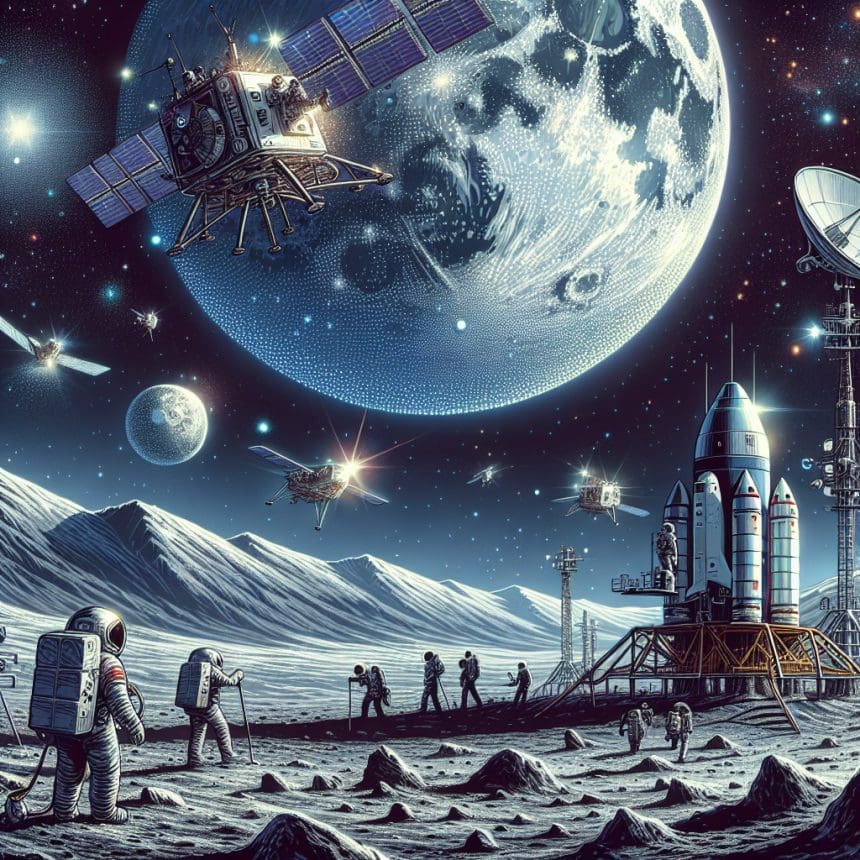
Headline: NASA Unveils New Lunar Mission Plans Amid Budget Changes
In a significant strategic shift, NASA has announced a comprehensive overhaul of its lunar exploration plans, focusing on the Artemis program. This new direction aims to advance human and robotic exploration of the Moon in light of operational budget constraints and evolving scientific objectives. The revamped mission strategies will be implemented over the next several years, with key activities scheduled to launch from Kennedy Space Center in Florida starting in late 2024.
A Bold New Era for Lunar Exploration
NASA has long held an ambitious vision of returning humans to the Moon and establishing a sustainable presence. The Artemis program, which was initially launched to land astronauts on the lunar surface by 2024, has now been refocused to emphasize long-term exploration, necessitated by a reevaluation of budgetary allocations and project timelines. This recalibration responds to various challenges, including technical setbacks and the need for improved international collaboration in space exploration.
Key Changes to the Artemis Program
Under the restructured Artemis plan, NASA will prioritize the development of the Lunar Gateway, a key orbital platform that will serve as a staging point for both crewed and uncrewed missions to the lunar surface. As a cornerstone of this new approach, the Gateway will facilitate enhanced communication, refueling, and scientific operations in lunar orbit. This platform is envisioned to boost collaboration with international space agencies and commercial partners, thereby diversifying funding sources and expertise.

Additionally, the timeline for landing the next crewed mission on the Moon has been adjusted to 2025, allowing for necessary technological advancements and mission integration. These adjustments were made in recognition of the important need for safety and reliability in human spaceflight missions.
Collaboration and Cost Efficiency
One of the most notable shifts in NASA’s strategy is its increased emphasis on collaboration with international partners, including the European Space Agency (ESA), the Japan Aerospace Exploration Agency (JAXA), and others. By opening up the Artemis program for broader international participation, NASA aims to maximize resources and enhance mission capabilities. These partnerships could streamline project costs while fostering groundbreaking scientific endeavors that span across human exploration and robotic research.
Furthermore, NASA is also reaching out to the commercial sector to invite innovative contributions to moon exploration technologies. With a historical precedent established by the Commercial Crew Program, where private companies have successfully transported astronauts to the International Space Station, NASA hopes to cultivate similar partnerships for lunar landers, rovers, and support vehicles.
Scientific Objectives Drive New Vision
The revamped lunar plans also reflect a deeper focus on scientific objectives that extend beyond simply landing humans on the Moon’s surface. Researchers aim to explore the lunar South Pole, an area rich in potential resources, including water ice and other materials critical for sustaining future lunar inhabitants. Investigating these locations is believed to yield insights into the early solar system and the conditions necessary for life beyond Earth.
Moreover, the renewed Artemis efforts will leverage technologies that could eventually lead to sustainable lunar habitation. Innovations explored may include in-situ resource utilization—using lunar materials to produce water, oxygen, and energy to support long-duration missions. These advancements will serve as a foundation for future missions to Mars and beyond, giving NASA crucial experience in long-term off-Earth operations.
Public Engagement and Educational Initiatives
In tandem with the technical and operational shifts, NASA is also promoting its lunar plans through public engagement initiatives aimed at inspiring the next generation of scientists, engineers, and explorers. Educational programs designed to increase awareness of lunar science and innovation will be rolled out to schools and communities across the nation. Engaging the public in the excitement of space exploration not only helps garner support for funding but also ignites curiosity among students in STEM fields.
Future Implications
The recent changes to NASA’s lunar exploration strategy stand to reshape the future landscape of space exploration. By prioritizing safety, collaboration, and scientific discovery, the agency reaffirms its commitment to not only reaching the Moon but utilizing it as a launchpad for deeper exploration of the solar system.
As NASA embarks upon this new chapter in lunar exploration, the agency faces both opportunities and challenges that will require robust planning and adaptability. The quest to establish a human presence on the Moon is not just about exploration; it encompasses the potential for scientific revelations and the development of technologies that could impact life on Earth.
The Broader Space Exploration Community
While NASA takes the lead, this restructured agenda is likely to inspire increased activity from other nations and private entities interested in lunar exploration. As various countries and companies gear up for their own lunar missions, the collaborative international landscape could accelerate advancements not just for lunar research, but for entire new industries focused on space technology and utilization.
Conclusion: A New Horizon
The reimagining of NASA’s lunar aspirations underscores the agency’s resilience and commitment to exploration amid economic realities and technological transformations. As we look toward a future filled with possibilities on the Moon, the importance of international collaboration and public engagement in these endeavors has never been clearer. The Artemis program stands poised to open not just a new chapter in lunar exploration but an entire new era in our ongoing journey into the cosmos.
With the world watching, NASA’s revised plans will set the stage for monumental scientific achievements that can benefit not only space exploration but humanity as a whole. The Moon, now more than ever, represents not just a destination, but a stepping stone towards understanding our place in the universe.