"NASA Confirms B.C. Night Sky Fireball Was Meteor Event"
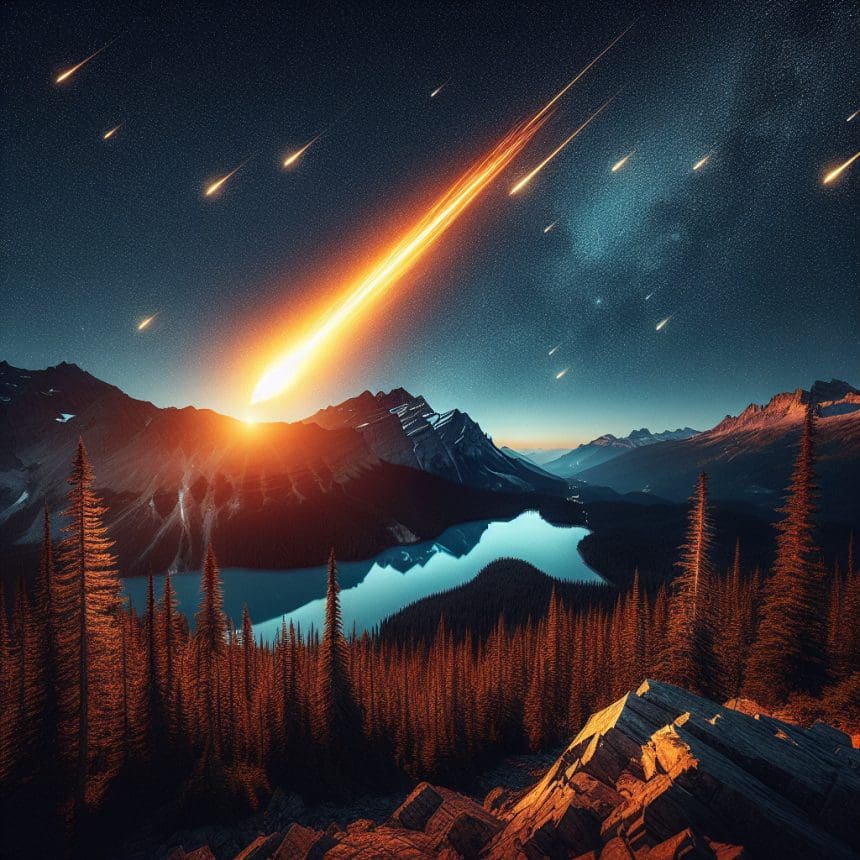
Residents across British Columbia were treated to a spectacular sight on the night of October 3, 2023, when a bright light streaked across the sky. NASA has confirmed that this dazzling display was a ‘fireball’ meteor, a phenomenon that has captivated onlookers and ignited discussions about the mysteries of the universe. Eyewitnesses reported seeing the bright flash around 8:30 PM local time, with many taking to social media to share their experiences and seek answers.
The fireball event was witnessed in various locations across the province, including Vancouver, Victoria, and as far inland as Kamloops and Kelowna. NASA’s meteor experts confirmed that what many saw was a piece of space rock entering Earth’s atmosphere at high velocity, disintegrating as it did so, which created the stunning visual effect. Fortunately, there have been no reports of damage or injuries associated with the event, allowing residents to enjoy the stunning cosmic display without worry.
A Rare Celestial Event
Fireball meteors, unlike typical meteors, are significantly brighter—often outshining Venus. Scientists categorize them as being brighter than the planet Venus, produced by meteoroids that enter the atmosphere at speeds exceeding 25,000 miles per hour. While fireballs are relatively common, their visibility in populated areas such as B.C. makes them a rare treat for locals.
"This is an exciting event for not just British Columbians but for the broader astronomical community," said Dr. Lisa Sommers, a NASA meteoritics expert. "Events like these remind us of the dynamic nature of our universe and the fascinating meteorological processes at play."

Impact and Community Response
The sighting has led to considerable interest from both local residents and social media users. Many took to platforms like Twitter and Instagram to share photos and videos, expressing their awe and excitement. Posts have generated thousands of views, reflecting a shared sense of wonder.
Local astronomy groups have also noted the occasion, organizing viewing events and discussions about meteors in the coming weeks to encourage public interest in astronomy. "Events like these often spark a great deal of interest in stargazing and science," said Brian Hughes, president of the B.C. Astronomical Society. "We want to harness this excitement and engage the community in future educational opportunities."
Science Behind Fireballs
Fireballs occur when meteoroids—small fragments from comets or asteroids—enter Earth’s atmosphere. As they travel through the atmosphere, they encounter intense friction, which generates heat and causes these rocks to glow and often disintegrate. This interaction with atmospheric gases results in brilliant, colorful streaks of light—a breathtaking show for viewers.
NASA and other organizations regularly monitor the skies for such events, employing sensors and technology to track meteor activity. The agency encourages the public to report sightings through platforms like the American Meteor Society, helping scientists gather data and study meteor patterns.
What’s Next in Meteor Research?
The excitement surrounding the recent fireball sighting has spurred a renewed interest in meteor research. Experts are keen to analyze the trajectory and composition of the meteor to gain insights into its origin. Specimens that survive the atmospheric passage and land on Earth are called meteorites, and studying these remnants can offer valuable information about the early solar system.
NASA has indicated that it will use data collected from this event to improve models for predicting future meteoric activity. By refining their computational methods, scientists hope to enhance monitoring efforts, allowing for better-informed predictions and public safety measures when large meteors approach the Earth’s vicinity.
Environmental Considerations
While fireballs are a beautiful spectacle, they also raise questions about environmental impacts, especially if larger meteors pose a risk of landing in populated areas. Experts stress the importance of monitoring potential threats. “Planetary defense has become an essential aspect of our work at NASA,” said Dr. Sommers. “Understanding and mitigating the risks related to meteoroids is critical for both safety and scientific advancement.”
Given that 2023 has seen a number of noticeable meteor events around the globe, discussions about how such celestial objects interact with Earth are gaining traction, sparking interest not only among scientists but also policy-makers. Investments in research and technology to track and analyze meteoric activity are expected to increase in the coming years.
Conclusion
As British Columbians reflect on the awe-inspiring fireball meteor that illuminated their skies, it serves as a reminder of the universe’s vastness and complexity. Such phenomena encourage collective wonder and can unite communities in shared experiences, spurring interest in the sciences that explain our world. As research continues, residents will undoubtedly keep their eyes on the skies, awaiting the next meteorological marvel.
For further updates on astronomical events and findings, space enthusiasts are encouraged to follow NASA’s official channels and local astronomical societies that often facilitate public engagement and educational programs.