Headline: Israel Distributes Leaflets in Lebanon Amid Hezbollah Conflict
In a significant escalation of tensions in the region, the Israel Defense Forces (IDF) dropped propaganda leaflets over southern Lebanon on October 10, 2023, as part of their ongoing military offensive against Hezbollah. The leaflets, which are intended to sway public opinion and provide information about the conflict, come amid heightened hostilities following a series of violent exchanges between the two factions. The offensive aims to degrade Hezbollah’s capabilities while bolstering Israel’s security framework.
The leaflets, emblazoned with messages aimed at the Lebanese populace, underscore Israel’s commitment to countering Hezbollah’s influence and armed presence in southern Lebanon. Israeli military officials state that the dissemination of these pamphlets is part of a broader strategic initiative to reach out to civilian residents, aiming to diminish support for the militant group by portraying it in a negative light. This tactic not only seeks to inform but also to instill fear in Hezbollah, which Israel views as an ongoing threat to its national security.
The conflict has seen an uptick in violence in recent weeks, including rocket attacks and retaliatory strikes across the border. Israel’s approach of employing psychological warfare tactics, such as the distribution of leaflets, underscores the multifaceted nature of this conflict, which combines military action with efforts to influence the narrative within Lebanon itself.

Critics of the leafleting strategy argue that such actions can perpetuate a cycle of violence and distrust. Humanitarian organizations have expressed concern over the potential ramifications for civilians who may feel caught in the crossfire between the IDF and Hezbollah. Many Lebanese citizens fear retribution from Hezbollah for any perceived collaboration with Israel, complicating the already dire humanitarian situation.
In light of the escalating conflict, the Lebanese government, led by Prime Minister Najib Mikati, condemned Israel’s actions, labeling the leaflet drop as an act of psychological warfare. Mikati emphasized the need for unity among Lebanese factions in the face of external threats, urging citizens to remain vigilant and united against what he called Israeli aggression.
The ongoing confrontation also has broader implications for regional stability, drawing in neighboring countries and international bodies concerned about the potential for widespread conflict. The United Nations Interim Force in Lebanon (UNIFIL) has been monitoring the situation closely, calling for restraint from both sides and urging a return to dialogue as a solution to the ongoing crisis.
Hezbollah, for its part, has vowed to respond to Israeli provocations, asserting that it will protect Lebanon’s sovereignty and territorial integrity. In recent public statements, Hezbollah officials claimed that the group remains committed to its resistance against Israeli encroachment, framing the conflict as a struggle for liberation against an occupying force.
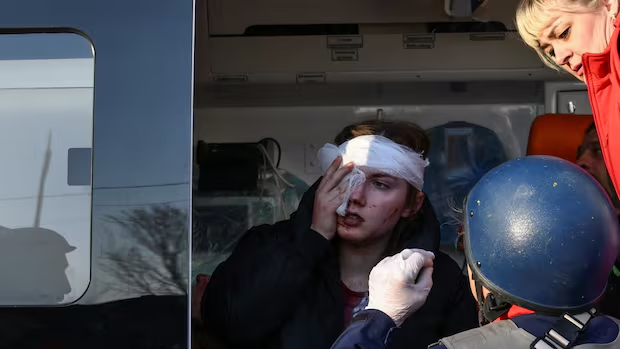
As military actions continue, the humanitarian situation in southern Lebanon remains precarious. Many residents face daily disruptions, with electricity and water supplies stretched thin due to ongoing hostilities. The influx of displaced families from conflict zones has added additional strain to local resources, complicating efforts from aid organizations to provide necessary relief.
In addition to the immediate humanitarian concerns, experts are warning about the long-term socio-political implications of the ongoing conflict. The circulation of propaganda leaflets, while tactical in nature, may serve to deepen divisions within Lebanese society, particularly among factions that may hold differing views on Hezbollah’s role in the country.
This conflict echoes a long history of animosity between Israel and Hezbollah, characterized by armed confrontations and geopolitical maneuvering. The current situation may extend beyond military engagement, influencing future elections and governance in Lebanon as public sentiment shifts in response to the ongoing violence.
Analysts suggest that Israel’s strategy of using psychological operations, such as the leaflet drop, reflects a calculated attempt to weaken Hezbollah’s support base. However, the effectiveness of such measures remains uncertain, especially in a region where narratives are deeply rooted, and loyalties can quickly change.
As both sides prepare for potential escalation, the prospects for peace remain uncertain. The international community is watching closely, and many hope for a diplomatic resolution that could lead to a ceasefire and address the underlying issues fueling the conflict.
In the meantime, the situation on the ground continues to evolve, with each passing day bringing new developments. As clashes erupt and diplomacy feels distant, the people of Lebanon remain in the balance, caught between the crossfire of political ambitions and existential threats.
In conclusion, the distribution of propaganda leaflets by Israel in Lebanon represents a multifaceted strategy aimed at undermining Hezbollah’s influence while attempting to communicate directly with the Lebanese people. This development highlights the complexities of the ongoing conflict and the lengths to which both sides will go in pursuit of their objectives. As tensions persist and the humanitarian crisis deepens, the path to resolution remains fraught with challenges, making it imperative for stakeholders on all sides to seek a peaceful solution.
As the situation develops, continued monitoring and engagement from the international community will be crucial in facilitating dialogue and diminishing the likelihood of further escalation.