Headline: Israel Dismantles Key Bridge, Orders Home Demolition in Lebanon
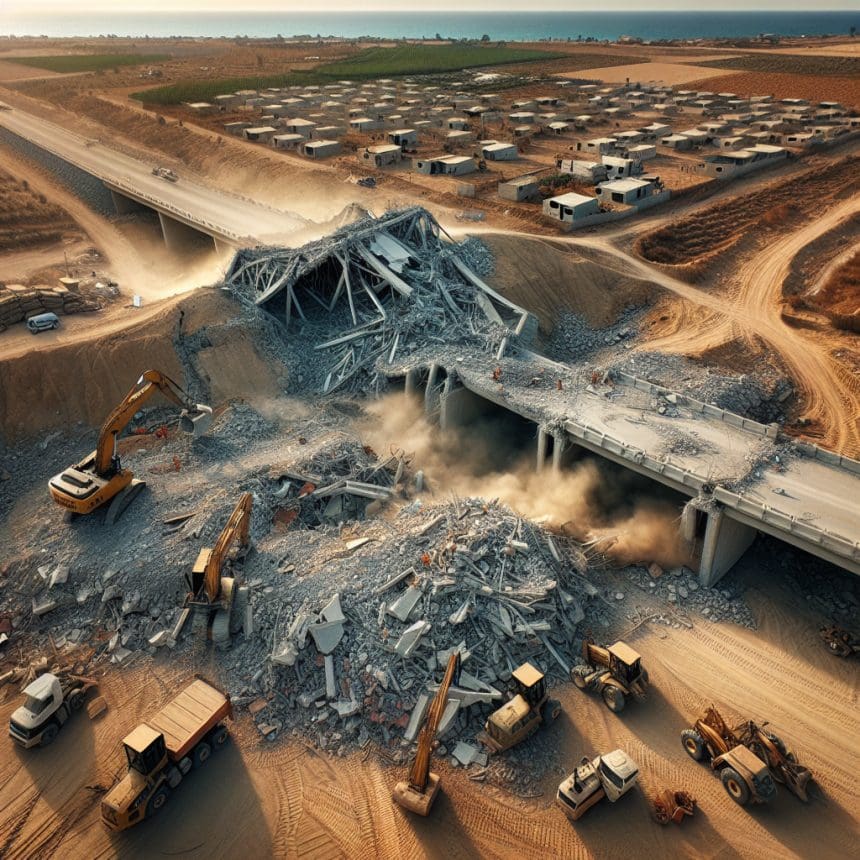
In a significant escalation of ongoing tensions in the region, Israeli forces carried out a strategic airstrike on a vital bridge in southern Lebanon on Saturday, aiming to disrupt supply lines perceived to be aiding Hezbollah militants. The attack targeted the bridge near the border town of Marjayoun, leading to its complete destruction. Israeli authorities have also issued orders for the demolition of homes located near the border as a precautionary measure, reinforcing their commitment to national security amidst escalating threats.
Background of the Conflict
The situation in the region has been increasingly volatile due to the longstanding feud between Israel and Hezbollah, which has intensified in recent months. Israel has ramped up military operations in southern Lebanon, asserting that these actions are necessary to counter perceived threats from Hezbollah, a powerful militant group that has been involved in numerous skirmishes along the border. The Israeli government cites growing military capabilities of Hezbollah, reportedly supported by Iran, as justification for these aggressive measures.
Details of the Airstrike
Israel launched the airstrike under the cover of night, deploying advanced weaponry aimed at the key bridge, which was used reportedly for transporting supplies and logistics for Hezbollah. This action aligns with Israel’s ongoing strategy to preempt potential attacks by disrupting the supply chain of groups they consider adversaries. The Israeli Defense Forces (IDF) stated that they will continue to take decisive action to neutralize threats emanating from Lebanon.

Local Impact and Humanitarian Concerns
The destruction of the bridge has significant implications for civilians in the area. Witnesses reported that residents heard loud explosions followed by clouds of smoke rising from the targeted site. Many locals are now cut off from critical transportation routes, potentially impacting access to food, medical supplies, and essential services.
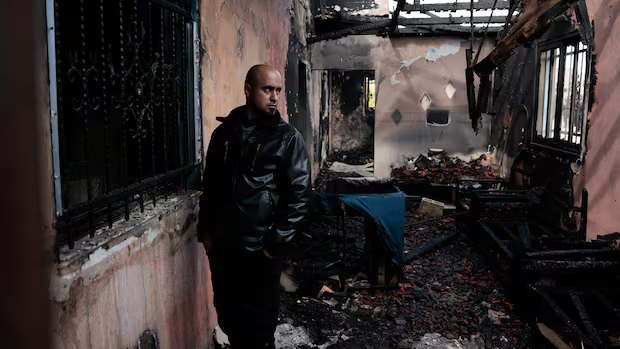
In addition to the bridge demolition, the order for the destruction of nearby homes has raised alarms among human rights groups. Organizations focusing on humanitarian issues are voicing concerns regarding the displacement of residents and the lack of sufficient warning given to affected families. Critics argue that such actions could exacerbate the already dire humanitarian situation in southern Lebanon, where many families struggle to make ends meet due to the ongoing conflict.
Diplomatic Repercussions
The initiation of these military operations has renewed calls for immediate diplomatic dialogue. Various international stakeholders have expressed apprehension regarding the potential outcomes of escalating violence. Arab nations, particularly those bordering Lebanon, are closely monitoring developments while urging immediate cessation to military actions.
The United Nations has also weighed in, emphasizing the need for dialogue to address underlying issues rather than resorting to military solutions. Concerns have been raised regarding the potential for further conflict that could destabilize the region even more, given the interconnected nature of geopolitical interests in the Middle East.
Hezbollah’s Response
In the aftermath of the airstrike, Hezbollah has released statements condemning Israel’s actions, labeling them as acts of aggression against Lebanese sovereignty. The group pledged to respond in kind, raising fears of an escalation into full-scale conflict. Observers note that Hezbollah has historically retaliated against Israeli operations, making future engagements nearly inevitable.
Broader Regional Implications
The conflict between Israel and Hezbollah is part of a larger tapestry of tensions within the region, where various state and non-state actors exert influence. Israel’s actions against Lebanon reflect not only its national security concerns but also its ongoing struggle to manage relations with neighboring countries, particularly Iran, which funds and supports Hezbollah.
As nations worldwide become increasingly interconnected through trade, politics, and social media, any instability in the Middle East has the potential to impact global markets and diplomatic relations. Oil prices could be affected by rising tensions or supply disruptions stemming from conflict, which has historically caused market volatility.
A Call for Restraint
As the situation develops, leaders from multiple nations are urging restraint from both sides. The focus remains on de-escalation and the prevention of casualties among civilians. While military actions may generate immediate results, leaders are increasingly stressing the importance of sustainable solutions that address the root causes of conflict.
Conclusion
The recent airstrike on the bridge in southern Lebanon and subsequent demolition orders underscore the fragile state of peace in the region. With both Israel and Hezbollah poised for further military action, the international community must navigate these turbulent waters carefully. Diplomatic frameworks must be prioritised to foster peace and stability, preventing the situation from deteriorating into a wider conflict. Future developments will be closely scrutinized as both domestic and international actors assess the ramifications of this latest escalation. The hope remains for a peaceful resolution that prioritizes the well-being of civilians and promotes lasting stability in Lebanon and beyond.