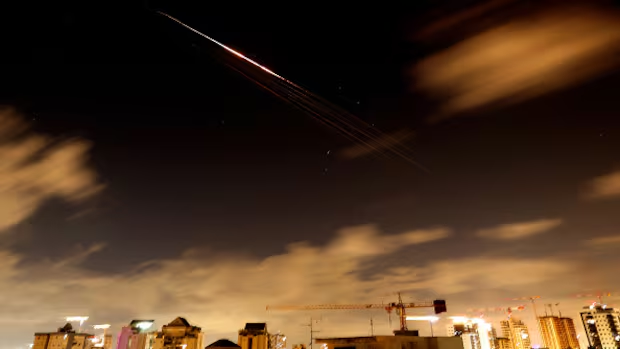
Headline: Bombshell Strikes: Israel Hits Tehran While Trump Stalls Hormuz Timetable
In a dramatic escalation of tensions in the Middle East, Israeli forces launched airstrikes targeting key military facilities in Tehran early this morning. The operation comes amidst a complex backdrop of geopolitics, as former President Donald Trump announced a delay in enforcing a new deadline for military action in the Strait of Hormuz. This significant event unfolds at a time when regional stability hangs by a thread, raising fears of further military confrontation.
Background to the Strikes
Israel’s airstrikes on Tehran are reported to have targeted locations deemed crucial for Iran’s military capabilities, including weapon storage depots and missile launch sites. These strikes signal a bold assertion of Israeli military power and a direct challenge to Iran’s influence across the region. The operation is seen as a preemptive measure against what Israeli leaders describe as an imminent threat posed by Iran’s escalating nuclear and missile programs.
Tensions between Israel and Iran have reached a boiling point following months of heated exchanges and proxy conflicts throughout the region. Iranian officials have repeatedly vowed to retaliate for any aggressive actions taken against them, thereby heightening the stakes in an already fraught geopolitical landscape.

Trump’s Strategic Delay
Concurrently, Donald Trump’s announcement regarding the Strait of Hormuz adds another layer of intrigue to the situation. Previously set to impose stringent measures against Iranian shipping activities, the former president indicated that these plans would be put on hold. Observers speculate that this delay could be a strategic move to provide time for diplomatic negotiations or to allow for the consequences of Israel’s airstrikes to play out, thereby re-evaluating America’s military posture in the region.
The Strait of Hormuz is a crucial waterway for global oil shipments, effectively serving as a chokepoint for about 20% of the world’s oil transaction. Any disruption in this vital corridor can send shockwaves through global oil markets, prompting fears of increased prices and supply shortages.
Implications for Regional Stability
Analysts are already warning that Israel’s aggressive military posture could lead to a new cycle of retaliation. Iranian Supreme Leader Ayatollah Khamenei has condemned the strikes, pledging to take "appropriate retaliatory action" against Israel. The possibility of Iranian proxies acting throughout the region raises alarms among nations already on edge, particularly in Lebanon, Syria, and Iraq.
The repercussions of these developments are likely to exacerbate tensions not just between Israel and Iran, but also among other nations involved in the Middle East’s complex dance of alliances and hostilities. Saudi Arabia, the United States, and other Gulf Cooperation Council (GCC) nations are closely monitoring developments, particularly given their longstanding rivalries with Iran.
Global Economic Concerns
Economically, the implications of these military actions are concerning. Analysts predict an upsurge in oil prices following the strikes due to the inherent instability in the region. Major oil companies are already preparing contingency plans, and analysts caution consumers to brace for potential spikes in fuel costs.
The ripple effects might extend even further, influencing stock markets worldwide. Investors typically react nervously to military escalations in politically volatile areas, hence why many are already watching for signs of instability in oil prices as a barometer for broader economic conditions.
The Path Forward
The coming days and weeks will be crucial in determining how this situation evolves. Will Israel follow up its strikes with more military actions aimed at crippling Iran’s military infrastructure? Or will there be a push towards de-escalation, possibly prompted by diplomatic efforts from major powers like the United States, Russia, or European allies?
As Trump signals a willingness to delay action in the Strait of Hormuz, the diplomatic community is left wondering whether this will open avenues for renewed discussions on nuclear proliferation or lead to a cycle of violence that further complicates the already fraught environment.
Calls for Diplomacy
In light of the escalating tensions, global leaders and various international organizations have urged both Israel and Iran to exercise extreme caution in the days ahead. The potential for miscalculation or overreaction remains high, emphasizing the need for a measured response rooted in diplomacy rather than further military action.
The Iranian foreign minister is expected to address the UN Security Council in the coming days, expressing Iran’s concerns while urging the international community to intervene and prevent an all-out conflict. Israel, for its part, may seek to justify its actions through claims of self-defense, framing its operations as necessary to protect its sovereignty against perceived existential threats from Tehran.
Conclusion
In a world where the complexities of international relations are ever more pronounced, the latest developments in Israeli-Iranian relations serve as a reminder of how quickly tensions can escalate into armed conflict. With Trump’s announcement and Israel’s strikes forming a dual narrative of military might and strategic delay, the coming weeks will likely offer vital insights into the future of peace in the Middle East. As global eyes turn to the region, the importance of robust diplomacy cannot be overstated, as it remains the clearest path to lasting stability.