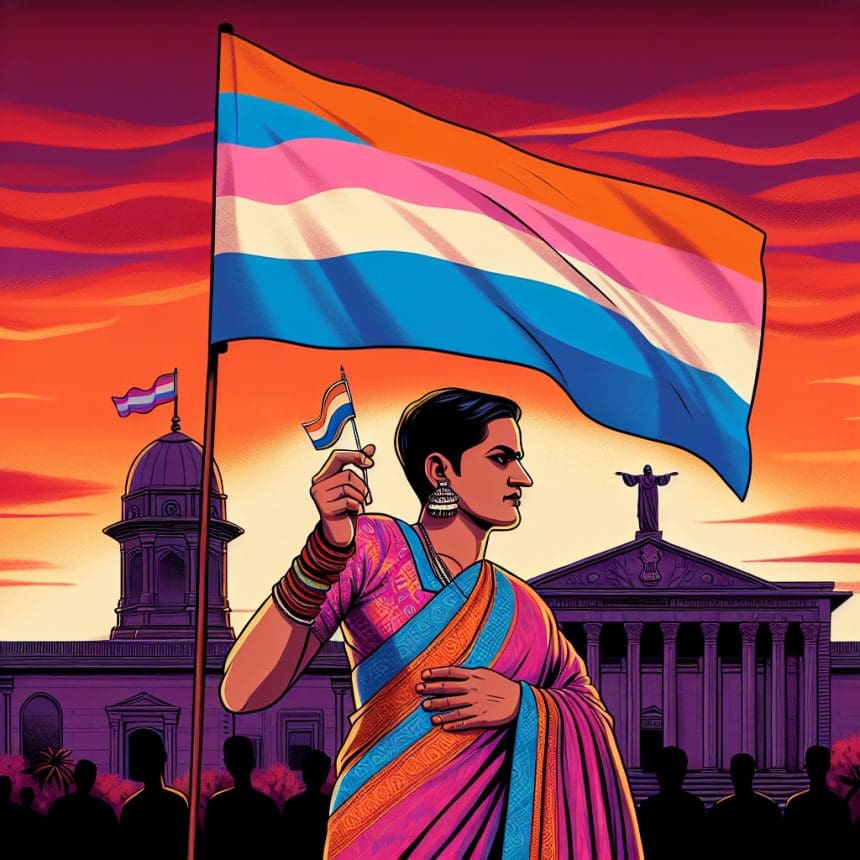
Headline: Indian Transgender Activists Mobilize Against Self-Identification Bill
In a significant political development, Indian transgender activists are rallying against a new bill passed by Parliament that curtails the right to self-identify gender. The controversial legislation, approved on October 10, 2023, sparks deep concern among advocacy groups as it undermines a key aspect of transgender rights in India. Prominent activists, led by well-known campaigner Aditi Sharma, express strong opposition, vowing to continue their fight for recognition and equality across the nation.
The approved bill mandates that individuals wishing to change their gender must undergo a medical and legal process that includes undergoing surgery and obtaining a certificate, rather than allowing self-identification. This mandate raises serious ethical questions surrounding bodily autonomy and the personal rights of transgender individuals. Activists argue that it not only complicates the already challenging transition process but also reflects a wider societal stigma concerning gender identity that persists in India.
For decades, India has made strides toward recognizing the rights of transgender individuals, culminating in the Supreme Court’s landmark 2014 ruling that granted legal recognition of the third gender. The recent pushback, however, marks a stark regression, igniting widespread protests among those who feel the legislative changes disregard their identities and experiences.

Following the passing of the bill, Aditi Sharma took to social media to voice her objections, stating, "We will be fighting. This legislation is a direct attack on our dignity and an unacceptable limitation on our rights." Her comments, which resonated with many in the LGBTQ+ community, highlight a growing movement against legislative decisions that do not reflect the lived realities of marginalized groups.
Compounding the situation is the context of public perception and prevailing stereotypes. Despite progress made in urban areas, many parts of India remain steeped in traditional views that often marginalize transgender individuals. As a result, the backlash against this new bill has not only come from activists but has also garnered support from various human rights organizations, social media influencers, and citizens who view the legislation as discriminatory.
Advocacy groups such as the Indian Transgender Rights Coalition have begun mobilizing demonstrations in major cities like Mumbai, Delhi, and Bengaluru, urging the government to reconsider the implications of the recent bill. Their protests are characterized by chants of equality, colorful demonstrations, and messages of solidarity, emphasizing the need for compassionate and inclusive legislation that aligns with India’s global human rights commitments.
Additionally, social media has emerged as a crucial tool for activists. Hashtags like #TransRightsAreHumanRights and #OpposeTheBill are trending platforms for awareness, education, and dialogue about the rights of transgender individuals. Through these online campaigns, activists aim to rally support and influence change by fostering a culture of understanding and respect for diverse gender identities.
Responses from government officials have been mixed. Some leaders argue that the new bill aims to establish a standardized process to protect individuals undergoing gender transition. However, critics contend that this rationale dismisses the fluidity of gender and the autonomy inherent in self-identification. They point out that the medicalization of gender identity can lead to further stigmatization and violence against those who do not conform to binary gender norms, a serious risk for many transgender individuals in India.
"It is alarming to see the government take such a regressive step. Our identities are not defined by medical criteria or legal procedures but by who we are as individuals," stated activist Priya Mehta during a demonstration in Delhi. Her remarks mirror the sentiments of many within the community who feel that their basic human rights are under threat.
Internationally, the response to India’s legislative shift has also been stark. Global human rights organizations, including Human Rights Watch and Amnesty International, have condemned the bill, urging the Indian government to reverse its decision and promote policies that uphold the rights of transgender individuals. These organizations emphasize that a supportive approach, rather than punitive measures, is essential for fostering a society that embraces diversity.
As the protests gain momentum, the future of transgender rights in India hangs precariously in the balance. Activists are strategizing for what may be a long and challenging road ahead, filled with court appeals and potential policy changes. The convergence of activism, public discourse, and international pressure creates a critical juncture for India as it navigates the complexities of human rights and social justice for all its citizens.
In addition to street demonstrations, community engagement becomes paramount. Workshops, awareness campaigns, and collaborations with educational institutions are being initiated to foster deeper understanding and respect towards transgender individuals. Efforts are underway to educate healthcare providers, law enforcement, and the general public about the significance of recognizing and affirming the identities of transgender individuals.
As the discussion continues, attention will undoubtedly turn to how the current crisis can be transformed into an opportunity for advocacy and change. The mobilization of the LGBTQ+ community in India goes beyond mere resistance; it emphasizes a vision for a society that supports and celebrates diversity in all forms.
With tensions running high and commitment unwavering, Indian transgender activists face the future resolutely. They remain dedicated not only to the immediate fight against the newly sanctioned legislation but also to building a foundation for lasting change. As this battle unfolds, it serves as a poignant reminder that the quest for equality is often fraught with challenges but also shaped by resilience, solidarity, and an unyielding spirit for justice.