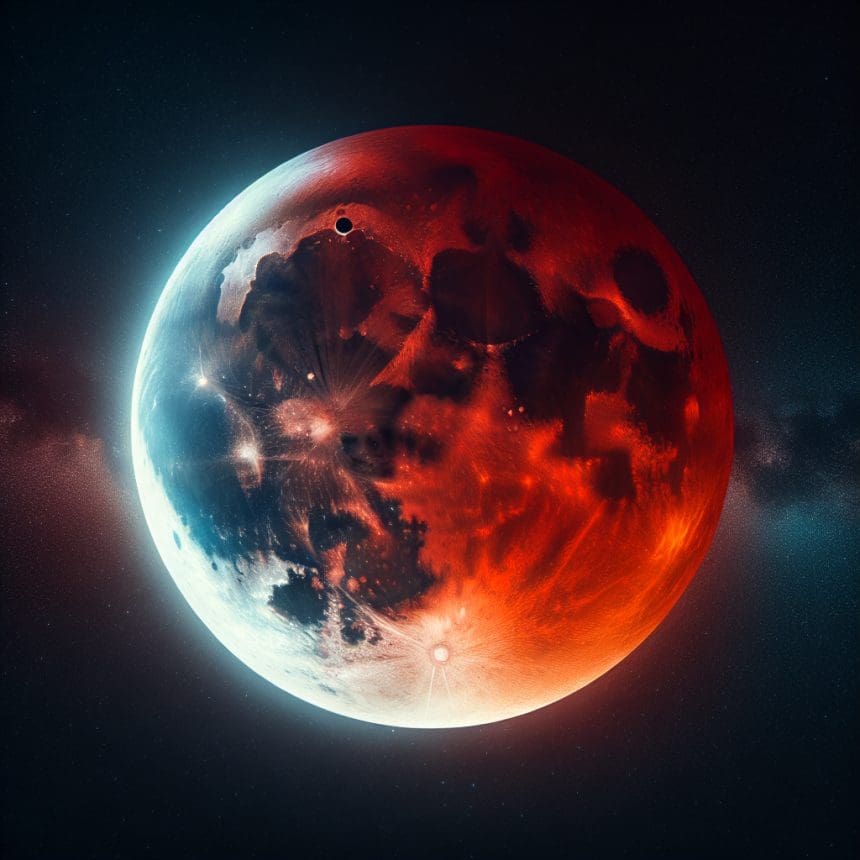
Captivating ‘Blood Moon’ Eclipse Dazzles Skywatchers Globally
On the evening of November 8, 2022, a stunning total lunar eclipse graced the night sky, captivating viewers around the world as the moon took on a striking red hue. This celestial event, often referred to as a "Blood Moon," could be seen clearly in areas such as North America, Europe, and parts of Asia, providing an enchanting spectacle that drew enthusiasts and casual observers alike. The phenomenon occurs when the Earth passes directly between the sun and the moon, casting a shadow that turns the moon a deep red. Astrophysicists credit this coloration to Rayleigh scattering, a phenomenon that also gives sunsets their vivid colors.
A Celestial Event for the Ages
Lunar eclipses are relatively common, occurring approximately twice a year; however, total lunar eclipses like this one are rarer, as they involve a complete shadowing of the moon. This particular eclipse was noteworthy, as it coincided with the final total lunar eclipse until 2025, making it a must-see event for stargazers and enthusiasts across the globe.
Skywatchers in North America enjoyed optimal viewing conditions, especially in areas away from urban light pollution. The eclipse began at around 3:00 a.m. EST, with totality peaking at approximately 5:00 a.m. EST. This allowed for several hours of breathtaking views, with social media flooded with stunning images of the Blood Moon, showcasing vibrant reds and oranges contrasting against the black canvas of the night sky.
Astrophysicists Weigh In
Experts in the field expressed their excitement about the eclipse. Dr. Maria Thompson, an astrophysicist from the National Aeronautics and Space Administration (NASA), explained, "Every Blood Moon provides us an opportunity to educate the public about the complexities of celestial mechanics and atmospheric optics. It’s not just a spectacle; it ignites curiosity about our universe."

Many astronomy clubs organized viewing events throughout the country, complete with telescopes and expert commentary. Families and individuals bundled up in blankets, gathered snacks, and came prepared with cameras, eager to capture the once-in-a-lifetime experience. For some, the event served as a moment for reflection and connection with loved ones, fostering a sense of community amid shared wonder.
The Social Media Buzz
As expected, social media platforms lit up with excitement. Hashtags like #BloodMoon and #LunarEclipse trended on Twitter and Instagram, as users posted awe-inspiring photos and shared their experiences. Many astronomy enthusiasts took the opportunity to educate others about the science behind lunar eclipses, turning a visual experience into a learning moment.
Photographers expertly captured the event through various techniques, utilizing long-exposure settings that brought out the intricate details of the moon’s surface. Images of the eclipse taken from different angles and locations showed the versatility and beauty of our natural satellite, leading to an outpouring of creativity online.
An Opportunity for Reflection
The Blood Moon is not just an astronomical phenomenon; many cultures around the world attach deep spiritual significance to it. In various traditions, lunar eclipses are considered times for introspection, cleansing, and renewal. Communities hold ceremonies and rituals to commemorate the event, emphasizing its influence on emotional and spiritual well-being.
Dr. Elena Cruz, a cultural anthropologist, observed, “Lunar eclipses have historically invoked a sense of mystery and reverence in humanity. They remind us of our place in the cosmos and encourage us to connect with something bigger than ourselves.”
Upcoming Astronomical Events
While this total lunar eclipse was a highlight for many, it piques interest for upcoming celestial events. The next total lunar eclipse is set for 2025, but there are numerous partial eclipses, meteor showers, and planetary alignments scheduled in the meantime that will captivate sky enthusiasts.
To prepare for future phenomena, experts recommend that individuals and families interested in observing celestial events invest in quality binoculars or telescopes. Community observatories and local Astronomy clubs often host sessions for citizens wishing to learn more, allowing for hands-on experiences that can enhance their knowledge and appreciation of the night sky.
Conclusion
The November 8, 2022, Blood Moon eclipse was a remarkable event that fulfilled the dreams of astronomers and casual stargazers alike. As the world continues to spin through an ever-changing cosmos, these moments offer a chance to pause, reflect, and appreciate the natural wonders above us. The anticipation of future celestial spectacles ensures that the fascination surrounding astronomy continues to grow, fostering both individual curiosity and community engagement.
As we look forward to the next lunar eclipse in 2025 and other astronomical events before then, the memories of the Blood Moon will linger, inspiring a new generation to gaze upward and explore the beautiful mysteries of the universe. Whether through educational initiatives, community gatherings, or social media excitement, the legacy of this extraordinary event will continue to intertwine science with the age-old human experience of wonder.