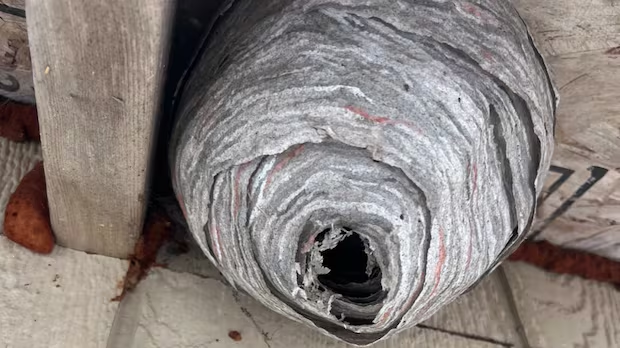
Headline: Researchers Seek Public Help to Study Unusual Wasp Nest
A remarkable discovery has been made in a small town in Oregon, where researchers from the University of Oregon are calling on locals and nature enthusiasts to assist them in studying a peculiar wasp nest that appeared just last week. This unique structure, which has garnered attention for its unusual shape and size, could provide insights into wasp behavior and environmental changes, prompting researchers to seek additional sightings and reports from the public.
As communities worldwide are witnessing ecological shifts driven by climate change, researchers are increasingly focused on insect behavior and habitat. The wasp nest in question is not only distinguished by its architecture but also by the peculiarities surrounding its formation. This discovery has the potential to unlock new understandings of wasp species and their adaptive strategies.
What Makes This Wasp Nest Unique?
The nest, discovered in a residential area in the town of Ashland, stands out due to its notable size and intricate design, a stark contrast to standard wasp nests, which typically appear uniformly round and compact. Local homeowner and naturalist Jane Thompson was one of the first to notice the unusual structure while gardening. “I thought it was just an odd-looking ball at first, but once I took a closer look, I realized it was nothing like I’d ever seen,” she reported.

Researchers, led by Dr. Emily Channer from the University of Oregon’s Entomology Department, have speculated that the nest’s odd characteristics might be a response to environmental changes and stressors, such as reduced food availability or altered weather patterns. “Insects are incredibly resilient but also highly adaptive,” Dr. Channer explained. “Studying this nest can help us understand how they’re coping in an ever-changing climate.”
The Call for Citizen Science
To bolster their research, Dr. Channer and her team have launched a citizen science initiative. They encourage residents not only in Ashland but across Oregon to report any unusual wasp nests they may encounter. This crowdsourcing methodology gives researchers a broader data set to analyze patterns and anomalies in wasp nesting behavior.
“Anyone who has seen an unusual wasp nest is invited to reach out to us,” Channer stated. “We’re particularly interested in detailed descriptions and photos that could help us piece together a fuller picture of what’s happening with these fascinating creatures.”
Why Wasp Nests Matter
Wasp nests are more than just homes for these insects; they are indicators of environmental health and stability. By examining the architectural diversity of wasp nests, researchers can infer trends in local ecosystems. For instance, an uptick in unique nests could signal changes in vegetation or perturbations in food sources.
In addition, wasps play a vital role in pollination and pest control, making them crucial components of healthy ecosystems. “Understanding wasps helps us understand the fine balance of nature,” Dr. Channer remarked. "Declines in their populations can lead to increased pest issues and lower crop yields, which impacts us all."
Public Engagement and Education
Alongside their research requirements, the University of Oregon is keen to engage the public through educational programs that explain the ecology of wasps. Local workshops are being planned to increase awareness about the importance of wasps and offer safety tips for individuals who might come into contact with them.
“This is not just a research project; it’s an opportunity for community engagement,” said Sarah Lopez, a graduate student involved in the initiative. “People are often scared of wasps, but they are absolutely essential to our environment. Education can help demystify misconceptions.”
A Growing Interest in Urban Ecology
The phenomenon of unusual insect behavior and its ties to urban environments is gaining traction as cities expand and natural habitats are compromised. Researchers assert that urban areas can have distinct ecological dynamics that lead to the emergence of unique adaptations.
“The urban landscape presents a paradox,” Dr. Channer said. “While it can be detrimental to many species, some thrive and adapt in unexpected ways. We’re seeing these adaptations with wasps, which could provide critical clues for conserving urban biodiversity.”
How to Get Involved
Residents interested in participating in the research can report their findings through the University of Oregon’s online platform specifically designed for the citizen science initiative. They encourage participants to include location information, photographs, and detailed descriptions of nests. The campaign will continue throughout the season, allowing for maximum data collection as wasps actively build their nests.
Future Research Directions
Depending on the data collected, there are plans for a follow-up study that may involve in-depth analysis of genetic material from various wasp populations across the region. “If we discover a trend, it could lead to broader implications about species resilience and adaptation,” Dr. Channer said.
In light of population declines among many insect species, understanding the resiliency of wasps could pave the way for more targeted conservation measures. Researchers hope that elevating public awareness of wasp ecology through this citizen science initiative will inspire greater interest in and responsibility toward insect populations in general.
Conclusion
The unexpected discovery of this remarkable wasp nest has opened a window into the broader implications of urban ecosystems and the vital role that community involvement can play in scientific research. By collaborating with residents, researchers aim to unravel the complex narratives of climate-driven changes in insect behavior, all while fostering a deeper appreciation and understanding of the natural world around us.
As the urgency for environmental preservation and awareness grows, local participation in scientific study becomes more essential than ever. So, have you seen a wasp nest like this? Your observations could help shape our understanding of these incredible insects.