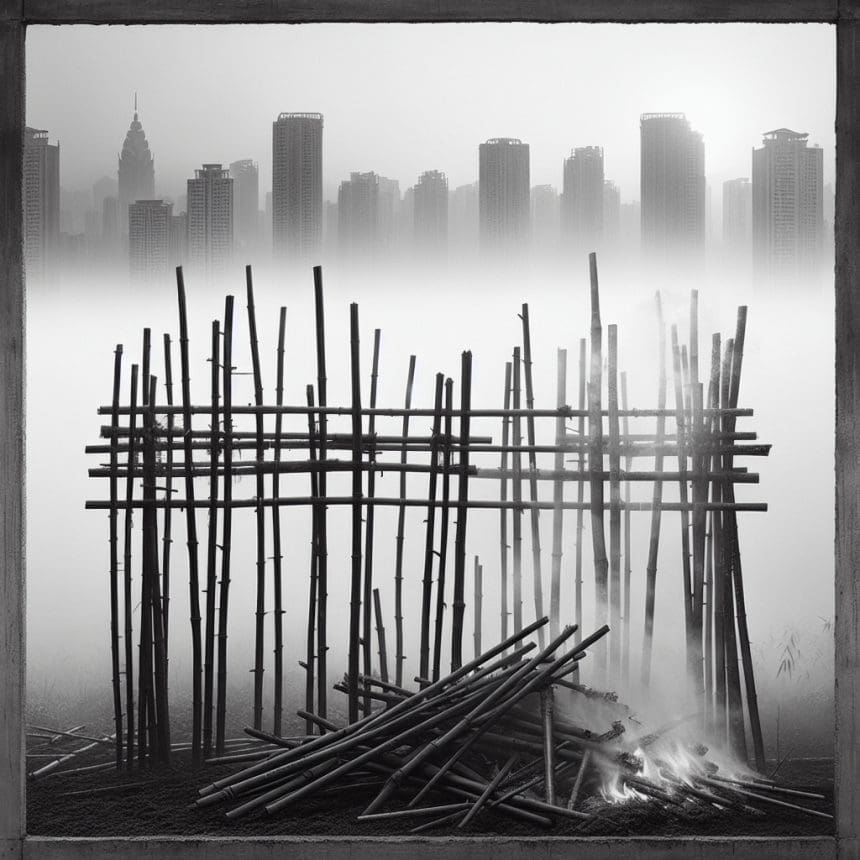
Headline: Bamboo Scaffolding’s Future in Doubt After Hong Kong Fire
In the wake of a tragic fire that engulfed a residential building in Hong Kong on August 23, 2023, the future of traditional bamboo scaffolding—a construction method revered for its strength and flexibility—faces an uncertain fate. The blaze, which claimed the lives of six people and left dozens injured, has reignited discussions about safety regulations and the longevity of this age-old practice, largely used in urban construction. As the city grapples with grief and calls for reform, many fear that this iconic symbol of Hong Kong’s architectural heritage may soon disappear.
A Tribute to Tradition
Bamboo scaffolding has been an integral part of Hong Kong’s skyline for decades, a solution that combines sustainability with historical significance. Artisans expertly weave thick bamboo poles into robust structures that can support heavy loads, even as they allow for a breathability that facilitates construction in tight urban spaces. However, as the city’s skyline stretches vertically and modernization takes center stage, critics argue that these traditional methods may be ill-equipped to meet contemporary safety standards.
The tragic fire has prompted an urgent reassessment of the regulations governing bamboo scaffolding. Local authorities are now and intensifying scrutiny on safety measures, which could potentially change how this ancient trade operates. Experts warn that, while safety is paramount, a blanket overhaul of scaffolding practices may inadvertently threaten the livelihoods of those skilled artisans who have preserved this craft for generations.

Realities of Safety Regulations
Following the fire, the Hong Kong government announced a review of existing safety protocols for construction sites, especially regarding scaffolding. In a city where construction is a constant, the guidelines governing bamboo scaffolding were already outdated, with many small operators struggling to comply. The conversation around modernizing these regulations now includes an urgent discussion on how to balance safety and tradition.
The investigation into the recent tragedy revealed that several safety violations were present at the construction site, including insufficient fire prevention measures. This revelation has intensified calls for reforms. Advocates for bamboo scaffolding argue that these new regulations should not wipe out the practice entirely but push for enhanced techniques that maintain its cultural essence while ensuring safety.
The Voiceless Artisans
Bamboo scaffolding is not merely a practice; it is an art passed down through generations. The artisans who construct these scaffolds have honed their skills over years, often starting as apprentices in their youth. Many of these workers are part of families that have engaged in this vocation for decades, intertwining their livelihoods with Hong Kong’s evolving urban landscape.
As discussions continue about the necessity of stricter regulations, many of these artisans fear job loss and displacement. "Our skills may not always align with what the government is proposing in terms of safety," said Ming Cheung, a seasoned bamboo scaffolder. "If the new rules lead to the end of bamboo scaffolding, we fear losing not just our jobs but our identity."
The Cultural Impact of Change
The ramifications of potentially phasing out bamboo scaffolding extend beyond economic concerns. It stirs a cultural debate about what modernity will mean for Hong Kong. Proponents of traditional methods argue that bamboo scaffolding promotes a sense of community. The workers who erect the scaffolding often build connections with the neighborhoods they work in, fostering a sense of belonging that is deeply ingrained in the culture of the bustling metropolis.
On the other hand, opponents caution that modernization brings efficiency and technological advancements that could ultimately safeguard lives. Building with materials that are tested for fire resistance and long-term durability could minimize accidents and loss of life.
International Perspectives
Hong Kong is not alone in grappling with the challenges posed by outdated construction practices. Cities worldwide are facing similar dilemmas; San Francisco’s historic homes often undergo retrofitting for earthquake safety while still preserving their architectural integrity. In Japan, traditional wooden scaffolding also raises similar safety questions, showing that the struggle to balance cultural heritage with modern-day practices is universal.
As Hong Kong navigates this crisis, it is essential for city planners to take a holistic approach that considers both tradition and safety. Experts from various fields advocate for a collaborative effort that brings together craftsmen, architects, and safety regulators to explore modernized scaffolding techniques without completely discarding the essence of bamboo construction.
Moving Forward: A Delicate Balancing Act
In the aftermath of the fire, Hong Kong stands at a crossroads—one path leads to modernization and possibly the decline of traditional bamboo scaffolding, while the other honors the time-honored skills of its artisans, improving safety standards and preserving a vital piece of its cultural fabric.
As discussions continue, stakeholders will need to engage in meaningful dialogues that encompass perspectives from the government, the construction industry, and the local community. Opportunities for innovation could arise, paving the way for hybrid solutions that honor the past while adapting to contemporary needs.
Conclusion
The deadly fire in Hong Kong has emerged as a pivotal moment for traditional bamboo scaffolding, raising pressing questions about safety, cultural preservation, and economic viability. While the immediate fallout is tragic, it provides a unique opportunity for creativity and collaboration among stakeholders. The fate of this artistic and vital construction method hangs in the balance, and how society chooses to move forward could redefine what Hong Kong’s skyline—and its identity—means for generations to come.