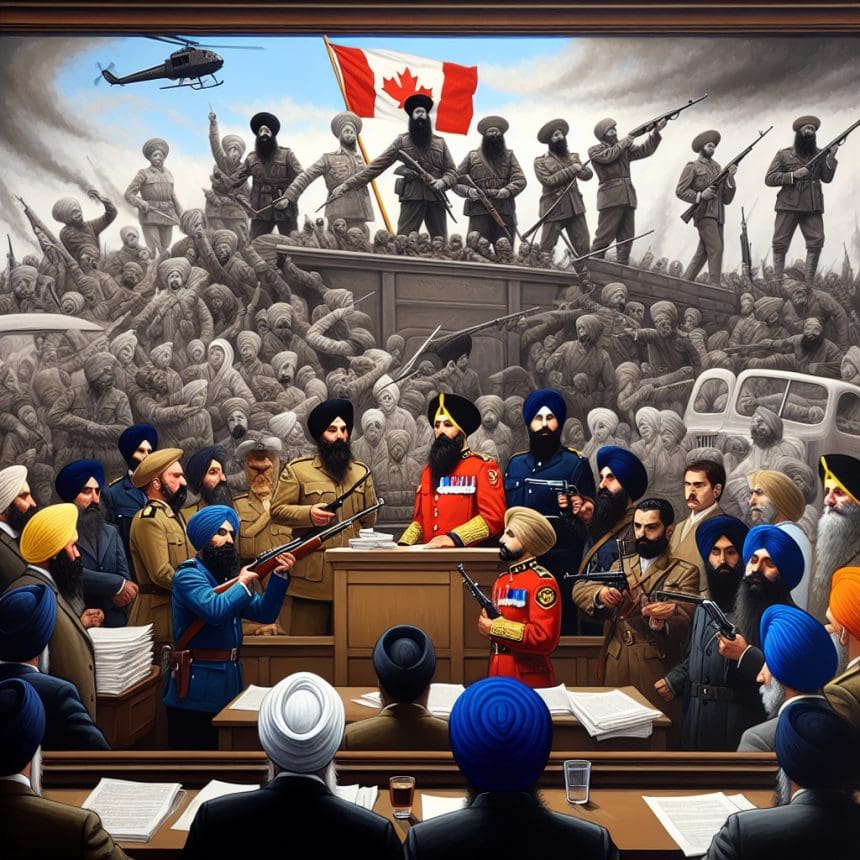
Headline: Gun Charges Dropped Against Khalistani Leader in Canada
In a significant legal development, Canadian authorities have stayed gun charges against a prominent Sikh Khalistani leader, the decision announced on October 10, 2023, at the Ontario Superior Court in Toronto. This ruling impacts the case against Arjan Singh, a key figure in the Khalistani movement advocating for an independent Sikh state. The stay comes as a result of procedural issues raised by Singh’s defense team, which argued that the evidence against him was insufficient and mishandled.
The case against Singh has garnered considerable attention, reflecting tensions surrounding the Khalistani movement both domestically and internationally. Singh was initially charged with unlawful possession of firearms after an investigation linked him to a stash of weapons found during a police operation last year. The legal team raised questions about the integrity of the evidence, arguing that it was obtained without proper authorization.
The Khalistani movement has been controversial, sparking debates on issues of national sovereignty and racial identity. Supporters argue for self-determination for Sikhs, while critics often frame it as a threat to public safety. Singh’s defense emphasized that the charges were largely politically motivated, claiming that the state was attempting to stifle dissent against governmental policies.

Following the announcement, Singh expressed gratitude towards his legal team and supporters, stating, “This decision underscores the importance of fair legal proceedings. We will continue to advocate for our community’s rights and freedoms." His comments reflect a broader sentiment shared by many within the Khalistani movement, emphasizing their commitment to justice and equality.
The staying of charges does not end the scrutiny faced by Singh and others associated with the Khalistani movement. Canadian law enforcement agencies have increased their focus on individuals connected to this nationalist agenda, viewing it as a potential source of domestic extremism. The authorities justified their actions by citing security concerns, arguing that some Khalistani activists have been involved in incidents of violence both in Canada and abroad.
As the case fades into the background for now, it raises persistent questions about the balance between public safety and the right to political expression in Canada. Legal experts have noted that issues related to national security often complicate judicial proceedings, leading to tensions between law enforcement and civil liberties advocates.
Beyond the immediate legal implications, this case illustrates the intersection of local and international politics. The Khalistani movement has its roots in a demand for an independent Punjab, which has significant historical and cultural significance for Sikhs around the world. The diaspora’s involvement adds another layer of complexity, as sentiments about the movement can vary widely among Canadian Sikhs and their families back in India.
The Canadian government has historically balanced its support for individual liberties with concerns about separatism, which complicates their approach to Khalistani activism. In 1984, the Indian government responded to heightened Khalistani activity with militarized operations that resulted in widespread violence. This tumultuous history informs the perspectives of Canadian Sikhs today, creating a delicate atmosphere around discussions of Khalistan.
Moreover, Canada’s increasing diversity has spurred conversations about multiculturalism and identity, making cases like Singh’s highly impactful in shaping the narrative around these issues. Critics of the Khalistani movement emphasize that while peaceful advocacy is a fundamental right, any actions perceived as inciting violence or hatred can undermine those rights.
In light of the ruling, discussions around gun control and its implications for community safety are expected to reignite. Advocates for stricter measures point to the risks associated with illegal firearms, while supporters of the Khalistani movement often cite a perceived need for security against hostility directed at the Sikh community.
Moving forward, organizations such as the World Sikh Organization (WSO) have voiced support for Singh and others in similar positions, arguing for the need to protect political dissidents from unfounded criminal charges. The WSO emphasizes that the right to peaceful protest and advocacy should not be conflated with criminality, advocating for an open dialogue about the challenges faced by the Sikh community.
Public opinion remains divided with regard to Khalistani activism. Some citizens view it as a legitimate political expression, while others worry about what such movements signal about national unity and social cohesion. As discussions unfold, one thing becomes increasingly clear: the case against Singh is just a chapter in a broader narrative that encompasses legal, cultural, and identity struggles far beyond the courtrooms of Canada.
As the legal landscape evolves, it is anticipated that both supporters and critics of the Khalistani movement will intensify their efforts to influence public discourse. The outcomes of these debates may very well shape the future trajectory of activism within Canada, as well as its relationship with India and the global Sikh community.
In conclusion, while the staying of gun charges against Khalistani leader Arjan Singh marks a momentary victory for his supporters, it also opens the door to renewed discourse about political freedoms, national security, and community safety. As stakeholders from various backgrounds engage in this ongoing dialogue, the complexities surrounding the Khalistani movement will likely continue to affect Canadian society for the foreseeable future.