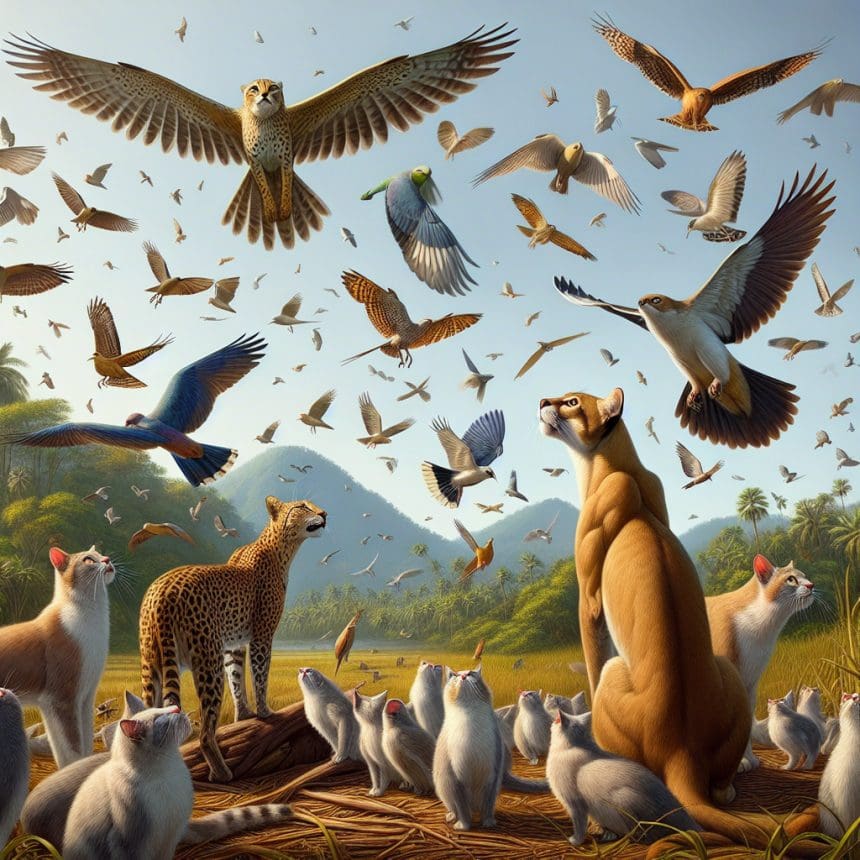
Feline Predators: The Troubling Impact of Cats on Bird Populations
Recent studies highlight alarming data regarding domestic cats and their impact on bird populations across the United States. According to a comprehensive report published by the American Bird Conservancy on October 3, 2023, free-ranging and feral cats are responsible for the deaths of billions of birds annually. This growing concern, which has prompted renewed discussions on wildlife conservation, raises urgent questions about the balance between pet ownership and the preservation of avian species.
The Scope of the Problem
The American Bird Conservancy’s report estimates that free-ranging and feral cats kill an astonishing 2.4 billion birds each year in the U.S. alone. This figure, compiled through decades of research, underscores the significant role that cats play in threatening various bird species, some of which are already endangered. The findings indicate that house cats, often viewed as benign members of the family, are one of the most significant direct human-induced threats to birds across North America.
A Complex Relationship
Cats have been companions to humans for thousands of years, and their hunting instincts are deeply ingrained. While the domesticated version of the species, Felis catus, is often kept indoors, millions roam freely in neighborhoods, parks, and rural areas. The report highlights a growing concern not just for the safety of birds but also the ecological consequences that free-ranging cats can impose on local ecosystems.
Predation is a natural part of the food web; however, the sheer volume of cats in urban and suburban areas alters this delicate balance. The casual hunting behavior of household pets can significantly affect bird populations, leading to reductions in species diversity and number.

The Science Behind the Numbers
Research indicates that various factors contribute to the alarming number of birds killed by cats. A majority of the predation occurs during peak activity hours at dawn and dusk, aligning with when many birds are most active. The University of California, Santa Cruz, conducted a study showing that a single outdoor cat can kill up to 33 birds per year, with some feral cat colonies accounting for thousands of deaths collectively.
Rescue organizations, particularly in urban settings, often advocate for trap-neuter-return (TNR) programs to help manage the feral cat population. However, opponents of the practice argue that these programs often fail to curb predation effectively.
The Conservation Community Responds
The American Bird Conservancy’s findings have prompted wildlife conservation communities to take action. Efforts such as public education campaigns about responsible pet ownership and the importance of keeping cats indoors are gaining traction. Various conservation organizations are emphasizing the catastrophic effects of cat predation on bird populations and are urging cat owners to consider transitioning their pets to indoor lifestyles.
Additionally, bird-watching enthusiasts and organizations are calling for legislative measures to manage the free-ranging cat population. Some communities have begun to impose strict regulations on cat ownership, including mandatory indoor confinement and licensing.
A Call to Action
Experts are emphasizing the immediate need for responsible cat ownership to mitigate the devastating effects on bird populations. Suggestions include:
-
Keeping Cats Indoors: Encouraging owners to keep their cats indoors not only protects local wildlife but can also lead to longer, healthier lives for the pets.
-
Outdoor Enrichment: Offering alternatives such as catios (enclosed outdoor patios) or play sessions can provide stimulation without the risk of predation.
-
Community Engagement: Initiatives that promote awareness and encourage responsible pet management can foster collaboration among cat owners, wildlife advocates, and local governments.
- Research and Funding: Targeted research should receive support to better understand cat behavior and ecology while finding innovative solutions to reduce wildlife impacts.
The Bigger Picture
The debate surrounding the impact of cats on birds is more than just a matter of pet ownership; it is part of a broader conversation about environmental stewardship and wildlife conservation. The findings from the American Bird Conservancy highlight a critical issue that intertwines human activity and ecological balance. Balancing the affection we have for our pets with the responsibility of protecting fragile ecological systems is paramount.
Personal Responsibility in Conservation
For cat owners, understanding the role they play in this issue can lead to positive change. Simple decisions—such as keeping cats indoors, supporting TNR programs, and spreading awareness—can make a significant difference for avian populations fighting for survival.
With a growing awareness of this issue, all it takes is a little collective effort to find a solution. The intersection of companion animals and conservation presents both a challenge and an opportunity for communities and individuals alike.
Conclusion
As bird populations continue to face pressures from various sources, the role of domestic cats in wildlife predation cannot be overlooked. Addressing this issue will require a commitment from pet owners, conservationists, and policymakers to ensure that the simple act of enjoying feline companionship does not come at the expense of our avian friends. With proactive measures, it is possible to foster harmony between pet ownership and wildlife conservation, ensuring that both cats and birds can thrive in a shared environment.