


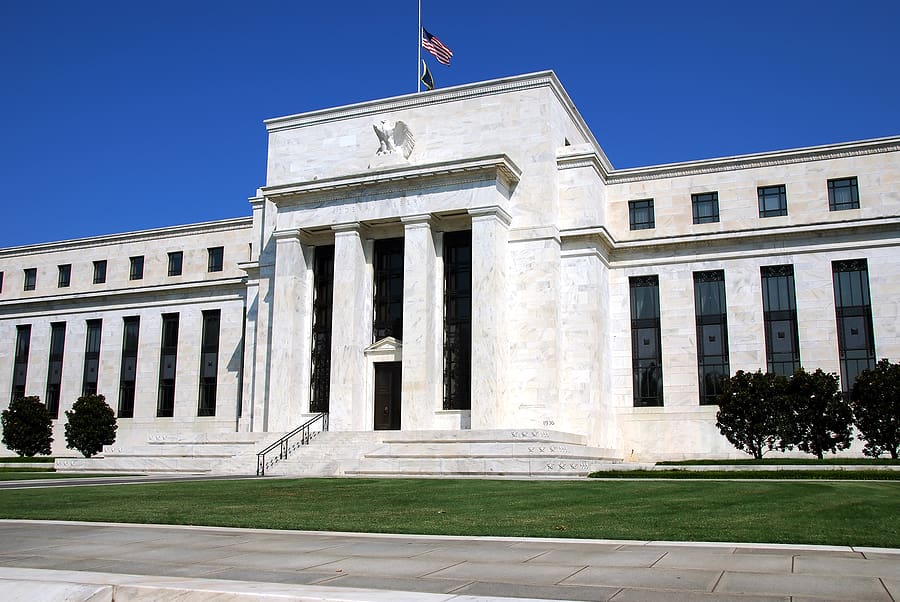
Federal Reserve Caps 2025 with Third Consecutive Rate Cut: The National Economic Outlook
(STL.News) Federal Reserve – Rate Cut – The American economic landscape is undergoing a significant transformation as 2025 draws to a close. In a move signaling a definitive shift in monetary policy, the Federal Reserve announced its third consecutive interest rate reduction following its December policy meeting. This pivot marks the end of the aggressive “inflation-fighting” era that dominated the mid-2020s, ushering in a “protection” phase aimed at sustaining a cooling labor market.
For consumers and investors across the country, this shift carries profound implications for borrowing costs, retirement strategies, and the broader financial health of the nation heading into 2026.
The Fed’s Final Move of 2025: A Detailed Breakdown
On December 10, the Federal Open Market Committee (FOMC) voted to lower the benchmark federal funds rate by 25 basis points (0.25 percentage points). This reduction brings the target range to 3.50%–3.75%, the lowest level for the benchmark rate since early 2022.
A rare level of internal friction within the committee characterized the decision. The 9–3 vote reflected a growing debate among policymakers: some argued for a more aggressive 50-basis-point cut to jumpstart hiring, while others expressed concern that cutting too quickly could cause inflation to settle permanently above the 2% target.
The Economic Motivation: Why Now?
Market analysts are describing the Fed’s latest move as an “insurance cut.” Rather than reacting to a crisis, the central bank is attempting to get ahead of potential weakness.
Key factors influencing this national policy shift include:
- A Softening Labor Market: While the economy is still adding jobs, the pace has slowed significantly compared to 2024. The national unemployment rate has stabilized at a slightly higher level, and the “quits rate”—a measure of worker confidence—has fallen.
- Inflation Normalization: While the cost of services and insurance remains high, the price of physical goods has continued to stabilize, giving the Fed the “all clear” to move away from restrictive territory.
- Reaching the “Neutral Rate”: Fed Chair Jerome Powell indicated that interest rates are now approaching a “neutral” level—one that neither speeds up nor slows down economic activity.
Impact on the National Housing Market
For millions of Americans, the primary concern regarding Fed policy is the cost of housing. However, the relationship between the Fed funds rate and mortgage rates is rarely a straight line.
The Mortgage Rate Paradox
Mortgage rates are primarily influenced by the 10-year Treasury yield, which reflects the market’s long-term outlook on growth and inflation rather than daily Fed movements.
As of mid-December, the national average for a 30-year fixed mortgage stands at approximately 6.21%. While this is a welcome reprieve from the 7% to 8% range seen in previous years, it has not dropped as sharply as the Fed’s short-term rates. Lenders remain cautious because the Fed signaled a “wait and see” approach for 2026. This suggests that unless the economy weakens significantly, mortgage rates may hover in the 6% range for the foreseeable future.
The Refinancing Landscape
For homeowners who purchased during the peak rate periods of 2023 and 2024, the current environment offers a narrow window for refinancing. However, with the Fed signaling a potential pause in early 2026, many homeowners are weighing whether to lock in a 6.2% rate now or gamble on further drops that may not materialize.
The Consumer Experience: Savings and Credit
The “silver lining” of high interest rates over the past two years was the return of meaningful yield for savers. For the first time in a decade, high-yield savings accounts and Certificates of Deposit (CDs) offered returns exceeding 5%.
That era is now fading. With three cuts in the books for the second half of 2025, banks are quickly lowering the APY (Annual Percentage Yield) on savings products. Savers who haven’t yet “locked in” rates via long-term CDs may struggle to find yields above 4% as 2026 progresses.
Conversely, those carrying high-interest debt, such as credit card balances or personal loans, should begin to see a modest decrease in their Annual Percentage Rates (APRs). While these changes often take one to two billing cycles to appear, the cumulative effect of 75 basis points in cuts throughout 2025 will provide some breathing room for the average household budget.
Wall Street’s 2026 Forecast: Cautious Optimism
As the Fed moves toward a pause, major financial institutions are releasing their projections for the stock market. The consensus among top-tier analysts is that the “Bull Market” remains intact, but the pace of gains is likely to slow.
S&P 500 Targets
Projections for the S&P 500 at the end of 2026 generally fall within the 7,400 to 7,800 range. This suggests a total return in the high single or low double digits—a solid performance, though more modest than the explosive growth seen in the early phases of the AI boom.
The Rise of the “AI Reality”
In 2024 and 2025, the market was driven by the potential of Artificial Intelligence. In 2026, analysts believe the market will demand proof. Investors are shifting their focus from companies that build AI (semiconductor manufacturers) to companies that use AI to increase their profit margins. This “productivity boom” is expected to broaden market participation beyond the “Magnificent Seven” tech giants to include sectors such as manufacturing, logistics, and healthcare.
National Sector Trends to Watch
As interest rates stabilize, specific sectors of the economy are positioned to outperform:
- Healthcare and Biotechnology: These sectors are highly sensitive to borrowing costs. Lower rates make it easier for biotech firms to fund long-term research and development.
- Renewable Energy and Infrastructure: Large-scale projects that require significant upfront capital are becoming more viable as debt costs decline.
- Consumer Discretionary: If the labor market remains stable and borrowing costs ease, analysts expect a rebound in “big ticket” consumer spending, including home improvements and automotive purchases.
Risks to the 2026 Outlook
While the “Soft Landing” remains the most likely scenario, several “wild cards” could disrupt the national economy:
- The Midterm Election Cycle: 2026 is a midterm election year in the United States. Historically, these periods bring increased market volatility as investors speculate on potential changes to tax, trade, and regulatory policies.
- The “K-Shaped” Recovery: There is a widening gap between households that own assets (stocks and real estate) and those that do not. If the labor market softens too much, the “bottom half” of the economy could see a significant pullback in spending, which would eventually drag on corporate earnings.
- Geopolitical Stability: Global supply chains remain sensitive to international conflicts. Any disruption that causes energy or food prices to spike could force the Fed to reverse course and raise rates again to combat “sticky” inflation.
Summary of the Economic Landscape
| Economic Indicator | End of 2025 Status | 2026 Projection |
| Federal Funds Rate | 3.50% – 3.75% | Likely stable (3.25% – 3.75%) |
| S&P 500 Index | ~6,880 | Target: 7,500 – 7,800 |
| 30-Year Mortgage | ~6.21% | Range: 5.9% – 6.4% |
| National Unemployment | 4.4% | Expected to hover near 4.5% |
| GDP Growth | 1.7% | Projected acceleration to 2.2% |
Conclusion: A New Era of Stability?
The Federal Reserve’s final actions of 2025 suggest a central bank that is confident in its progress against inflation but wary of economic stagnation. By lowering rates now, the Fed is attempting to engineer a “perfect landing”—curbing price increases without triggering a recession.
For the American public, 2026 promises to be a year of transition. It will likely be a year where the frantic volatility of the post-pandemic era gives way to a more traditional economic cycle. For investors and homeowners alike, the key to success in the coming year will be patience and a focus on long-term fundamentals rather than short-term Fed speculation.
© 2025 STL.News/St. Louis Media, LLC. All Rights Reserved. Content may not be republished or redistributed without express written approval. Portions or all of our content may have been created with the assistance of AI technologies, like Gemini or ChatGPT, and are reviewed by our human editorial team. For the latest news, head to STL.News.



