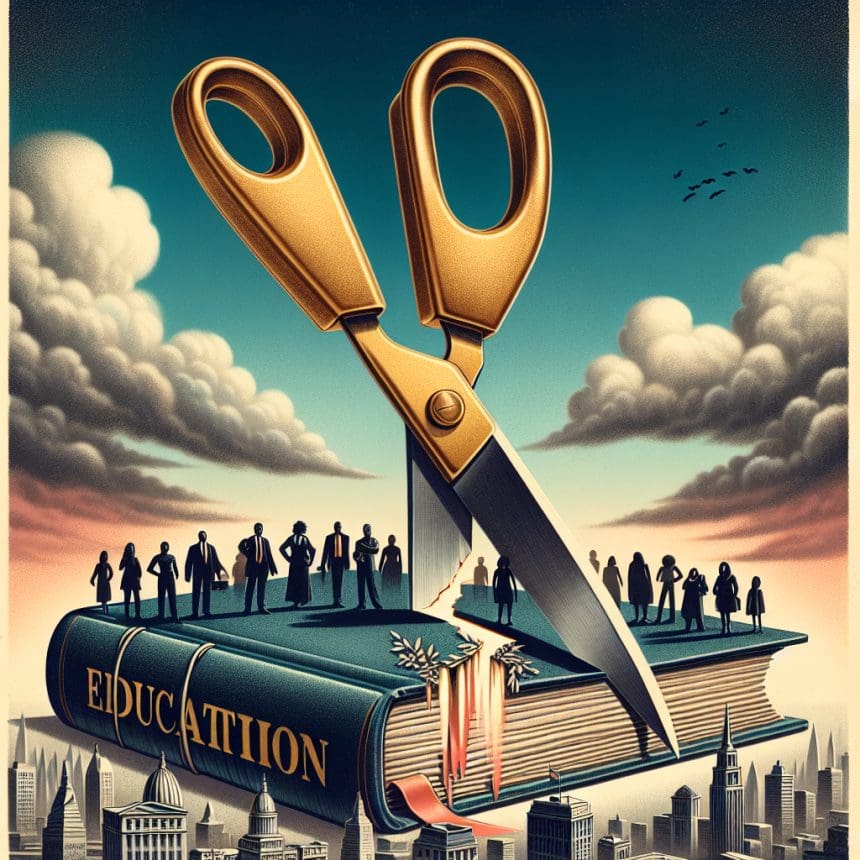
Headline: Education Department Faces Major Budget Cut Amid Shutdown Threat
In a significant development, the U.S. Department of Education experienced a critical blow as its largest budget item faced loss during the latest government shutdown negotiations led by the Trump administration. This decision, made amidst contentious discussions on Capitol Hill this week, has raised alarm among educators and advocates alike, who fear the potential long-term impacts on federal education programs. Aiming to curb federal spending, the administration’s budget proposal has sparked intense debate, putting pressure on lawmakers to find an acceptable compromise before the looming deadline.
Education Budget Cuts Intensify Concerns
The Trump administration’s recent budget proposal, which has already faced substantial criticism, aims to decrease the funding allocated to essential education programs, particularly the Pell Grant program. The Pell Grant, which provides financial aid to low-income students pursuing higher education, represents the largest item in the Education Department’s budget. As negotiations between Republicans and Democrats have grown increasingly strained, the potential loss of such pivotal funding has sent shockwaves throughout the educational sphere.

Political Tensions Mount
As Congress continues to grapple with looming deadlines, the standoff between both parties has intensified. House Democrats and Senate Republicans have yet to find common ground on critical issues such as funding allocations that would affect millions of students across the nation. Amidst the anxiety over program cuts, educators and policy experts have expressed grave concerns about the affect on college accessibility, arguing that financial aid is vital for lower-income families unable to afford tuition fees without assistance.
“With the Pell Grant program under threat, we must reconsider our priorities," stated Jessica Harlow, an educational advocate with the National Education Association. "Cutting funding that directly supports our students undermines the future of education and the promise of success for many."
Backlash from Educational Institutions
The proposed cuts have prompted a coordinated response from various educational institutions, which argue that such budget reductions would drastically impact students’ opportunities to pursue higher education. Universities and colleges across the country are alarmed at the potential increase in dropout rates and decreased numbers of graduates. Many institutions have written letters to Congress, urging lawmakers to reconsider the impact of these cuts before finalizing any budget decisions.
“The future of the next generation is at stake,” remarked Dr. Eliza Fernandez, president of a major university in California. “The Pell Grant program allows students who might not otherwise have the resources to attend college and build their futures.”
Future of Education at Stake
In addition to the direct implications on funding, many educators believe that reduced financial aid will exacerbate existing disparities in access to higher education. Underlining this sentiment, data from the Education Department reveals that nearly 7 million students benefit from Pell Grants, with many relying entirely on this financial assistance to cover tuition expenses. The fear is that less funding will inevitably lead to higher tuition costs, further marginalizing low-income students and exacerbating socioeconomic barriers.
During recent town hall meetings, student representatives expressed their concerns to lawmakers, pleading for continued support of educational programs that foster social mobility and equal opportunity. “We need to invest in education, not cut it,” said Marcus Lee, a student from Michigan. “If we want to prepare the workforce of tomorrow, we need to support students today.”
Broader Implications of the Shutdown
The stakes of this funding dispute extend beyond education; the potential government shutdown poses risks to various sectors reliant on federal support. Discussions have also surfaced regarding the impacts such a shutdown would have on vital social services, including drug recovery programs, housing assistance, and various welfare initiatives.
In the backdrop of this contentious debate, President Trump has maintained his hardline stance, insisting on budget cuts across multiple departments as a means of reducing the national deficit. However, critics assert that such measures disproportionately affect vulnerable communities and students striving for better futures.
The Need for Bipartisanship
As the clock ticks down to the budget deadline, there is an urgent need for bipartisan cooperation to avert a government shutdown and protect crucial federal programs. Advocates are calling for lawmakers from both parties to prioritize education funding in negotiations, raising the voice of millions who stand to lose from diminished funding avenues.
“The window for effective dialogue is closing rapidly,” warned Senate Minority Leader Chuck Schumer. “We must come together to protect educational opportunities and ensure that every child has access to quality education.”
A Call to Action
As negotiation strategies develop, concerned citizens and stakeholders are encouraged to engage with their local representatives, advocating for the preservation of educational funding. Many are mobilizing grassroots campaigns, utilizing social media platforms to amplify their concerns and drive awareness of the potential ramifications of a reduced education budget.
Conclusion: The Implications Ahead
The ongoing budget negotiations and the threat of a government shutdown underscore the fragility of educational funding in America. As discussions unfold, the voices of students, educators, and advocates will play a pivotal role in shaping the future of educational support across the country. Lawmakers face a critical choice: prioritize cuts that jeopardize the future of millions of students or work collaboratively to find solutions that support education and help foster a stronger, more equitable society.
As the debate continues, the education community watches closely, hoping for an outcome that champions the rights and opportunities of all students, ensuring that every child has a fair chance at success in their educational pursuits.