



Daylight Saving Time Ends: Why America Still Changes Its Clocks
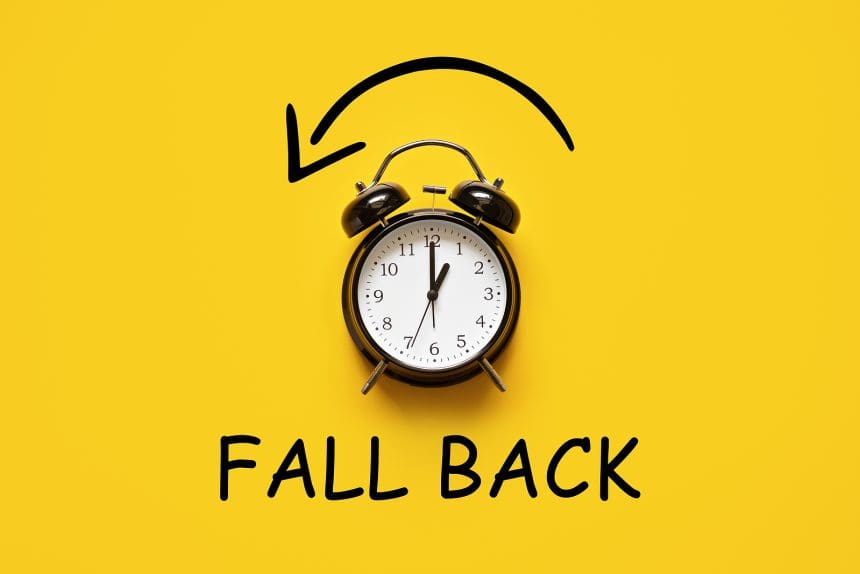
(STL.News) Americans woke up today to find that they had gained an extra hour of sleep as the nation officially shifted back to standard time. At 2 a.m. local time, clocks rolled backward one hour, ending the 2025 period of Daylight Saving Time (DST) — a long-standing national practice that continues to spark debate every year.
While many celebrated the extra hour of rest, others groaned about the semi-annual disruption to their routines, sleep cycles, and work schedules. Behind this clock-changing ritual lies more than a century of history, energy policy, and economic theory — and a continuing disagreement in Congress about whether the United States should keep doing it.
What Is Daylight Saving Time?
Daylight Saving Time is a seasonal time adjustment designed to make better use of natural daylight during the longer days of spring and summer. Under the system, clocks “spring forward” one hour in March and “fall back” one hour in November.
The goal: to extend daylight into the evening hours, reducing the need for artificial lighting and encouraging more outdoor and commercial activity after work hours.
When DST begins in March, the sun rises and sets later by the clock — meaning evenings stay brighter. When it ends in November, the country reverts to standard time, aligning sunrise and sunset more closely with typical waking and sleeping hours during the shorter days of winter.
The Origins of Daylight Saving Time
The concept of adjusting the clock for daylight was first popularized by Benjamin Franklin in 1784, who jokingly suggested that Parisians could save on candles by getting out of bed earlier. However, it wasn’t until World War I that DST became government policy.
In 1918, Congress passed the Standard Time Act, establishing both time zones and daylight saving time as a wartime energy-conservation measure. The idea resurfaced during World War II, when it was again implemented nationwide as “War Time” to conserve fuel for military operations.
After the war, the practice became optional, leading to a confusing patchwork of timekeeping. Some states and cities changed their clocks; others didn’t. A 1965 interstate bus schedule might have to cross through multiple time zones and daylight rules within a few hundred miles.
This chaos led to the Uniform Time Act of 1966, which standardized the start and end dates nationwide while still allowing states to opt out. Today, Hawaii and most of Arizona remain on standard time year-round, rejecting the clock change altogether.
Why Daylight Saving Time Was Created
DST was originally introduced for energy conservation — the idea being that if people used daylight more efficiently, they’d consume less electricity for lighting and heating.
In the early 1900s, when most electricity was used for illumination, this logic made sense. Longer daylight hours after work meant fewer lightbulbs burning in homes and businesses. However, modern energy usage is far more complex.
Today, air conditioning, electronics, and industrial operations account for the majority of electricity demand. Studies have shown that DST’s overall energy savings are marginal, and in some regions it may even increase electricity use due to greater air-conditioning on warmer evenings.
Nevertheless, DST persists for several non-energy reasons that still matter to many communities.
Economic and Social Reasons for DST
Beyond its original purpose, Daylight Saving Time has been linked to economic growth, consumer activity, and public health.
- Retailers and restaurants tend to support DST because longer daylight hours encourage shopping, dining, and recreation after work. More light in the evening means more people outdoors — visiting stores, eating out, or attending events.
- Tourism and travel industries also benefit. Visitors are more likely to explore attractions or dine late when it’s still bright outside.
- Safety advocates note that extended daylight reduces traffic accidents, since more driving occurs in daylight rather than darkness.
- Public health advocates cite increased opportunities for evening exercise and family outdoor activities.
Critics argue, however, that these benefits come at the cost of sleep disruption, health risks, and confusion across transportation and technology systems each time the clocks change.
The Health and Safety Debate
Over the past two decades, medical researchers have warned about the negative health effects of changing clocks twice a year. The “spring forward” transition in particular — when people lose an hour of sleep — has been linked to short-term increases in heart attacks, strokes, and workplace injuries.
Sleep scientists argue that permanent standard time is more natural because it aligns better with human circadian rhythms and morning sunlight exposure. Proponents of permanent daylight time counter that evening daylight offers more lifestyle benefits.
The truth may depend on geography. In northern states, winter sunsets under permanent DST could occur after 5 p.m., but sunrise might not occur until almost 9 a.m., leaving children waiting for school buses in the dark. Southern states experience less seasonal variation and might adapt more easily.
Why the U.S. Still Changes Its Clocks
If so many people complain about the clock change, why does America keep doing it? The answer lies in federal gridlock and local preference.
Congress has considered multiple bills to eliminate the biannual time change. The most recent — the Sunshine Protection Act — passed the Senate in 2022 but stalled in the House of Representatives. Lawmakers couldn’t agree on whether to make daylight time or standard time permanent.
Meanwhile, states are divided.
- Eighteen states, including Florida, Missouri, and Texas, have passed laws in favor of permanent daylight time — but federal approval is required before they can enact it.
- Others, like Massachusetts, have explored joining the Atlantic Time Zone instead to achieve the same effect.
- Hawaii and Arizona remain firm in their support for permanent standard time, avoiding DST altogether.
Until Congress resolves the issue, Americans will continue moving clocks forward in March and backward in November — likely for years to come.
How the Time Change Affects Businesses and Consumers
While most digital devices automatically update, the time shift still causes disruptions. Airlines, hospitals, and financial markets must coordinate timing systems to avoid errors. Small businesses that operate across time zones — such as restaurants managing online orders or delivery platforms — also face minor headaches.
The extra evening sunlight during DST months tends to boost restaurant and retail sales, particularly for patio dining and outdoor shopping. In contrast, the return to standard time often ushers in a quieter, more indoor-oriented season for many local economies.
For example, St. Louis-area restaurants often see higher traffic in spring and summer, when diners enjoy outdoor seating late into the evening. As fall arrives and clocks move back, earlier sunsets signal shorter hours and shifting consumer patterns — though online ordering platforms such as eOrderSTL help local restaurants maintain steady business even after dark.
The Global Context
The United States isn’t alone in rethinking daylight saving.
- The European Union voted in 2019 to abolish the time change entirely, though implementation has been delayed by member-state disagreements.
- Japan, China, and India do not observe DST.
- In contrast, many Middle Eastern and Latin American countries experiment with DST on and off, depending on political or energy conditions.
These global variations can complicate international travel, trade, and digital communications, as time zone conversions occur several times a year.
Looking Ahead: The Future of Daylight Saving Time
Public opinion polls consistently show that most Americans want to stop changing clocks. Yet opinions are evenly split on which time to keep — daylight or standard.
Experts predict that the issue will return to Congress as states push for more autonomy. Some analysts suggest a regional approach, where states within the same time zone could coordinate a shared policy rather than wait for federal reform.
Until then, the rhythm of springing forward and falling back remains an American tradition — part convenience, part inconvenience — woven into the country’s daily life.
A Simple Reminder
As always, safety officials recommend using the time change to check your smoke detectors, carbon monoxide alarms, and emergency supplies. That small ritual, paired with resetting clocks, keeps families safe as daylight hours fade and the colder months arrive.
So while Americans gained an hour of sleep today, the debate about daylight saving time is far from over. For now, the sun still rises an hour earlier on the clock — and the conversation about whether to keep changing it continues.
© 2025 STL.News/St. Louis Media, LLC. All Rights Reserved. Content may not be republished or redistributed without express written approval. Portions or all of our content may have been created with the assistance of AI technologies, like Gemini or ChatGPT, and are reviewed by our human editorial team. For the latest news, head to STL.News.



