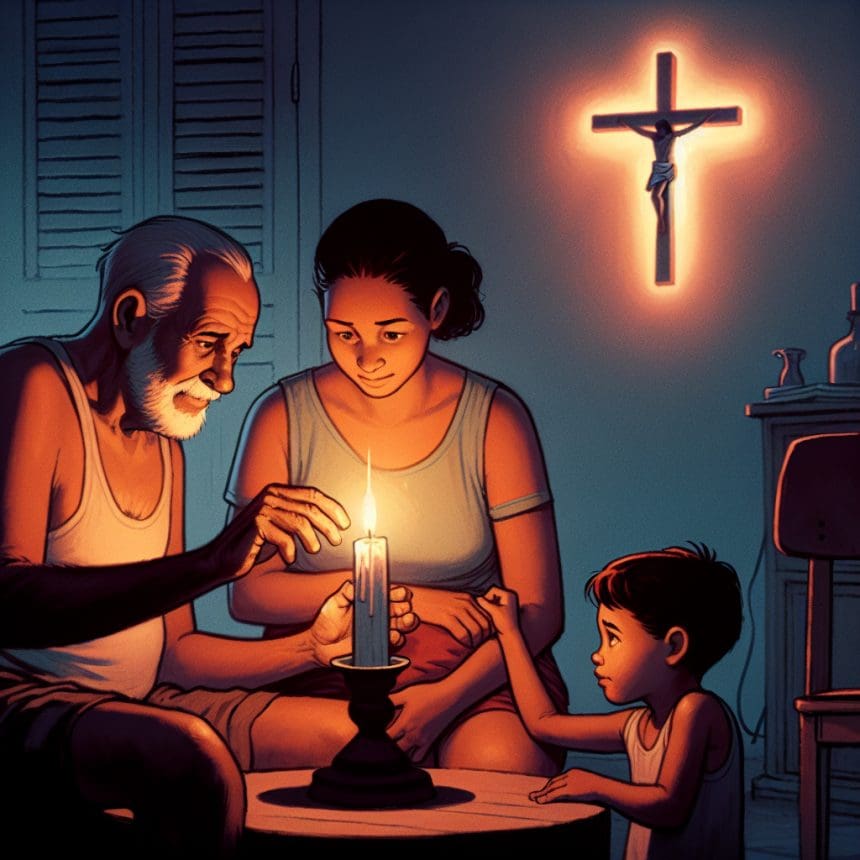
Headline: Faith and Family Flourish in Cuba Amid Blackouts
Cuba is facing an ongoing nationwide blackout, leaving millions of residents without power and basic resources. As the rolling outages persist, citizens in Havana and other cities are turning to their faith and close-knit family ties to navigate the challenges presented by the lack of electricity and essential services. The crisis, which began last month, is attributed to infrastructural failures and economic sanctions affecting the island, compelling many to seek solace and strength in their communities and place of worship.
The blackouts in Cuba’s urban centers have become a daily reality, forcing people to adapt to living without electricity for prolonged periods. This struggle has been exacerbated by rising fuel prices and a stagnant economy, leading to increased frustration among residents who rely heavily on electrical power for daily activities. As temperatures soar, the absence of fans, refrigerators, and proper lighting heightens the sense of urgency for solutions.
In the face of adversity, many Cubans have turned inward, choosing faith and family gatherings as a means of coping. Churches have seen an uptick in attendance as individuals seek spiritual guidance and communal support. Pastor Lourdes, who leads a congregation in Old Havana, mentioned how her church now serves as a sanctuary for many: “Our doors are always open. It’s a space where people can come together, share their struggles, and pray for better days.”

Community leaders, too, have observed a similar trend. Maria Elena, who organizes neighborhood meetings, noted that families are gathering for communal dinners and sharing resources like food and water. “The blackouts have forced us all to rely on each other more than ever,” she said. “We’re sharing what we have to ensure everyone has enough to eat and stay hydrated."
Faith plays a pivotal role during these difficult times. Many Cubans have found comfort in religious practices, with a noticeable surge in prayer sessions and group reflections. “In hardships, we often turn to higher powers,” said Javier, a local resident. “For many of us, faith is not just a belief—it’s a source of hope and resilience.”
The importance of family is equally highlighted in current discussions among residents. In a society where multi-generational households are common, families are finding ways to support each other economically and emotionally. Parents and grandparents are banding together to cook meals, care for children, and manage local agricultural efforts. “When one person struggles, the whole family feels it. We lean on each other,” stated Ana, a mother of three who has turned her backyard into a vegetable garden to sustain her family and neighbors amidst the food shortages spurred by the blackout.
Social media platforms are buzzing with stories of people sharing their experiences, triumphs, and setbacks. While the blackouts have limited internet access in many areas, Cubans are innovative, finding ways to connect and support one another through resourceful means. Community leader Carlos has started a WhatsApp group to coordinate food and resource distribution, saying, “It’s about community first. We have to work together to survive this.”
Alongside faith and familial bonds, local organizations and charities are stepping up to provide essentials to low-income families. Schoolchildren are also showing solidarity; where possible, students are collecting supplies to donate, harnessing their youthful energy to instill hope among their peers. “Even as kids, we can help,” said 11-year-old Luis, reflecting a growing sentiment among younger generations who feel compelled to contribute.
In the face of such profound adversity, cultural values of resilience and solidarity are being tested and fortified. Several activists have begun grassroots initiatives to advocate for energy reforms and infrastructural improvements, pushing for systemic change in response to the ongoing crisis and creating a roadmap for recovery.
The international community watches closely, with various humanitarian organizations examining ways to provide assistance. While political tensions persist, the emphasis on supporting local grassroots movements could help spark changes that are desperately needed in Cuba’s electrical infrastructure.
Experts argue that while faith and familial bonds can provide stability and emotional refuge, the long-term solution lies in comprehensive dialogue and engagement with all stakeholders to address the systemic challenges that have led to this crisis. Sociologist Dr. Roberto Alvarez noted, “Cuba is facing a confluence of issues that require multifaceted solutions. While community spirit is vital now, lasting change must focus on governance and infrastructure.”
The power struggle also highlights the pressing need for policy changes and economic reforms, particularly as public discontent grows. Citizens are tired of enduring shortages, and patience is wearing thin. Continuous blackouts challenge the very essence of daily living, forcing communities to unite in ways they have not had to for generations.
As Cuba grapples with its present reality, the stories of faith and familial ties paint a portrait of resilience in the face of adversity. While no one can predict how long the situation will last, the strength drawn from close relationships and a shared sense of purpose provides a glimmer of hope amid the darkness. For many Cubans, community feels like the lifeline that will carry them through these challenging times.