


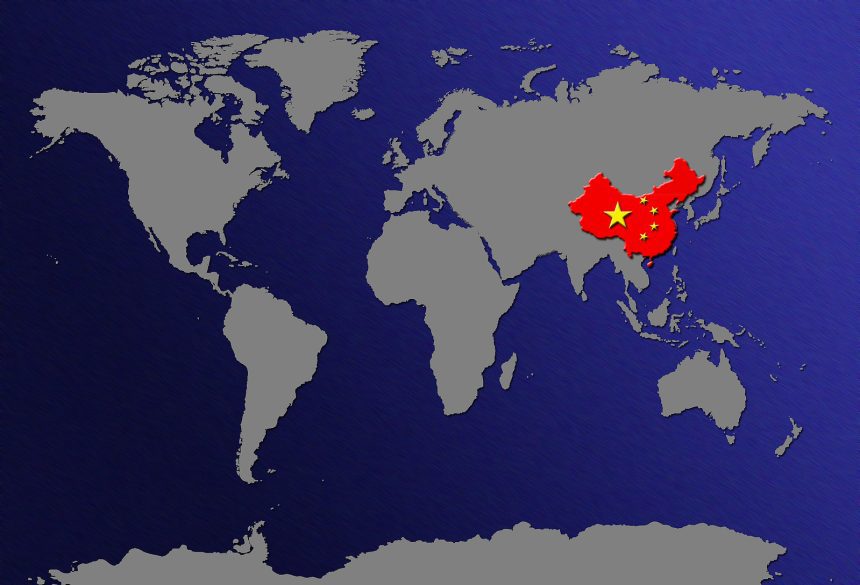
China has conducted joint naval and air patrols around the disputed Scarborough Shoal, renewing attention on one of the South China Sea’s most contested maritime flashpoints. The latest operations come amid continuing territorial disputes with the Philippines and heightened regional security concerns involving the United States and its Indo-Pacific allies.
BEIJING – August 2 2026 (STL.News) – China’s military has carried out joint naval and air combat patrols around the disputed Scarborough Shoal in the South China Sea, marking the latest demonstration of Beijing’s determination to reinforce its territorial claims in one of the world’s most strategically important waterways. According to China’s People’s Liberation Army (PLA) Southern Theater Command, the exercises were conducted in the airspace and waters surrounding the shoal to test combat readiness and defend what Beijing describes as its national sovereignty and maritime rights.
The patrols come as tensions remain elevated across the South China Sea, where overlapping territorial claims by China, the Philippines, Vietnam, Malaysia, Brunei and Taiwan continue to create diplomatic and military friction. While the latest Chinese operation did not result in any reported confrontation, it underscores the increasingly frequent military activity in the region as competing nations seek to reinforce their respective claims.
Latest Military Activity Around Scarborough Shoal
The PLA said the joint operation involved both naval and air forces operating around Scarborough Shoal, which China refers to as Huangyan Dao. Chinese officials described the patrols as a necessary response to actions by “certain countries” that they claim threaten regional peace and stability. However, no nation was specifically identified in the official statement.
Scarborough Shoal, known in the Philippines as Bajo de Masinloc, lies approximately 140 miles west of the Philippine island of Luzon. Although the feature consists primarily of rocks and reefs surrounding a lagoon, it occupies an important strategic position in the northeastern South China Sea. It sits near productive fishing grounds used by Filipino fishermen for generations.
The Philippine Embassy in Beijing did not immediately comment following the announcement of the Chinese patrols.
Why Scarborough Shoal Matters
Scarborough Shoal has become one of Asia’s most closely watched maritime flashpoints over the past decade. Control of the area extends beyond questions of national sovereignty, as the surrounding waters are believed to contain valuable fishing resources and potentially significant oil and natural gas deposits.
The South China Sea itself carries roughly one-third of global maritime trade each year, making freedom of navigation through the region a matter of international economic and security importance. The United States and many of its allies argue that international law guarantees free passage through these waters. At the same time, China maintains that it possesses historic rights over much of the sea within its so-called “nine-dash line.”
Because of its location, Scarborough Shoal also offers military significance. Control of the reef provides an observation point along major shipping routes. It contributes to broader efforts by regional powers to monitor naval and air traffic throughout the South China Sea.
Long-Running Dispute Between China and the Philippines
The dispute over Scarborough Shoal intensified dramatically in 2012 after a standoff between Chinese and Philippine government vessels. Following weeks of confrontation, Chinese maritime forces established effective control over access to the shoal, limiting Filipino fishermen’s ability to operate in the area.
In 2016, an international arbitration tribunal established under the United Nations Convention on the Law of the Sea ruled overwhelmingly in favor of the Philippines, concluding that China’s expansive maritime claims lacked legal basis under international law. Beijing rejected the ruling, declaring it “null and void,” and has continued to maintain its presence throughout the disputed waters.
Since then, Chinese Coast Guard ships and maritime patrol vessels have regularly operated near Scarborough Shoal, while Philippine authorities have continued patrols asserting Manila’s sovereign rights within its exclusive economic zone.
Regional Security Environment Continues to Evolve
The latest Chinese patrols occur amid broader changes in Indo-Pacific security.
The United States has strengthened defense cooperation with the Philippines in recent years through expanded military exercises, increased rotational deployments and additional access to Philippine military facilities under the Enhanced Defense Cooperation Agreement. Washington has repeatedly stated that its Mutual Defense Treaty with the Philippines applies to armed attacks on Philippine public vessels, aircraft or armed forces operating in the South China Sea.
Large multinational exercises involving the United States, Japan, Australia and other regional partners have also increased in both size and frequency. Those exercises are intended to improve interoperability among allied forces while reinforcing commitments to maintaining a free and open Indo-Pacific.
China, meanwhile, has continued expanding both the capabilities and operational reach of the People’s Liberation Army Navy and the China Coast Guard. Military analysts note that Beijing has invested heavily in new warships, aircraft carriers, long-range aviation and maritime surveillance systems as part of its broader military modernization program.
Increasing Competition Without Open Conflict
Although encounters between Chinese and Philippine vessels have become increasingly common, both governments have generally sought to avoid escalation into direct military conflict.
Instead, analysts describe the situation as one of sustained strategic competition, with each side attempting to strengthen its position through regular patrols, coast guard operations and diplomatic messaging rather than conventional warfare.
Chinese officials maintain that their activities are defensive and intended to safeguard territorial sovereignty. Philippine leaders, however, argue that Chinese patrols interfere with lawful activities inside the Philippines’ exclusive economic zone and undermine regional stability.
International observers continue to urge restraint, warning that an accidental collision or miscalculation involving military or coast guard vessels could quickly escalate tensions in the heavily contested waterway.
Global Implications
Events in the South China Sea are closely monitored well beyond Asia because of the region’s importance to global commerce and international security.
Any disruption to shipping routes could affect supply chains, energy transportation and international trade. The continued military presence of major powers—including China and the United States—also means that even localized incidents can draw wider international attention.
For now, China’s latest naval and air patrols appear to represent another step in its long-running effort to reinforce its territorial claims rather than an indication of an immediate military confrontation. Nevertheless, the operation highlights the continuing challenges facing regional governments as they balance national security interests, international law and economic cooperation in one of the world’s most strategically significant maritime regions.
Disclaimer: The information and any accompanying video are based on reports from third-party sources. STL.News has not independently verified all claims and does not guarantee the accuracy or completeness of the information. This content is provided for informational purposes only.



