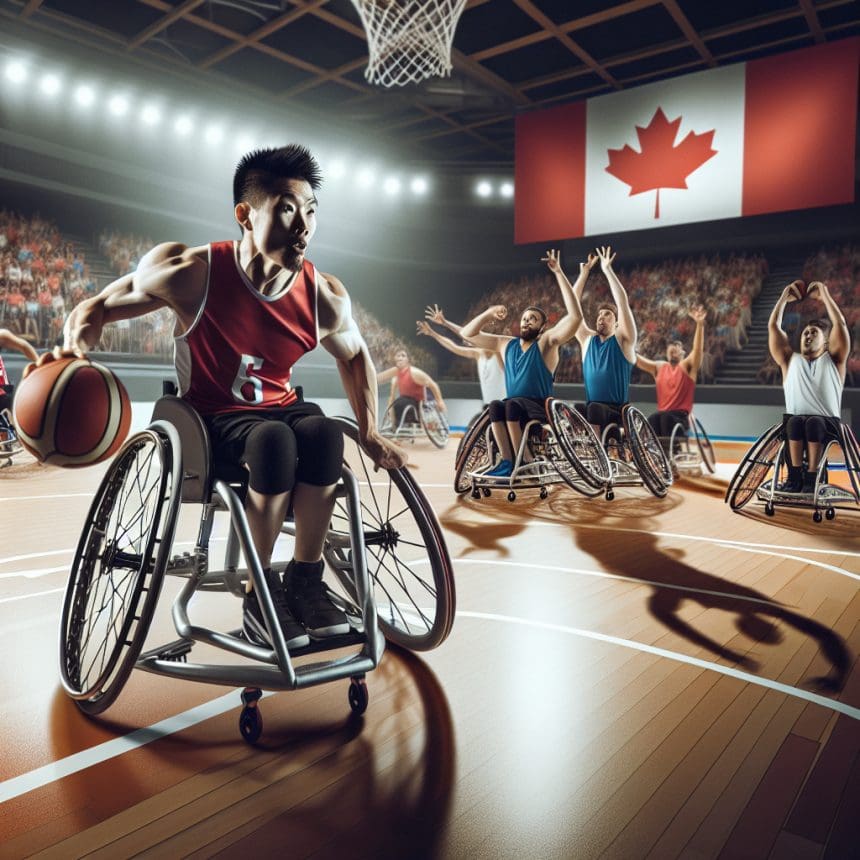
Headline: Canadian Paralympic Committee Calls for Increased Funding Amid Medal Decline
In a recent press conference in Ottawa, the CEO of the Canadian Paralympic Committee (CPC), Karen O’Neill, acknowledged a concerning decline in Canada’s standings at the last Paralympic Games. The Games, held in Tokyo in 2021, saw the nation finish lower in the medal tally compared to previous years, prompting O’Neill to urge both public and private sectors to invest more robustly in Paralympic sports development to foster future success.
As the dust settles on the Tokyo Games, Canada’s performance in the international Paralympic arena has sparked widespread discussion among sports officials, athletes, and fans alike. Collectively, the Canadian team secured 21 medals, a significant drop from their 29 medals at the previous Rio 2016 Paralympics. This downturn places Canada in 14th position overall—a stark contrast to earlier games where Canada consistently ranked in the top 10. O’Neill’s remarks reflect a growing concern regarding the sustainability of Canadian athletes’ success and emphasize the need for a strategic financial boost.
"To maintain our competitive edge on the world stage, we need to reevaluate our investment in Paralympic sports," O’Neill stated. She elaborates that many disabled athletes face unique challenges that require substantial funding for training, facilities, and support systems. An increase in investment could directly impact the athletes’ ability to train at optimal levels, access cutting-edge equipment, and receive specialized coaching.

The organization emphasizes that the decline is not merely about the number of medals but also about creating an environment where athletes can thrive. "It’s not just about winning medals; it’s about ensuring that all athletes have the opportunity to excel, to reach their full potential," O’Neill added. This perspective aligns with the CPC’s broader mission to foster inclusivity and support for athletes of all abilities.
A key piece to achieving these aims is securing sponsorship and partnerships that can translate into tangible financial resources. The CPC is actively seeking collaboration with corporate partners who share a vision for inclusivity in sports. "Corporate sponsorship can play a transformative role," O’Neill noted, pointing to successful partnerships in other countries that have yielded positive outcomes for their Paralympic teams.
The call for increased funding comes at a critical time. The next major event for Canadian Paralympians is the 2024 Paris Paralympic Games, and O’Neill suggests that preparation must begin now. This preparation includes not only athlete training but also investing in grassroots programs designed to unearth and nurture young talent. "We need to ensure that the next generation of athletes has the resources and opportunities to pursue their aspirations in sport, regardless of their abilities," she remarked.
In response to the CPC’s call for action, Sport Canada has expressed its commitment to examining funding models to better support Paralympic sports. "As the landscape of sports continues to evolve, our commitment remains to ensure that every athlete, irrespective of their physical challenges, can pursue excellence on the world stage," stated Minister of Sport Pascale St-Onge.
Athletes themselves have voiced their support for O’Neill’s call to action. Para-athlete and medalist at the Rio 2016 Games, Michelle Stilwell, shared her perspective, emphasizing that investment in infrastructure and programming is crucial. “Without proper facilities and support systems, it’s challenging for athletes like me to realize our dreams. We want to inspire the next generation, and that starts with the right resources,” Stilwell said.
The media and public elite have also engaged with the conversation surrounding inclusivity in sports. Columnists and sports analysts have been debating the importance of government support, and several prominent figures have taken to social media to rally attention around the issue. Calls for increased awareness and advocacy for disabled athletes are beginning to gain momentum, and there is a burgeoning hope that this decline in medals will serve as a catalyst for change.
As this narrative unfolds, the implications extend beyond the realm of sports. The CPC is pushing for societal recognition of the capabilities of persons with disabilities, showcasing that enhanced investment in sports could help break down barriers and challenge stereotypes. "By fostering an environment of inclusivity in sports, we can initiate a broader cultural shift towards embracing diversity," O’Neill remarked, highlighting the overarching responsibility that comes with funding and support.
The path ahead is fraught with challenges, yet the CPC remains optimistic. Plans for a strategic review of their funding model are underway, and the committee has initiated discussions with stakeholders across various sectors to emphasize the critical nature of this issue. Several upcoming events and workshops are being planned to elevate awareness and foster dialogue between athletes, sponsors, and policymakers.
In conclusion, while the decline in Canada’s Paralympic medal standings is a concern, it has opened the door for discussions about better funding and support for athletes with disabilities. The CPC’s call for increased investment not only aims to bolster Canada’s competitive edge but also to catalyze a more inclusive society where athletes of all abilities can shine. As the country gears up for the Paris 2024 Games, it remains to be seen how the combination of public awareness and investment will shape the narrative of Canadian Paralympic sports going forward. With the right support, Canada may very well return to its rightful place on the Paralympic podium.