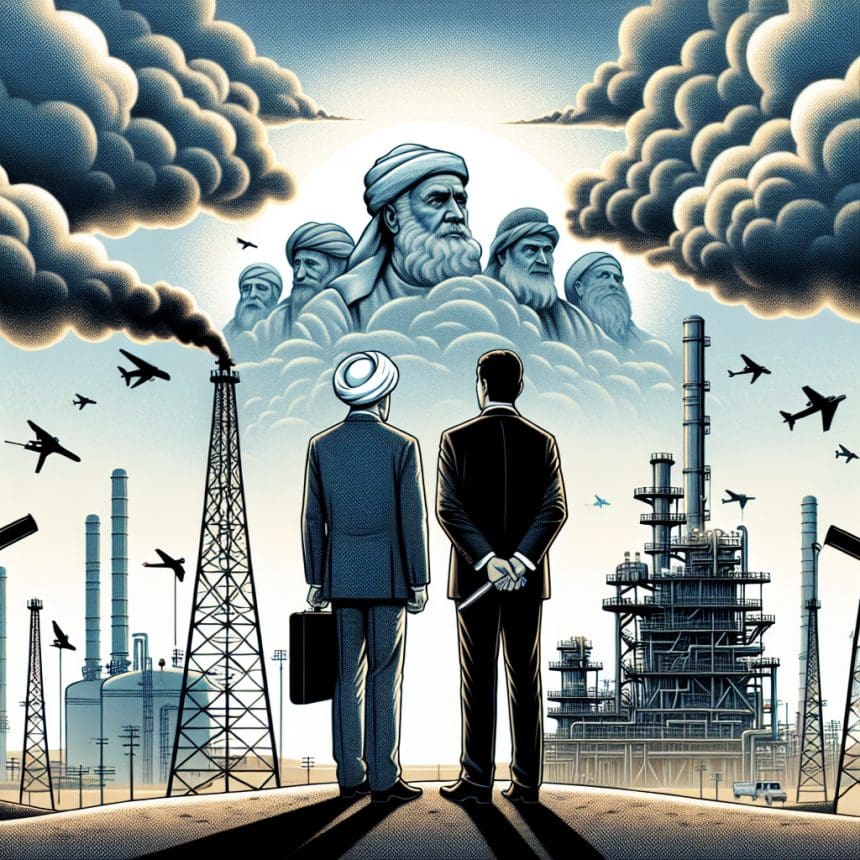
Headline: Norway’s Commitment to Oil Stability Amid Middle East Turmoil
In a concerted push for reassurance in global oil markets, Norwegian Prime Minister Jonas Gahr Støre and oil minister Terje Aasland held a press conference on October 10, 2023, in Oslo to address rising concerns over supply disruptions related to ongoing conflicts in the Middle East. As geopolitical tensions escalate, both leaders emphasized Norway’s role as a reliable energy supplier and reiterated their commitment to ensuring a stable oil market amidst uncertainties caused by international conflicts.
The backdrop of their announcement comes as the world grapples with the implications of renewed hostilities in the Middle East, particularly impacting oil-rich countries. Investors and consumers alike are worried about potential price hikes and supply shortages as key production regions face interruptions. “We recognize the critical situation and are prepared to bolster production to mitigate price spikes and maintain stability,” stated Aasland, underscoring Norway’s capacity as a key player in the energy sector.
Global Oil Market Woes
The oil market has been particularly sensitive to geopolitical events, as conflicts in the Middle East have historically affected supply chains and pricing structures. According to analysts, the recent flare-up of tensions could disrupt deliveries and lead to a cascading effect on global oil prices. "It’s imperative that we work together as a community of nations to ensure stability in energy markets," Aasland added.

Norway, a major oil and gas producer, seeks to position itself as a pillar of stability in a fluctuating landscape. With the conflict unfolding in regions like Gaza and Southern Iraq, the Prime Minister confirmed that Norway stands ready to enhance its oil output if required to counterbalance market fluctuations. This proactive approach aims not only to safeguard Norway’s economic interests but also to support global partners who rely heavily on stable oil supplies.
Norway’s Energy Strategy
Underlining the strategic importance of energy, Støre highlighted Norway’s long-term vision for its oil sector. “We are committed to producing energy sustainably while ensuring the world has the energy it needs during these uncertain times.” Støre affirmed Norway’s investment in renewable energy sources such as wind and solar, which will complement traditional oil and gas exports. This dual focus serves to strengthen Norway’s energy portfolio and create a buffer during periods of global unrest.
In line with this strategy, Norway has announced plans to increase its oil drilling activities in the North Sea and elsewhere, exploring untapped reserves. Industry experts believe this could significantly enhance Norway’s output and reinforce its position in the European energy supply chain.
Market Reactions and Implications
Market analysts have responded positively to the Norwegian government’s commitment, suggesting that increased output could help stabilize prices that have recently surged due to uncertainty. Brent crude oil futures, a key global benchmark, exhibited volatility shortly after the announcement of escalated conflict in the Middle East. However, the assurance from Norway led to a momentary drop in prices as traders digested Støre’s message of proactive supply.
Energy economist Maria Jensen commented, “Norway’s readiness to step in during times of crisis is exactly what the market needs right now. It not only signifies stability but also builds investor confidence in the Norwegian oil sector.” The proactive stance is also expected to fortify Norway’s relationships with European partners, who have increasingly turned towards domestic suppliers to mitigate dependence on volatile regions.
Broader Geopolitical Context
Internationally, the significance of Norway’s announcement cannot be understated, especially as the European Union navigates its energy transition and seeks to reduce its reliance on Russian oil. The war in Ukraine has already prompted a reevaluation of energy strategies across Europe. Countries like Germany and France are eyeing Nordic nations as reliable alternatives in the wake of conflicts affecting their traditional sources.
While Norway’s promotion of stability is aimed at easing immediate concerns, questions remain about the long-term global implications of Middle Eastern turmoil. Experts assert that a prolonged conflict could disrupt not only oil supplies but also broader energy markets, impacting renewable energy investments and infrastructure projects that many nations are currently undertaking.
Looking Ahead
As both Støre and Aasland look towards the future, they emphasize the importance of international collaboration in navigating these turbulent waters. With emerging markets seeking oil and gas supplies amidst escalating prices, Norway aims to remain a viable partner in achieving energy security.
The Prime Minister also acknowledged the vital role of the global community in finding diplomatic solutions to conflicts, emphasizing, “Stable energy supplies can only exist in a stable world.” Aasland echoed this sentiment, assuring that Norway would continue to engage in dialogue with global partners to promote peaceful resolutions and collaborative efforts in energy sustainability.
Conclusion
As geopolitical strains in the Middle East reverberate across the global oil market, Norway is stepping forward with a message of stability and responsibility. By enhancing its production capability and committing to support international partners facing energy challenges, the Norwegian leadership aims to navigate a complex landscape marked by uncertainty. The commitment not only highlights Norway’s strategic importance within the European energy framework but also seeks to ensure that global markets can withstand the pressures of geopolitical instability. The coming months will test the resilience of this approach, as the world watches how Norway responds to both immediate challenges and the long-term energy landscape.