Headline: Canadian Astronaut Jeremy Hansen Prepares for Lunar Mission
On April 8, 2024, Canadian Space Agency astronaut Jeremy Hansen will embark on a groundbreaking mission aboard NASA’s Orion spacecraft, slated to orbit the Moon. As part of the Artemis II crew, Hansen is set to enable further exploration of lunar resources and pave the way for future Mars missions. This momentous journey marks Canada’s significant contribution to international space exploration.
As the world looks toward the future of space exploration, Jeremy Hansen stands at the forefront, poised to make history as the first Canadian to journey beyond low Earth orbit. With an illustrious career as an astronaut spanning over a decade, Hansen’s role in the Artemis II mission signals a pivotal moment not just for Canada, but for international collaboration in space endeavors.
A Closer Look at the Orion Capsule
Constructed to accommodate astronauts for deep-space missions, NASA’s Orion spacecraft is a marvel of modern engineering. At approximately 22 feet tall, it boasts advanced technology designed to support multi-week voyages beyond the Earth’s atmosphere. The capsule will feature a state-of-the-art life support system, ensuring crew members remain safe and healthy throughout the mission.

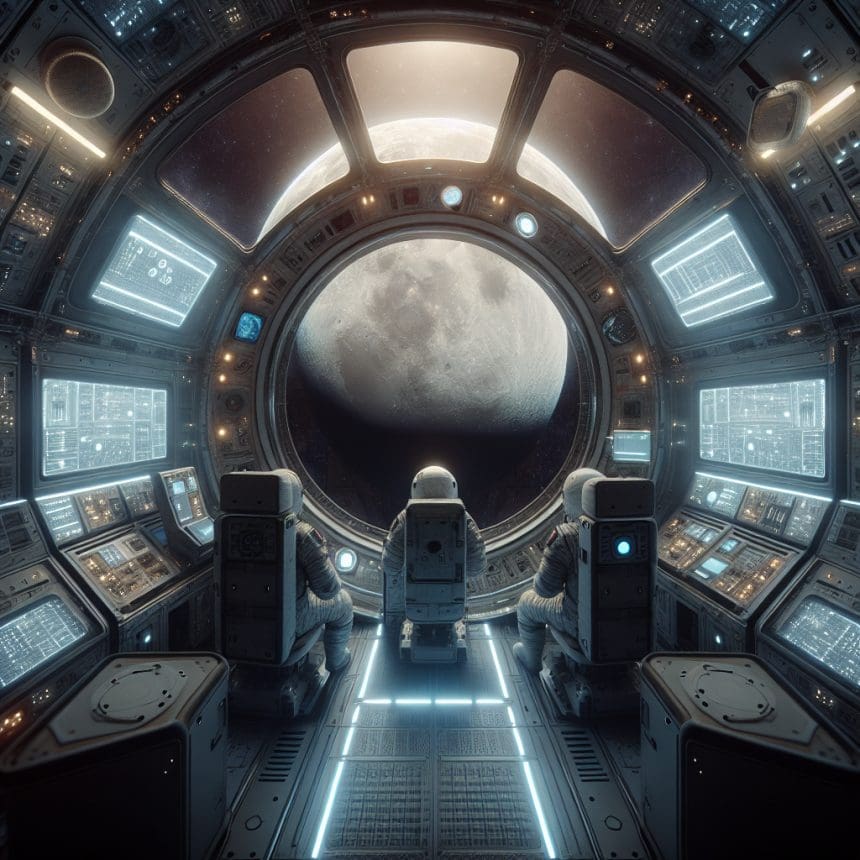
Inside Orion, astronauts will find ergonomically designed control panels with touch-screen interfaces that provide real-time data and operational control. These innovations will be critical as Hansen and his team navigate their way around the Moon’s gravitational pull and execute multiple orbits before returning to Earth. The crew will also be equipped with portable tablets, which offer access to mission updates and allow for seamless communication with mission control.
In addition to its impressive technological features, the Orion capsule includes dedicated living and working spaces. Each astronaut will have their own sleeping compartment, equipped with a sleeping bag and essential personal items, allowing them to rest as they prepare for planned maneuvers and scientific observations.
The Artemis II Mission: A Step Towards a Lunar Base
Taking place four years after the Artemis I unmanned flight, the Artemis II mission is a crucial step toward establishing a sustainable human presence on the Moon. With the support of international partners, NASA aims to explore the lunar South Pole region, believed to host water ice resources that could support future missions to Mars.
Hansen’s participation elevates Canada’s role in these ambitious plans. The Canadian Space Agency, alongside NASA, has already made significant contributions through the development of the Canadarm3, a robotic arm designed for operations on the Lunar Gateway—an orbiting outpost designed to support long-term visits to the Moon and facilitate travel to Mars.
What’s at Stake: The Importance of International Collaboration
International collaboration in space exploration has proven essential in pushing the boundaries of human knowledge. The Artemis II mission includes astronauts from various space agencies, highlighting the unified drive toward expanding our understanding of the universe.
“Exploring the Moon requires teamwork and a diversity of ideas,” says Hansen. “My mission reflects how global cooperation can pave the way for sustainable exploration of the Moon and other celestial bodies in the future.”
This collaborative effort not only fosters goodwill among nations but also accelerates technological advancements that benefit life on Earth. From innovations developed for space travel that are later utilized in medical advancements to improved satellite communications, the impact of space exploration is vast and multifaceted.
Hansen’s Journey: Training and Preparation
As Hansen prepares for the upcoming mission, rigorous training practices remain essential. Over the past few months, he has participated in extensive simulations designed to replicate the conditions he will face during the flight. These exercises include emergency drills, navigation training, and learning how to work seamlessly as part of a team.
Additionally, Hansen has undergone survival training in diverse environments, preparing him for any unforeseen circumstances. These sessions ensure he remains poised and ready to respond to emergencies, further enhancing the safety and success of the mission.
“I’m excited and ready,” Hansen expressed during a recent press conference. “Every moment spent training and preparing has brought me one step closer to achieving a dream I’ve held for many years.”
Looking Ahead: The Future of Canadian Space Exploration
The Artemis II mission not only represents Hansen’s personal achievement but also points toward a thrilling future for Canada’s role in space exploration. With advancements in space technology, potential lunar bases, and missions targeting Mars, Canadian researchers and innovators are poised to make significant contributions in the years to come.
In light of Hansen’s upcoming journey, interest in science, technology, engineering, and mathematics (STEM) education is on the rise. The excitement surrounding his mission serves as an inspiration to young people and aspiring astronauts across Canada.
Schools and organizations are already organizing events to engage students with space-themed activities, science fairs, and outreach programs that encourage the next generation of explorers. Hansen’s journey to the Moon offers a once-in-a-lifetime opportunity to motivate youth to pursue careers in fields related to space and exploration.
Conclusion: A New Chapter for Humanity
As Hansen prepares to round the Moon, the significance of this mission cannot be understated. It is a stepping stone for humanity’s future endeavors in space exploration, highlighting the need for international cooperation and technological development to access the great beyond.
On April 8, 2024, the world will watch as Jeremy Hansen and his crew embark on a voyage that will ignite curiosity, drive innovation, and reaffirm humanity’s resolve to explore unknown frontiers. The lessons learned and discoveries made during this mission could very well shape the future of interplanetary exploration for decades to come.
The journey around the Moon is not just a moment in time—it is a bold step toward the stars.