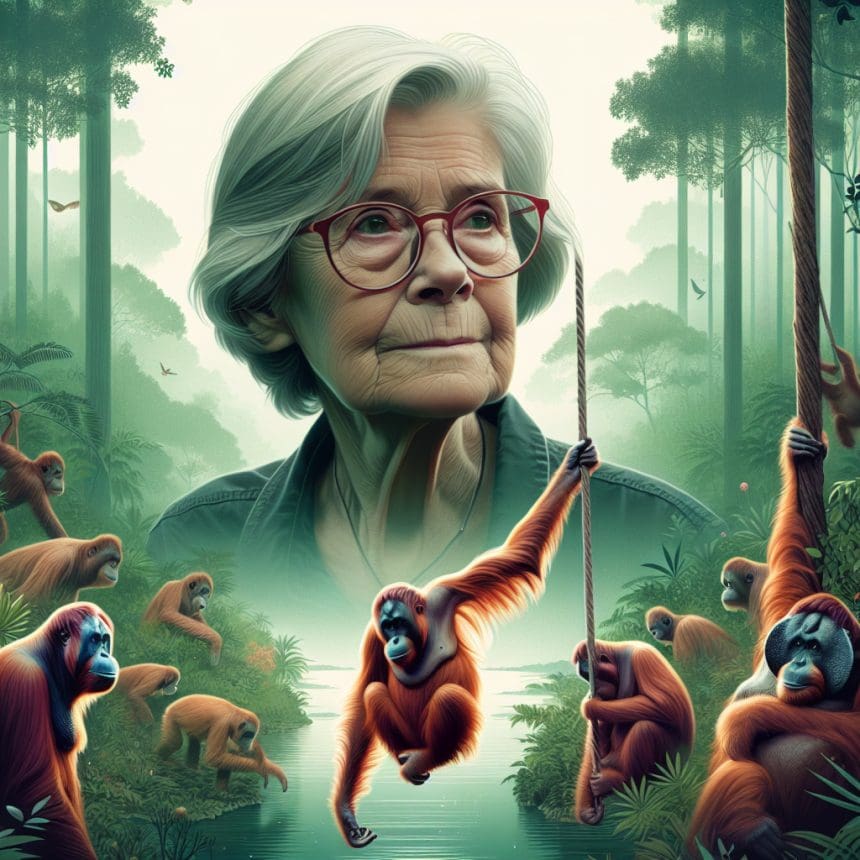
Headline: Celebrated Orangutan Scientist Biruté Galdikas Passes Away
Biruté Galdikas, a revered Canadian primatologist known for her groundbreaking work with orangutans, has passed away at the age of 79. Galdikas, who spent over five decades studying these remarkable primates in Indonesia, died on October 18, 2023, in her home in Palm Springs, California. Her lifelong dedication to orangutan conservation and her contributions to science have left an indelible mark on both the field of primatology and global wildlife conservation efforts.
A Legendary Career
Born on June 10, 1946, in Wiesbaden, Germany, Galdikas emigrated to Canada with her family when she was a child. She graduated from Simon Fraser University and went on to earn a PhD from the University of California, Los Angeles (UCLA), under the mentorship of renowned anthropologist Louis Leakey. Galdikas was part of a trio of female researchers, including Jane Goodall and Dian Fossey, who were instrumental in expanding the field of animal behavior studies.
In 1971, she founded the Orangutan Foundation International (OFI) and launched her long-term field study at Camp Leakey, located in Borneo. Her immersive research efforts helped elucidate the complex social structures, behaviors, and communications of orangutans. Galdikas’s studies also shed light on the critical threats facing these great apes, such as habitat loss due to logging, poaching, and the palm oil industry.
Pioneering Conservation Efforts
Over the course of her career, Galdikas became a global advocate for orangutan conservation. She was instrumental in pushing for legal protections for the species in Indonesia and played a key role in raising awareness about the global consequences of deforestation. Her advocacy emphasized not just the plight of orangutans but also the interconnectedness of all life on Earth.

Galdikas’s work extended beyond pure research. She actively engaged local communities in conservation efforts, helping to create sustainable livelihoods that do not depend on destructive practices. Her holistic approach aimed not only at preserving orangutan populations but also at fostering an understanding of the forest ecosystem as a whole.
A Legacy of Knowledge
Galdikas authored more than 200 scientific papers and several books, including her acclaimed memoir, "Reflections of Eden," published in 1995. This literary contribution intertwined her personal experiences with her scientific findings, making her work accessible to a broader audience. An advocate for ethical wildlife tourism, she often highlighted the importance of education in fostering a sense of responsibility toward wildlife conservation.
In 2005, her contributions were further recognized when she received the prestigious Tyler Prize for Environmental Achievement. The award underscored her work as a leading voice for conservation, inspiring generations of scientists and activists to take action in the fight against environmental degradation.
Impact and Tributes
In messaging that resonated around the world, many in the scientific community expressed their sorrow and gratitude for Galdikas’s life and work. Jane Goodall released a statement reflecting on their friendship and shared mission, stating, "Biruté’s unwavering commitment to orangutans has inspired countless individuals to appreciate and protect wildlife. Her contributions will resonate for years to come."
Similarly, conservation organizations and academic institutions have shared tributes, recognizing Galdikas’s profound impact on the field of primatology. Current researchers noted that her foundational work laid the groundwork for future studies and conservation initiatives directed toward orangutans and other endangered species.
Remembering Biruté
In addition to her scientific achievements, Galdikas is remembered for her vibrant personality and warm spirit. Friends and colleagues describe her as a passionate advocate and a nurturing mentor who cared deeply for both the animals she studied and the people she worked with.
As the world mourns her loss, several memorials are planned in Canada and the United States, celebrating her life and contributions. Environmentalists and animal welfare advocates are encouraged to honor her legacy by engaging in conservation activities, supporting ethical wildlife initiatives, and educating others about the importance of preserving biodiversity.
Conclusion: A Call to Action
Biruté Galdikas’s work with orangutans serves as both a cautionary tale of the challenges facing our planet and a beacon of hope through her immense contributions to conservation. As habitat loss and climate change continue to threaten biodiversity, her legacy challenges each of us to take action. Whether through supporting organizations that advocate for wildlife or by making informed decisions about our consumption habits, we can all play a part in honoring the extraordinary life of Galdikas.
In the wake of her passing, the global conservation community remains resolute in its mission to protect orangutans and their habitats. Galdikas’s life reminds us of the responsibility we bear toward future generations and the world we share with other living beings. Her voice may be silenced, but her passion and commitment will undoubtedly continue to inspire those dedicated to preserving the natural world.