Headline: Israel’s Defense Minister Unveils Military Plans for Southern Lebanon
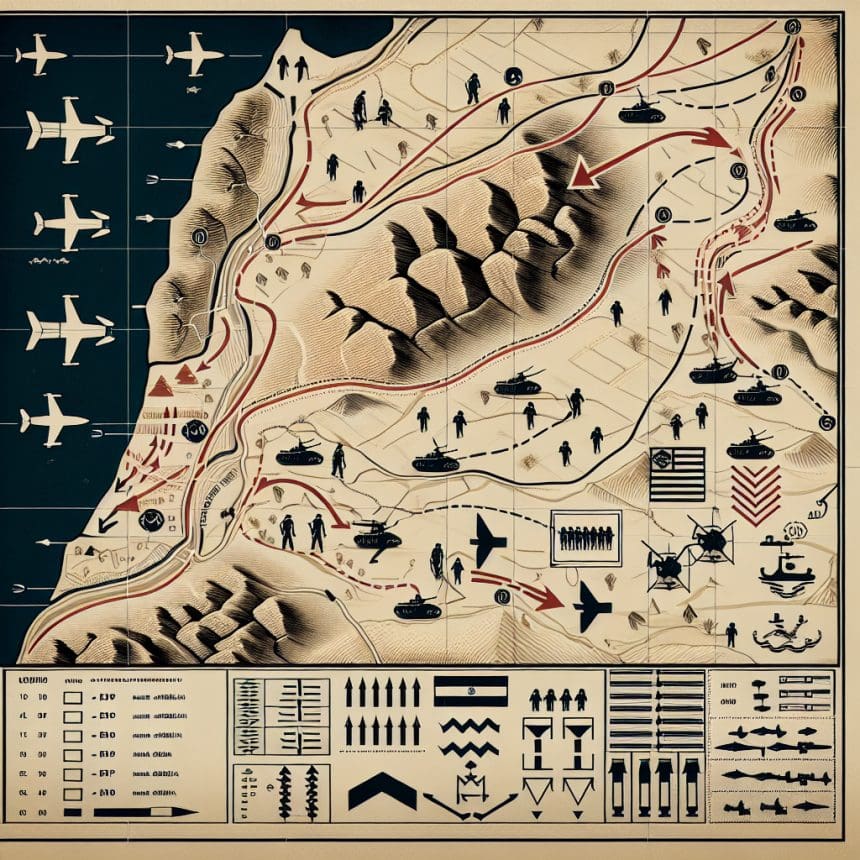
In a recent statement, Israel’s Defence Minister Yoav Gallant announced strategic military plans aimed at occupying a significant area of southern Lebanon. This announcement, made during a press conference on Monday, is seen as a response to escalating tensions in the region amidst ongoing conflicts with Hezbollah and other militant groups. The timing of this declaration comes as Israel fortifies its borders and prepares for potential military action to counter perceived threats.
The geopolitical landscape of the Middle East has long been fraught with tension, particularly between Israel and its northern neighbor, Lebanon. For decades, southern Lebanon has served as a base for Hezbollah, an Iran-backed militant group that has engaged in multiple confrontations with Israel. In his announcement, Gallant emphasized that the military’s new plans aim to deter aggression from Hezbollah and protect Israeli citizens.
Gallant detailed how Israel’s military operations would not only displace Hezbollah’s infrastructure but also establish a more secure and stable boundary along the Lebanese border. He made it clear that these operations are part of broader security measures intended to safeguard Israel’s northern territories. According to him, the military plans have received high-level approval and are set to be enacted if hostilities escalate.

Rising Tensions: Context Behind the Plans
The region has been increasingly volatile in recent months, with both sides exchanging fire along the border. In response to cross-border attacks and rocket fire into Israeli territory, Israeli forces have conducted retaliatory operations, which have intensified local concerns about a full-scale military confrontation.
In addition to military operations, Israel has ramped up its intelligence-gathering efforts to monitor Lebanese movements more closely. Analysts suggest that these proactive measures reflect Israel’s long-standing policy of preemptive strikes aimed at neutralizing threats before they can manifest into larger conflicts.
The situation has drawn concern from international observers, as an escalation in southern Lebanon could have far-reaching implications for the entire region. Diplomats from various nations are calling for restraint and dialogue to prevent further military actions that could lead to civilian casualties and larger humanitarian crises.
International Response
Following Gallant’s announcement, reactions from the international community have been mixed. The United Nations issued a statement urging both Israel and Lebanon to engage in discussions aimed at de-escalating tensions and avoiding military conflicts. Secretary-General António Guterres highlighted the importance of diplomatic efforts in stabilizing the region while emphasizing the humanitarian concerns of civilians caught in the crossfire.
European Union officials have also expressed concern regarding the potential for increased violence, calling for both sides to prioritize dialogue over military solutions. “Military action only exacerbates an already fragile situation,” remarked a senior EU diplomat, suggesting that peace negotiations could be a pathway toward long-term stability.
Conversely, Hezbollah has issued strong warnings against any Israeli military incursions into Lebanon, labeling the plan as an aggressive act that will be met with fierce resistance. The group’s secretary-general, Hassan Nasrallah, has vowed that any attempt to infiltrate Lebanese territory would be met with significant military responses, indicating a willingness to escalate military actions if necessary.
Implications for Border Security
For years, southern Lebanon has been a contentious area, and Israeli military plans to occupy parts of it mark a significant shift in strategy. Security experts are divided on the potential implications of this move. Some argue that increased military presence could deter Hezbollah’s activities and secure a more stable border, while others believe it could lead to a prolonged occupation and greater conflict.
The operational details regarding how and when these military plans will be implemented remain classified, but analysts expect that a phased approach will be taken to minimize civilian impact while maximizing strategic advantage. Israeli officials insist that the primary objective will focus on neutralizing threats and maintaining peace in the region, albeit through military means.
Local Reactions
Within Israel, public sentiment appears to be largely supportive of Gallant’s plans. A recent survey indicated that a significant majority of Israelis favor a strong military response to the threats posed by Hezbollah. However, there is also a palpable concern about the potential ramifications of an extended military engagement.
In southern Lebanon, fear and uncertainty have gripped local communities. Residents are worried about the repercussions of renewed military actions and the likelihood of another war similar to the 2006 conflict, which resulted in significant loss of life and infrastructure damage on both sides.
The Path Ahead
As both nations brace for what may come next, the international community seems poised to play a crucial role in mediating discussions. Diplomats are reportedly preparing for urgent meetings to address the situation, understanding that the narrow window for peaceful resolution is rapidly closing.
In summary, the developments surrounding Israel’s military plans for southern Lebanon illustrate the complex interplay of security and diplomacy in one of the world’s most contentious regions. With the potential for escalation looming large, the next steps taken by both Israeli officials and Hezbollah leadership will significantly influence the trajectory of peace and stability across the Middle East.
Conclusion
As the situation develops, it will be critical for stakeholders both within and outside the region to engage in constructive dialogue and seek diplomatic avenues to mitigate the possibility of armed conflict. The consequences of failure to do so could reverberate far beyond the borders of Israel and Lebanon, impacting the broader geopolitical landscape for years to come.