


Historic Glasgow Building Ravaged by Blaze, Disrupts Train Services
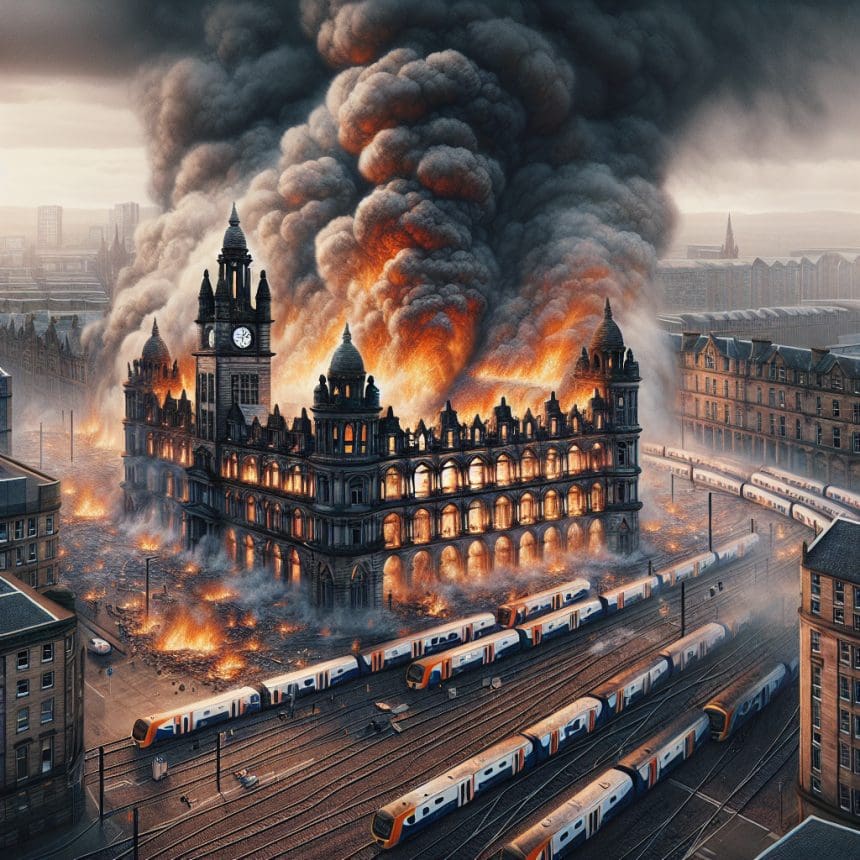
A significant fire engulfed a historic building in Glasgow’s city centre early Wednesday morning, leading to widespread disruptions in train services across the region. Emergency services were alerted around 3:00 AM to the blaze at the former Alexandra Hotel, a landmark structure dating back to the early 20th century. Fire crews battled the flames for several hours, with the cause of the fire yet to be determined.
The iconic Alexandra Hotel, known for its Edwardian architecture and long-standing history, was undergoing renovation at the time of the incident. Firefighters faced challenges due to the building’s intricate design and the intensity of the flames, which quickly spread throughout the structure. Witnesses reported hearing explosions as the fire took hold, prompting a swift response from the Scottish Fire and Rescue Service.
As the fire raged, emergency services established a cordon around the site to ensure public safety, leading to substantial traffic delays and disruption in nearby transport services. Train operators, including ScotRail, announced delays and cancellations for routes serving Glasgow Central Station, with many commuters left stranded or rerouted as a result.

Local residents expressed their shock at the turn of events, with many highlighting the hotel’s significance to the community. "It’s heartbreaking to see such a beautiful building reduced to ashes," said one neighbourhood resident, who has lived in the area for over a decade. "We always took our guests there to show them the charm of Glasgow. It’s a part of our heritage."
As investigations into the fire begin, questions remain regarding both the cause and future of the site. The building, which has been a significant feature of Glasgow’s history, was home to a variety of businesses and served as a popular venue for events. Its destruction raises concerns about the preservation of historical architecture amid ongoing urban redevelopment.
Authorities have urged anyone with information regarding the incident to come forward, as both fire investigators and local police continue to examine the site. The city council has also expressed its commitment to supporting local businesses affected by the fire, particularly as nearby shops reported a downturn in foot traffic due to the disruptions.
In the wake of the fire, transport officials have scrambled to ensure safe and efficient travel for commuters. ScotRail announced alternate routes and additional services for passengers affected by cancellations. However, with multiple routes still impacted, commuters are advised to check their travel plans ahead of time.
Emergency services remain on the scene as of midday Wednesday, conducting thorough assessments and monitoring for any potential flare-ups. The fire has raised crucial discussions about fire safety standards in historic buildings, particularly those undergoing renovation. Experts are calling for heightened scrutiny on the renovations to ensure that safety measures are adequately enforced to prevent such tragedies in the future.
While the immediate danger has been addressed, the aftermath of this fire poses significant challenges for the community and local authorities alike. As Glasgow continues to grow, the balance between preserving its rich history and accommodating modern needs becomes increasingly complex.
While the full extent of the damage is still being assessed, city historian Dr. Emily Caldwell expressed concerns over the loss of another historical landmark. "Buildings like the Alexandra Hotel are irreplaceable," she said. "They tell the story of Glasgow’s past and contribute immensely to our cultural identity. We must find ways to protect our heritage."
As the city begins to process the destruction, community leaders are urged to come together to discuss the future of similar historical sites. Engagement with local citizens and stakeholders is crucial to ensure that the legacy of Glasgow’s architecture continues, despite the challenges posed by modernization.
While the authorities investigate the cause of the fire, citizens are left grappling with grief for their lost landmark. Mourners have expressed their sentiments online, sharing photographs and memories associated with the hotel. Social media platforms have been flooded with tributes from locals reminiscing about personal experiences at the venue, from weddings to community gatherings.
The impact of the fire extends beyond the building itself; it serves as a reminder of the precarious nature of our shared history. Glasgow’s streets hold stories of generations past—stories that deserve to be remembered and preserved. Community discussions surrounding fire safety regulations, historical preservation, and urban planning are essential to articulate a vision that encourages growth while safeguarding key aspects of the city’s character.
As we wait for updates on the investigation, one thing remains certain: Glasgow’s community spirit is resilient. Residents and local businesses are coming together, organizing informal support networks to help those affected by the disruption caused by the train service delays. It is this collective resolve that will aid in the city’s recovery.
Going forward, the Glasgow City Council will review its policies regarding historical?? preservation and fire safety protocols to prevent future incidents. The lessons learned from this devastating fire may, ultimately, help shape a safer and more resilient Glasgow for all its residents.
As the community continues to grapple with this tragedy, the hope remains that new measures and a renewed focus on preserving historical sites will prevent such losses in the future. The spirit of Glasgow is a tapestry woven with stories of resilience, and this latest chapter, though sad, may ignite a renewed commitment to protecting the city’s treasured heritage.





