New Salmon Protections Gain Support from Alaska Natives and Advocates
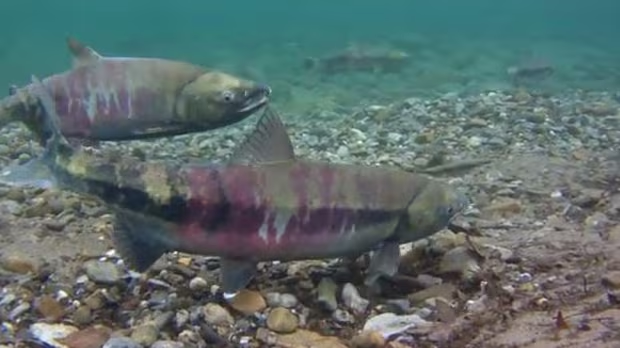
Alaska has implemented new restrictions designed to assist in the recovery of chum salmon, a move celebrated by Alaska Natives and environmental advocates. Officially announced on October 1, 2023, these regulations aim to address the declining population of chum salmon, particularly in critical spawning rivers across the state. With the alarming decrease in fish numbers impacting not just the ecosystem but also cultural traditions and local economies, these protective measures are seen as a vital step towards sustainable fish populations.
A Crucial Development for Chum Salmon Recovery
The new regulations, spearheaded by the Alaska Department of Fish and Game (ADF&G), aim to limit commercial fishing during significant spawning periods. Fishery managers have noted a troubling downward trend in chum salmon numbers over the past decade, prompting calls for immediate action. With Alaska Natives relying heavily on these fish both for sustenance and cultural practices, the stakes are incredibly high. For many indigenous communities, chum salmon are not just a food source but a vital part of their heritage and identity.
By limiting fishing practices temporarily, state officials hope to provide young salmon with a better chance of survival as they make their way back to their spawning grounds. "This is a historic moment for our community," said Amelia Talakto, a spokesperson for the Alaska Native Federation. "Chum salmon have long been the lifeblood of our culture, and these measures reflect the acknowledgment of our traditional practices and the need for their preservation."

Understanding the Fishery’s Significance
Chum salmon are integral to Alaska’s fishing economy. Known for their versatility, they are used in everything from fresh consumption to processed products. Their decline poses a dual threat: impacting both local fisheries and the broader ecosystem, where they play a crucial role as prey for various animal species, including bears, eagles, and larger fish.
In response to the alarming trends, the ADF&G has adopted a multi-pronged approach, not only restricting fishing but also enhancing habitat protection along vital rivers. This includes changes in land use practices to ensure cleaner water flow and the removal of invasive species that threaten spawning grounds.
Community Engagement and Collaborative Efforts
The regulations have sparked enthusiasm within local communities, especially among Alaska Natives, who have long advocated for greater conservation efforts. Community meetings prior to the announcement fostered collective input, resulting in a framework that resonates with traditional ecological knowledge. Local leaders emphasized that they are committed to working collaboratively with state officials to monitor progress and adapt strategies as necessary.
"We believe that these measures are just the beginning," stated Nikia Cleveland, an environmental advocate from the Cook Inlet region. "By incorporating local voices and traditional wisdom into the management of our natural resources, we can create solutions that not only benefit salmon populations but also strengthen community ties."
The Science Behind Salmon Recovery
Scientists have extensively researched the factors contributing to the decline of chum salmon populations, pointing to climate change as a significant player. Rising temperatures affect spawning environments, while alterations in river flow dynamics due to melting glaciers further complicate the situation. The newly adopted restrictions are designed not only to improve current populations but to also pave the way for long-term resilience amidst an uncertain ecological future.
Dr. Elena Mills, a marine biologist at the University of Alaska, emphasizes the importance of these measures. "The collaboration between the state and local communities is crucial for recovering salmon populations. By taking a comprehensive approach, we are not just addressing the immediate issue but setting the stage for ecological balance."
Economic Implications of Salmon Decline
As the state implements these protective measures, the economic implications are also being carefully weighed. Commercial fisheries, while impacted by the new restrictions, are rallying behind the need for sustainable practices. Local businesses, particularly those hinged on tourism related to fishing, recognize the significance of preserving the salmon habitat.
Margo Johnson, a business owner in Ketchikan, voiced her support: "It’s better for us all in the long run. Healthy fish populations mean sustainable tourism and economic viability for generations to come."
Future Outlook
Looking ahead, the success of these new restrictions will depend on ongoing monitoring and community involvement. Advocates are calling for additional research funding to support conservation efforts and to better understand the long-term trends affecting salmon populations.
State officials have acknowledged the need for continuous assessment and adaptation of the measures. "We are committed to being transparent and responsive throughout this process," said Commissioner Doug Vincent-Lang of the ADF&G. "Our goal is to strike a balance between protecting our natural resources and supporting our local communities."
Conclusion: A Win for Tradition and Sustainability
The new regulations on chum salmon represent a significant stride toward sustainable management of Alaska’s natural resources. By uniting Alaska Natives, advocates, and state officials, this initiative not only addresses ecological concerns but also reinforces the cultural ties that bind local communities to their land and resources. As the season changes and the salmon begin their annual journey, hope surrounds the waterways of Alaska—a hope rooted in survival, sustainability, and the shared commitment to preserving a way of life.
By aligning conservation efforts with cultural heritage, Alaska is setting a precedent that could serve as a model for other regions grappling with similar challenges. With the support of local communities and regulatory bodies, the future of chum salmon could become brighter, echoing the hopes and aspirations of Alaska Natives for generations to come.