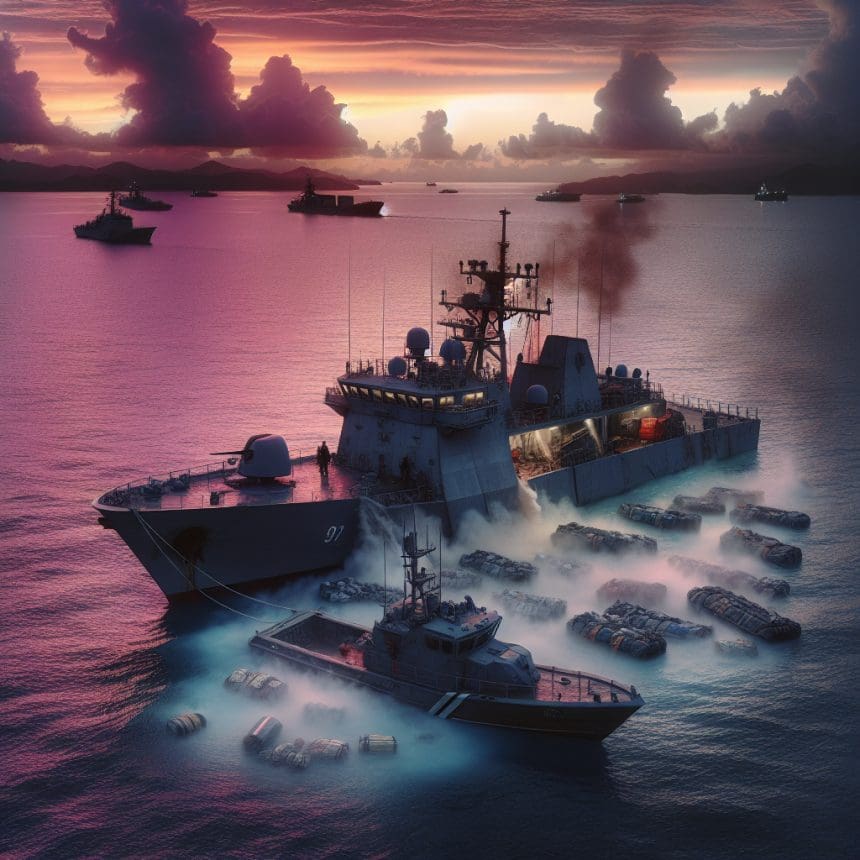
Headline: U.S. Military Strikes Alleged Drug Boat, Four Dead in Caribbean
In a significant military operation, the U.S. Department of Defense announced that four individuals were killed following an airstrike on an alleged drug trafficking vessel in the Caribbean Sea on Monday. The operation aimed to disrupt the illicit drug trade in the region and was carried out in response to rising concerns about drug smuggling routes that threaten U.S. national security and regional stability. The strike highlights the ongoing efforts by the U.S. military to combat narcotics trafficking linked to organized crime in Latin America.
U.S. military sources revealed that the operation was conducted as part of a broader initiative known as Operation Martillo, which focuses on tackling drug trafficking and organized crime in Central America and the Caribbean. According to officials, the struck vessel was believed to be transporting narcotics when it was detected several miles off the coast of an unnamed Caribbean nation. This marks one of the first military engagements of its kind in recent months amid heightened attention to drug-related violence and trafficking in the region.
The U.S. has long been active in Caribbean anti-narcotics operations, utilizing intelligence sharing, surveillance, and reconnaissance to monitor drug routes. The military’s escalation of force, however, brings about complex ethical considerations, as local communities often bear the brunt of such actions.

Context and Implications
The Caribbean remains a crucial transit point for drugs entering the U.S. market, with Colombian and other South American cartels utilizing smaller boats to evade detection. The increasing sophistication of these drug trafficking operations necessitates a corresponding response from U.S. authorities. Analysts suggest that while military interventions may provide tactical wins, they can also escalate tensions between the U.S. and Caribbean nations, particularly if civilian casualties occur.
Leaders from some Caribbean islands have voiced concerns regarding U.S. military operations in their waters, emphasizing the need for collaboration rather than unilateral actions. Local governments are worried that aggressive military responses may lead to increased violence and instability within their borders.
Community Reaction
In the wake of the U.S. airstrike, local communities are grappling with the ramifications. Families of the deceased victims have expressed outrage and confusion as they seek answers regarding the identities of those killed and the nature of the military operation. Community leaders have called for investigations to clarify the circumstances surrounding the attack, highlighting the need for greater accountability in international military engagements.
Meanwhile, advocates for drug policy reform in the U.S. argue that military solutions alone will not address the root causes of drug trafficking. They emphasize the importance of addressing poverty, lack of opportunity, and systemic issues that fuel the drug trade. Their stance is supported by a growing body of research which shows that a more holistic approach may yield better long-term results.
Operational Review
The Department of Defense stated that the operation adhered to strict engagement protocols and followed extensive reconnaissance to confirm the vessel’s intentions. In a press briefing, military officials underscored that U.S. operations are conducted with the primary objective of disrupting drug trafficking while minimizing potential harm to innocent individuals.
However, critics argue that such military engagements can result in non-combatant casualties, raising pressing ethical questions about the use of force in drug interdiction efforts. Operational reviews in the aftermath of such attacks often lead to calls for reevaluation of strategies and tactics employed by the U.S. military in drug war initiatives.
Future Actions
Looking forward, U.S. military officials have indicated that similar operations may take place if intelligence suggests significant drug trafficking activity. Furthermore, collaborations with local military and law enforcement agencies in the Caribbean are expected to strengthen as part of a multi-faceted approach to countering drug trafficking.
The situation remains fluid as the U.S. government faces pressure from both domestic and international stakeholders to provide clarity on its drug policy and military strategies. The event serves as a stark reminder of the complicated interplay of national security, international relations, and local community impact that defines modern military engagement.
Conclusion
The U.S. military’s airstrike in the Caribbean Sea has reignited debates about the effectiveness and ethics of employing military force in the ongoing battle against drug trafficking. As authorities assess the impact of this particular operation, the ramifications will likely reverberate through communities across the Caribbean for years to come. Addressing the multifaceted challenges presented by the drug trade requires a collaborative approach that unites various stakeholders committed to creating sustainable solutions for drug-related issues.
As policymakers reflect on the implications of this airstrike, the need for a balanced strategy that prioritizes both security and community welfare becomes increasingly clear.