


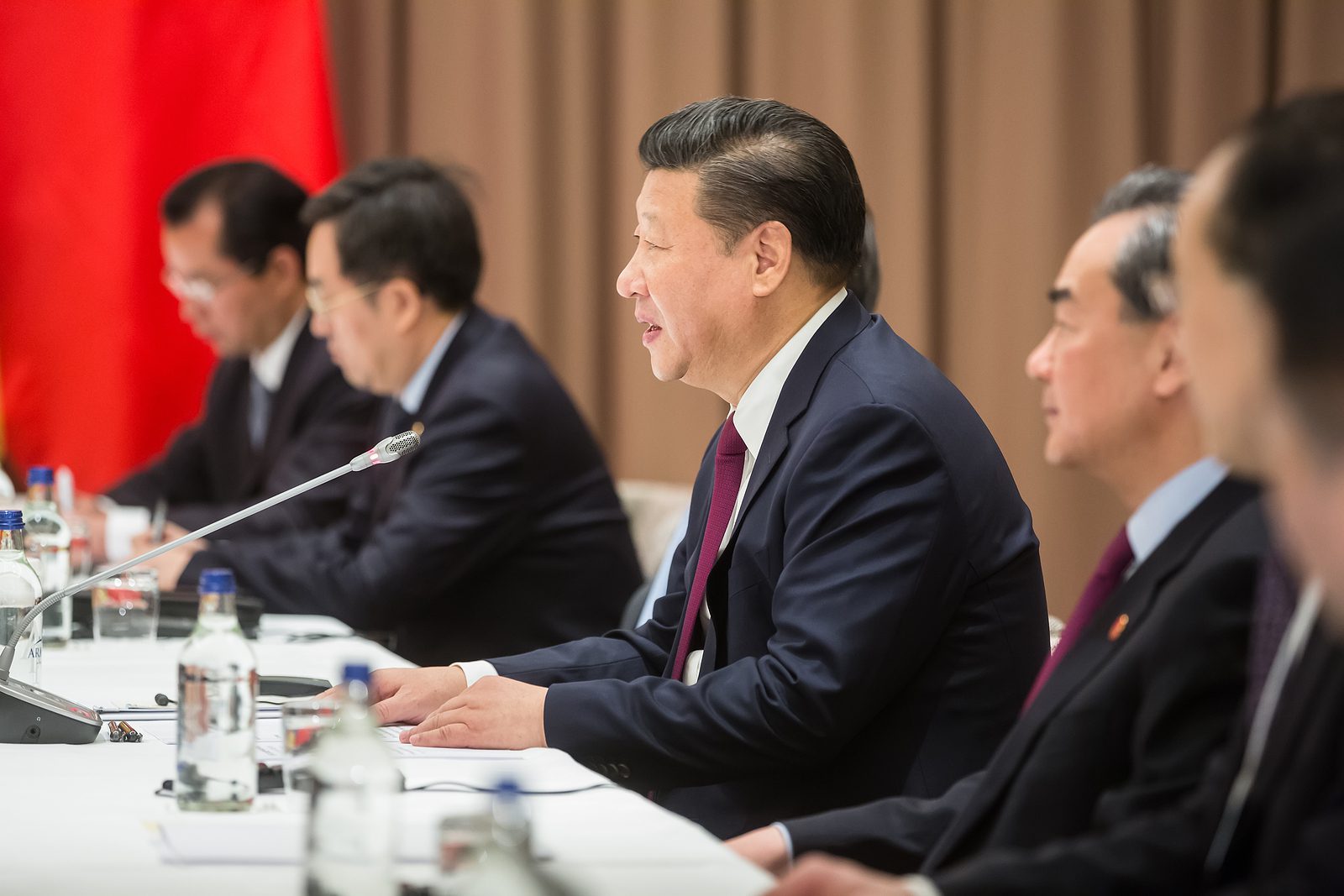
Xi Jinping has emerged as one of the most influential and controversial political leaders of the modern era, reshaping China’s economy, military, and global ambitions.
From surviving the Cultural Revolution to becoming China’s dominant leader, Xi’s rise reflects both political discipline and strategic long-term planning.
His accomplishments and criticisms continue to define global discussions surrounding power, trade, technology, and international stability in 2026.
Overview
(STL.News) Xi Jinping is the President of China, General Secretary of the Communist Party of China, and Chairman of the Central Military Commission. Widely considered the most powerful Chinese leader since Mao Zedong, Xi has overseen a dramatic transformation of China’s domestic policies, global influence, military expansion, and economic direction.
Since assuming power in 2012, Xi Jinping has centralized authority around the Communist Party while aggressively pursuing China’s rise as a global superpower. His leadership has elevated China’s international standing, strengthened national infrastructure, expanded military capabilities, and accelerated technological advancement.
At the same time, Xi’s administration has faced criticism over censorship, human rights concerns, economic pressures, centralized political control, and increasingly tense relations with Western nations.
Supporters view Xi Jinping as the architect of China’s modern resurgence. Critics describe him as an authoritarian leader who has tightened political freedoms and increased global tensions.
Regardless of perspective, Xi Jinping remains one of the most consequential political figures of the 21st century.
Early Life and Family Background
Xi Jinping was born on June 15, 1953, in Beijing, China. He was born into a politically connected revolutionary family during a period when Communist China was still consolidating power after the Chinese Civil War.
His father, Xi Zhongxun, was a senior Communist revolutionary and one of the founding figures of the People’s Republic of China. Xi Zhongxun served alongside Mao Zedong and held important leadership positions within the Communist Party.
Despite his privileged political background, Xi Jinping’s early life was heavily shaped by political turmoil.
During Mao’s Cultural Revolution in the 1960s and 1970s, Xi Zhongxun fell out of political favor and was purged from power. The family suffered public humiliation, political persecution, and severe hardship. Xi Jinping’s sister reportedly died during the chaos of the Cultural Revolution, and the family experienced intense political pressure.
As a teenager, Xi Jinping was sent to the rural village of Liangjiahe in Shaanxi Province as part of Mao’s “Down to the Countryside” campaign. Millions of urban youths were relocated to remote farming communities for political reeducation and labor.
Xi lived in primitive conditions, including cave-like dwellings, while working on farms and performing manual labor.
These years became a central part of Xi Jinping’s political image later in life. Chinese state media frequently portrays this experience as evidence of his resilience, discipline, and connection to ordinary citizens.
Xi later described those years as transformative, claiming they taught him perseverance and practical leadership skills.
Education and Political Rise
After the Cultural Revolution ended, Xi Jinping attended Tsinghua University, one of China’s most prestigious institutions, where he studied chemical engineering.
Unlike leaders in many Western democracies who rise rapidly through elections or media popularity, Chinese political advancement typically occurs over decades through regional governance and party loyalty.
Xi Jinping gradually built his political career through provincial leadership positions across China. He served in Hebei, Fujian, Zhejiang, and Shanghai, gaining administrative experience and political credibility within the Communist Party.
His rise through the party structure was viewed as disciplined, methodical, and carefully strategic.
Xi developed a reputation as a pragmatic administrator focused on economic development, political stability, and organizational discipline.
By the late 2000s, Xi Jinping had emerged as one of China’s leading political figures and was widely viewed as a likely successor to then-President Hu Jintao.
Becoming China’s Top Leader
Xi Jinping officially became General Secretary of the Communist Party in 2012 and President of China in 2013.
These positions effectively placed him at the top of China’s political, military, and governmental hierarchy.
Soon after taking office, Xi launched one of the largest anti-corruption campaigns in Chinese history.
The campaign targeted officials across all levels of government, state-owned enterprises, military leadership, and Communist Party institutions.
Chinese authorities framed the campaign as a necessary effort to restore public trust and eliminate corruption that threatened party legitimacy.
Millions of officials faced investigations, disciplinary actions, or criminal charges.
Supporters praised the campaign for addressing widespread corruption that had angered ordinary Chinese citizens for years.
Critics argued the campaign also helped Xi eliminate political rivals and consolidate personal power within the Communist Party.
Regardless of interpretation, the anti-corruption campaign dramatically reshaped China’s political landscape.
Centralization of Power
One of Xi Jinping’s defining political characteristics has been the centralization of authority.
Under previous Chinese administrations, leadership power was often distributed more collectively among senior party officials.
Xi moved away from that model by consolidating control over military leadership, internal security, economic policy, technology initiatives, and foreign affairs.
In 2018, China removed presidential term limits, allowing Xi Jinping to potentially remain in power indefinitely.
The move represented one of the most significant political changes in modern Chinese history.
Supporters argued that strong centralized leadership was necessary to maintain long-term stability and national direction.
Critics warned that the removal of term limits weakened institutional safeguards and increased authoritarian control.
Xi Jinping Thought, his political philosophy, was also incorporated into China’s constitution — a distinction previously associated mainly with Mao Zedong.
Economic Accomplishments
Under Xi Jinping, China continued expanding as one of the world’s dominant economic powers.
China strengthened its global manufacturing leadership, expanded infrastructure investment, and accelerated technological innovation across multiple industries.
Major accomplishments during Xi’s leadership include:
Infrastructure Expansion
China dramatically expanded its high-speed rail network, highways, airports, urban transit systems, and modern cities under Xi Jinping.
The country now possesses one of the most advanced infrastructure systems in the world.
Poverty Reduction
Chinese officials claim Xi’s administration successfully eliminated extreme rural poverty through large-scale economic development programs and government investment initiatives.
This campaign became one of Xi Jinping’s signature domestic achievements.
Technology Development
China made rapid advances in artificial intelligence, electric vehicles, renewable energy, telecommunications, robotics, and digital payments during Xi’s leadership.
Chinese companies increasingly compete globally with major Western technology firms.
Belt and Road Initiative
Xi Jinping launched the Belt and Road Initiative, a global infrastructure and investment program spanning Asia, Africa, Europe, and Latin America.
The initiative expanded China’s geopolitical influence through ports, railways, highways, energy projects, and trade partnerships.
Supporters view it as economic cooperation and development assistance.
Critics argue it increases dependency on China and expands Beijing’s political leverage internationally.
Military Modernization
Xi Jinping has overseen one of the most aggressive military modernization programs in modern history.
China expanded its naval production, missile capabilities, cyberwarfare systems, drone technologies, and space operations.
The Chinese military increasingly projects power throughout the South China Sea, Indo-Pacific region, and beyond.
Xi emphasized transforming China’s armed forces into a “world-class military” capable of protecting Chinese interests globally.
China also increased pressure around Taiwan by conducting military exercises and strengthening its regional strategic positioning.
These actions significantly increased tensions with the United States and regional allies.
International Influence
Under Xi Jinping, China adopted a more assertive global posture.
China expanded diplomatic relationships throughout Africa, Latin America, the Middle East, and Southeast Asia while competing more directly with Western powers for influence.
Xi promoted China as an alternative model of governance focused on stability, economic planning, infrastructure development, and centralized authority.
His administration emphasized multipolar global leadership rather than a world dominated by Western institutions.
China also increased its involvement in global financial systems, climate initiatives, trade agreements, and international development projects.
Xi Jinping’s meetings with global leaders regularly attract worldwide attention because of China’s growing influence over trade, manufacturing, energy markets, and geopolitical stability.
Criticism and Controversies
Despite major accomplishments, Xi Jinping’s leadership has faced substantial criticism internationally.
Human Rights Concerns
Western governments and human rights organizations have criticized China’s policies regarding Xinjiang, Hong Kong, censorship, political dissent, and religious freedoms.
Chinese officials reject many of these criticisms, arguing that foreign governments interfere in internal affairs and misunderstand China’s security priorities.
Internet and Media Control
China under Xi Jinping strengthened internet censorship, online surveillance, and control over media platforms.
Authorities intensified efforts to regulate online speech and restrict politically sensitive content.
Critics argue these policies limit freedom of expression.
Supporters claim they preserve social stability and national security.
Economic Pressures
China’s economy has also faced growing challenges during Xi’s leadership.
Real estate debt issues, youth unemployment, slowing growth, declining foreign investment, and global trade tensions created economic uncertainty.
Strict COVID-era lockdown policies also generated frustration among businesses and citizens.
While China recovered from many pandemic disruptions, some analysts argue that Xi’s economic centralization policies increased pressure on private enterprise and foreign investors.
Global Tensions
Relations between China and Western nations became increasingly strained during Xi Jinping’s presidency.
Disputes involving trade, technology restrictions, cybersecurity, Taiwan, and military expansion intensified geopolitical competition.
The United States increasingly identified China as its primary long-term strategic competitor.
Xi Jinping and Taiwan
Taiwan remains one of the most sensitive issues during Xi Jinping’s leadership.
China considers Taiwan part of its territory, while Taiwan operates independently with its own democratic government.
Xi Jinping repeatedly emphasized that reunification remains a historic mission for China.
Military exercises near Taiwan increased substantially during his presidency.
Global concern surrounding Taiwan centers not only on military risks but also on economic consequences, particularly because Taiwan plays a major role in global semiconductor production.
Any conflict involving Taiwan could create severe worldwide economic disruption.
Leadership Style
Xi Jinping is known for a disciplined, calculated, and highly structured leadership style.
Chinese state media presents him as calm, intellectual, patriotic, and focused on long-term national goals.
Unlike many Western political figures, Xi rarely engages in spontaneous public communication.
His appearances are carefully managed through formal speeches, state visits, Communist Party events, and diplomatic meetings.
Xi strongly emphasizes nationalism, party loyalty, ideological discipline, and social stability.
Supporters view his leadership as decisive and strategic.
Critics view it as rigid and increasingly authoritarian.
Legacy and Historical Impact
Xi Jinping’s legacy remains in active development in 2026.
He has already reshaped China more dramatically than any leader since Mao Zedong and Deng Xiaoping.
Under Xi, China became more technologically advanced, militarily powerful, politically centralized, and globally influential.
His supporters argue he restored national pride and positioned China for long-term global leadership.
Critics argue that his concentration of power increased censorship, weakened political openness, and heightened geopolitical tensions.
Regardless of opinion, Xi Jinping’s influence on modern world history is undeniable.
His decisions affect global markets, trade systems, manufacturing supply chains, military strategy, artificial intelligence development, energy policy, and international diplomacy.
As China continues rising as a global superpower, Xi Jinping’s leadership will likely remain one of the defining political forces shaping the future of the international order.
More General News articles published on STL.News:
- A Blueprint for Global Productivity and Economic Stability
- China Issues Cryptic Warning to U.S. Over Taiwan During Trump-Xi Summit
- Trump and Xi Summit in Beijing Could Reshape the Future of the World
- Trump’s China Summit Could Reshape the Future of the Iran War
- Trump Returns to Beijing During One of the Most Dangerous Global Periods in Years
- Latest St. Louis Restaurant News
© 2026 St. Louis Media, LLC d.b.a. STL.News. All rights reserved. No content may be copied, republished, distributed, or used in any form without prior written permission. Unauthorized use may result in legal action. Some content may be created with AI assistance and is reviewed by our editorial team. For official updates, visit STL.News.



