


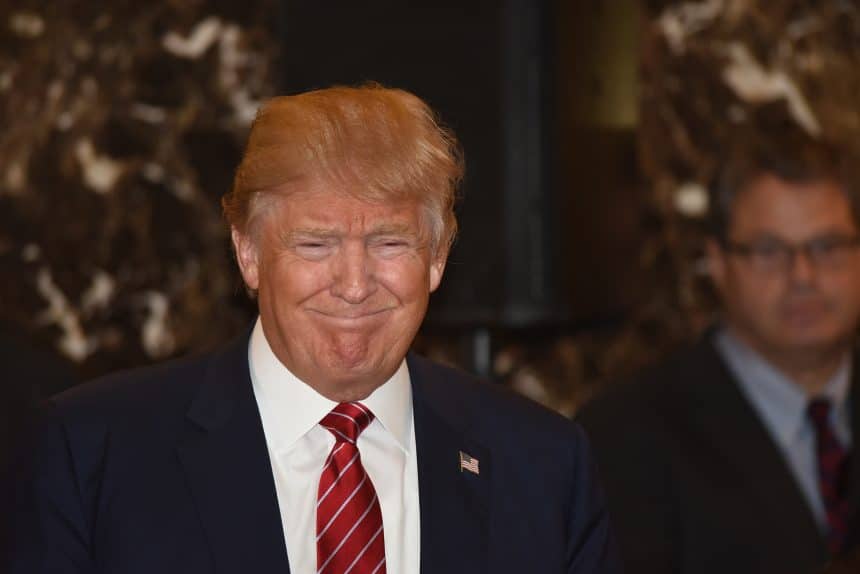

President Donald Trump entered his second term with inflation, high household costs, and border pressure already shaping American life.
His administration responded with record energy production, stricter border enforcement, deregulation, trade pressure, and broad executive action.
The result is a sharp national divide between measurable accomplishments and the political effort to frame nearly every Trump policy in the most negative possible way.
The Starting Point: Trump Inherited an Economy Already Under Pressure
WASHINGTON, DC – April 26, 2026 (STL.News) Any honest review of Donald Trump’s second term has to begin with the conditions that existed before his second-term policies had time to work. Trump did not return to office with inflation solved, household costs normalized, or public confidence fully restored. He entered office while Americans were already dealing with the consequences of years of rising prices.
At the beginning of 2025, inflation was still running around 3 percent annually. That number may sound moderate compared with earlier inflation spikes, but it does not tell the full story. The real problem was cumulative inflation. Families were not simply paying 3 percent more than the previous year; they were paying far more than they paid before the multi-year inflation cycle began.
Groceries had already become more expensive. Rent and mortgage payments remained painful. Auto insurance and homeowners insurance were rising sharply in many markets. Credit card interest rates remained high. Mortgage rates made homeownership more difficult. Small businesses were dealing with higher labor, energy, rent, financing, and supply costs.
This is the economic baseline. It matters because Democrats often criticize Trump for affordability problems that existed before his second term began. Supporters argue that his policies should be judged as attempts to correct inherited problems, not as the original cause of them.
That distinction is essential for readers. Without it, the public gets a distorted picture. Inflation was not created overnight. High prices did not appear the moment Trump took office. The administration began its second-term agenda from a position of economic pressure, not economic comfort.
Energy Production: A Record-Level Accomplishment With Direct Inflation Impact
One of the strongest data-backed accomplishments of Trump’s second term is energy production. U.S. crude oil production reached approximately 13.6 million barrels per day in 2025, setting a record annual level. Production increased by roughly 350,000 barrels per day compared with the previous year.
That is not a minor achievement. Energy is one of the most important cost inputs in the economy. It affects gasoline, diesel, jet fuel, trucking, shipping, manufacturing, agriculture, construction, utilities, and food distribution. A restaurant does not only feel energy prices through its utility bill. They feel it through food delivery, packaging, vendor prices, customer driving behavior, and overall consumer spending.
When energy costs rise, inflationary pressure spreads across the economy. When domestic energy supply expands, the country has greater leverage, greater stability, and greater protection against foreign supply disruptions.
Democrats and environmental advocates criticize expanded fossil fuel production as a step backward on climate policy. They argue that long-term environmental risks outweigh short-term price benefits. That criticism is politically predictable.
The counterpoint is straightforward: families and businesses pay energy costs today. The economy still depends on oil, gas, diesel, and natural gas at scale. Renewable energy can be part of the future, but it does not currently replace the entire energy system that powers the country.
For Trump supporters, record oil production is not just an energy statistic. It is evidence of a policy strategy designed to reduce cost pressures, enhance national security, and restore American energy strength.
Inflation Strategy: Targeting the Cost Drivers Instead of Only the Symptoms
Trump’s second-term inflation strategy has focused on supply-side pressure. That means increasing production, reducing regulatory burdens, expanding energy availability, strengthening domestic supply chains, and encouraging companies to produce more inside the United States.
The basic idea is that inflation cannot be solved by focusing only on consumer prices. Prices are the final result. The deeper question is what drives those prices.
Energy drives prices. Regulation drives prices. Labor shortages drive prices. Transportation drives prices. Import dependence drives prices. Interest rates drive prices. Insurance drives prices. Rent drives prices.
Trump’s administration has argued that lowering production costs is one of the most practical ways to reduce inflation over time. That is why energy, deregulation, trade, and manufacturing are all connected in the second-term agenda.
Democrats argue that some Trump policies, especially tariffs, can raise prices. They also argue that ordinary families still feel squeezed, regardless of whether inflation began before Trump returned to office.
That concern is real for many households. But the counterpoint remains equally important: price levels do not reset quickly. If groceries rise sharply over several years, a lower inflation rate does not mean groceries become cheap again. It only means they are rising more slowly.
This is where political messaging often becomes misleading. Critics can point to high prices and blame the current administration, while overlooking that those prices were already high when the term began. A better public record should separate inherited inflation, current inflation, and policy response.
Border Enforcement: A Measurable Shift in Federal Control
Border security is another major area where the second-term record includes clear, measurable change. Federal border officials reported extended periods of sharply reduced southwest border apprehensions, including 14 consecutive months with fewer than 9,000. Officials also reported that daily apprehensions had dropped dramatically compared with the previous administration and that there were zero releases over an extended period.
For Trump supporters, this is one of the clearest examples of campaign promises becoming measurable policy outcomes. Trump promised tougher enforcement. The administration implemented stricter policies. Border activity declined.
The importance of border enforcement extends beyond immigration politics. Border policy affects public services, local budgets, housing demand, school systems, law enforcement, hospitals, labor markets, and national security. Cities and states that experienced large migrant arrivals faced real cost pressures.
Democrats often frame strict immigration enforcement as harsh or inhumane. They argue that border policy must include humanitarian considerations, asylum protections, and comprehensive immigration reform.
The counterpoint is that no immigration system can function without enforcement. Legal immigration and illegal entry are not the same thing. Supporters argue that Democratic messaging often blurs that distinction, making basic law enforcement appear anti-immigrant.
The data matters because it shows that the policy had consequences. Lower apprehension levels and reduced releases are not slogans. There are measurable changes in federal border operations.
Deregulation: Lowering the Hidden Costs Passed to Consumers
Deregulation has been one of the central themes of Trump’s second term. The administration moved to reduce federal rules, speed up permitting, lower compliance burdens, and remove what it viewed as unnecessary obstacles to business growth.
Regulatory costs are often invisible to consumers, but they are real. They affect the cost of building homes, opening restaurants, expanding factories, drilling for energy, hiring workers, financing projects, and transporting goods. When a business spends more money on compliance, paperwork, legal review, permits, and delays, those costs often become part of the final price paid by consumers.
Large corporations can usually manage regulatory complexity. They have legal departments, compliance teams, consultants, and lobbyists. Small businesses do not. A family-owned restaurant, roofing contractor, trucking company, manufacturer, or local retailer feels regulatory costs much more directly.
Democrats argue that regulations protect workers, consumers, the environment, and financial stability. Some regulations do. But supporters argue that Democrats often treat every regulation as automatically good and every rollback as automatically dangerous.
That is the core disagreement. Trump’s position is that excessive regulation slows growth and raises prices. Democrats often respond by framing deregulation as reckless. The truth is that regulations should be judged individually, not defended as a category.
For business owners, deregulation can mean faster approvals, lower costs, less paperwork, and more flexibility. That is why it remains one of the most important economic accomplishments in the Trump agenda.
Executive Orders: Rapid Action on Voter Mandates
Trump issued more than 200 executive orders in 2025, a remarkable pace of executive action. These orders touched immigration, energy, federal agencies, regulation, trade, DEI programs, government operations, and national policy direction.
Supporters view this as proof that Trump moved quickly to deliver on campaign promises. They argue that voters did not elect him to manage the existing system slowly. They elected him to change direction.
Democrats criticize the heavy use of executive orders as an overreach of presidential authority. They argue that major policy changes should go through Congress and that executive action concentrates too much power in the White House.
The counterpoint is that modern presidents from both parties use executive power aggressively when Congress is divided or slow to act. Criticism of executive action often depends on which party controls the White House.
The accomplishment is not merely the number of executive orders. It is the speed of implementation. Trump used executive authority to quickly reshape federal policy, especially in areas where his supporters believed the prior administration had moved the country in the wrong direction.
DEI Rollbacks: A Major Shift Toward Merit-Based Standards
Trump’s rollback of federal diversity, equity, and inclusion programs became one of the most visible cultural and policy shifts of the second term. The administration moved to reduce or eliminate federal DEI programs and shift government policy toward merit-based standards.
Supporters argue that this is a major accomplishment because the government should treat citizens as individuals rather than as members of identity categories. Hiring, contracting, promotion, education, and public policy should be based on merit, qualifications, performance, and equal treatment.
Democrats argue that DEI programs are designed to address historical inequality and expand opportunity for underrepresented groups. They frame Trump’s rollback as an attack on diversity and inclusion.
The counterpoint is that DEI can create new unfairness while claiming to correct old unfairness. If the government gives preference based on race, sex, ethnicity, or identity, many supporters argue that this violates the principle of equal treatment.
This issue is emotional because it touches culture, civil rights, education, employment, and government contracting. But the accomplishment is clear: Trump changed federal policy direction away from identity-based programming and toward a stated merit-based standard.
Jobs and Labor Market: Stability During Policy Transition
The labor market remained stable through major second-term policy changes. Unemployment remained around the low 4 percent range in early 2026, and job growth continued in important sectors, including healthcare, construction, transportation, and warehousing.
This matters because critics warned that Trump’s policies would damage the economy and destabilize employment. Instead, the broader labor market continued to function while the administration pursued federal workforce reductions, deregulation, and changes to trade policy.
Supporters argue that private-sector employment is more important than government expansion. A healthy economy should be driven by businesses producing goods and services, not by endless growth in government payrolls.
Democrats argue that federal workforce cuts can reduce public services, weaken agencies, and harm workers. That argument has political appeal, especially in communities dependent on federal employment.
The counterpoint is that government payrolls are funded by taxpayers. Reducing bureaucracy can be part of a long-term fiscal strategy if core services are preserved. Supporters argue that the country should not measure economic health by how many people the government employs, but by how strong the private economy remains.
Stable employment during a period of major policy change is an important data point in Trump’s favor.
GDP Growth: Evidence of Economic Resilience
The economy showed strong growth during key periods of 2025, with annualized GDP growth above 4 percent in at least one quarter. GDP growth is not a perfect measure of household well-being, but it is still one of the most important indicators of economic activity.
Strong GDP growth reflects consumer spending, business investment, production, exports, and overall output. It shows whether the economy is expanding or contracting.
Democrats argue that GDP growth does not necessarily mean families feel better off. That is true. A household can struggle with rent, groceries, insurance, and credit card debt even while national output rises.
But supporters argue that growth is still essential. Without growth, job creation slows. Business investment weakens. Tax revenue suffers. Wages stagnate. Economic opportunity narrows.
GDP growth above 4 percent in a key period gives Trump supporters a strong argument against claims that his policies were collapsing the economy. The data shows resilience, not collapse.
Federal Deficit: A Modest but Notable Improvement
The federal deficit remained extremely large, but it declined slightly year over year in fiscal 2025. That does not solve America’s debt problem, but direction matters.
Supporters argue that even modest deficit reduction should be acknowledged because federal spending problems are long-standing and bipartisan. The deficit did not begin with Trump. It has been driven by entitlement spending, interest costs, emergency spending, defense spending, healthcare costs, and years of political unwillingness to make difficult decisions.
Democrats argue that Trump’s tax policies can worsen long-term deficits and that spending cuts can harm vulnerable communities.
The counterpoint is that Democrats often focus heavily on tax revenue while downplaying spending growth. Supporters argue that America cannot solve a spending problem only by demanding more revenue from taxpayers.
A slight improvement in the deficit is not a complete fiscal victory. But it is part of the record and should not be ignored.
Trade and Tariffs: Reframing Manufacturing as National Security
Trump’s trade policy remains controversial because tariffs can raise costs in the short term. But supporters argue that the larger accomplishment is forcing the country to rethink the long-term cost of foreign dependence.
For decades, America benefited from cheaper imported goods while losing factories, industrial capacity, and manufacturing jobs. Many towns suffered as production moved overseas. The country became dependent on foreign supply chains for critical goods, medicine, electronics, industrial parts, and strategic materials.
Trump’s tariffs and trade pressure were designed to push back against unfair trade practices, strengthen domestic production, and make foreign governments take American demands seriously.
Democrats argue that tariffs function as hidden taxes because importers may pass the costs on to consumers. That is a legitimate concern.
The counterpoint is that cheap imports are not free if they hollow out the domestic industry. Supporters argue that a strong country must be able to produce essential goods. Manufacturing is not only an economic issue; it is a national security issue.
The accomplishment is that Trump made trade policy central again and forced the public to confront the cost of dependency.
Small Business Impact: Why These Policies Matter Beyond Washington
The debate over Trump’s second term is often framed in national political terms, but many of the policies directly affect small businesses.
A local restaurant feels inflation through food, labor, rent, utilities, delivery, credit card, and insurance costs, as well as customer spending. A contractor feels it through materials, fuel, permits, insurance, and financing. A trucking company feels it through diesel, maintenance, insurance, wages, and regulation. A retailer feels it through inventory, rent, utilities, shipping, and consumer confidence.
Trump’s agenda on energy, deregulation, taxes, trade, and crime is designed to reduce pressure on businesses operating in the real economy.
Democrats argue that government standards protect workers, consumers, and communities. Supporters argue that excessive government pressure can break small businesses before they ever have a chance to grow.
For readers, this is a practical issue. Policy is not abstract when it affects prices, jobs, restaurants, construction, delivery, housing, and neighborhood businesses.
Law Enforcement and Public Safety: Stability as an Economic Foundation
Trump continued to emphasize law enforcement and public safety during his second term. Supporters argue that safe communities are essential for economic recovery.
Crime affects more than police statistics. It affects tourism, restaurant traffic, retail investment, downtown development, school confidence, insurance costs, and whether families feel safe living or shopping in a community.
Democrats argue that law enforcement must be paired with social programs, mental health services, housing policy, and criminal justice reform.
Supporters argue that social programs cannot replace basic public order. Businesses cannot thrive in communities where customers feel unsafe. Cities cannot rebuild if residents and employers lose confidence.
This issue is especially relevant for urban areas struggling with crime, population loss, and business closures. Trump’s law-and-order approach resonates with voters who believe public safety must come before everything else.
Stock Market Strength and Retirement Confidence
The stock market remained an important part of Trump’s economic argument. Critics often dismiss market strength as a Wall Street measure that does not reflect ordinary families.
That is only partly true. Not every American owns individual stocks, but millions are connected to the market through 401(k)s, IRAs, pensions, union retirement funds, college savings accounts, and employer retirement plans.
A strong stock market supports retirement confidence and long-term wealth building. It can also reflect business optimism, investment expectations, and confidence in future earnings.
Democrats argue that market gains do not erase household struggles with inflation, rent, healthcare, or debt.
Supporters argue that dismissing the stock market ignores the financial future of millions of middle-class Americans. Market strength is not the whole economy, but it is still a meaningful economic indicator.
The Pattern: Accomplishment Followed by Negative Framing
Across Trump’s second term, the same pattern appears repeatedly.
- Record energy production is framed as environmental recklessness.
- Border enforcement is framed as cruelty.
- Deregulation is framed as a danger.
- Tax and business incentives are framed as giveaways.
- DEI rollback is framed as discrimination.
- Federal workforce reform is framed as authoritarian.
- Tariffs are framed only as price increases.
- Law enforcement support is framed as extremism.
- Executive action is framed as overreach.
This does not mean every criticism is invalid. But it does show a consistent political pattern: Trump’s opponents often define his actions in the most negative terms before the public has time to evaluate the results.
Supporters believe this creates a distorted record. They argue that accomplishments are not being debated fairly but are being demonized through language designed to make every policy sound harmful.
For readers, the important question is not whether criticism exists. In politics, criticism always exists. The question is whether criticism accurately reflects the full context, the starting conditions, and the measurable outcomes.
Conclusion: The Full Record Requires the Full Context
Trump’s second term is best understood as a battle between data and narrative.
The data shows that inflation was already present when he returned to office. It shows record U.S. oil production. It shows major border enforcement changes. It shows rapid executive action. It shows deregulation, DEI rollback, strong GDP growth in key periods, labor-market stability, and an ongoing effort to reorient trade, energy, bureaucracy, and public safety policy.
Democrats have responded by warning about environmental risk, humanitarian concerns, inequality, executive overreach, tariff costs, and institutional damage. Those criticisms are part of the political record.
But the record is incomplete if it ignores what Trump inherited. High prices, expensive housing, elevated insurance costs, high borrowing costs, and inflation pressure were already part of American life before his second-term policies could take effect.
A fair review must ask four questions.
- What conditions existed at the start?
- What policies were implemented?
- What measurable results followed?
- How did political opponents frame those results?
That is the full story readers need.
Without that structure, the public hears only slogans. With it, readers can better understand the difference between accomplishment, criticism, and political narrative.
Other General News stories published on STL.News:
- Donald Trump Targeted During Correspondents’ Dinner Appearance, Raising New Security and Political Concerns
- Is Iran Becoming a Military State? Power Shift Raises Global Concerns in 2026
- Iran War and Bible Prophecy Claims: What’s Fact and What’s Speculation
- California Crackdown Targets Organized Crime Networks
- DOJ Arrest Surge Signals Stronger Federal Enforcement Across the U.S.
© 2026 St. Louis Media, LLC d.b.a. STL.News. All rights reserved. No content may be copied, republished, distributed, or used in any form without prior written permission. Unauthorized use may result in legal action. Some content may be created with AI assistance and is reviewed by our editorial team. For official updates, visit STL.News.



