


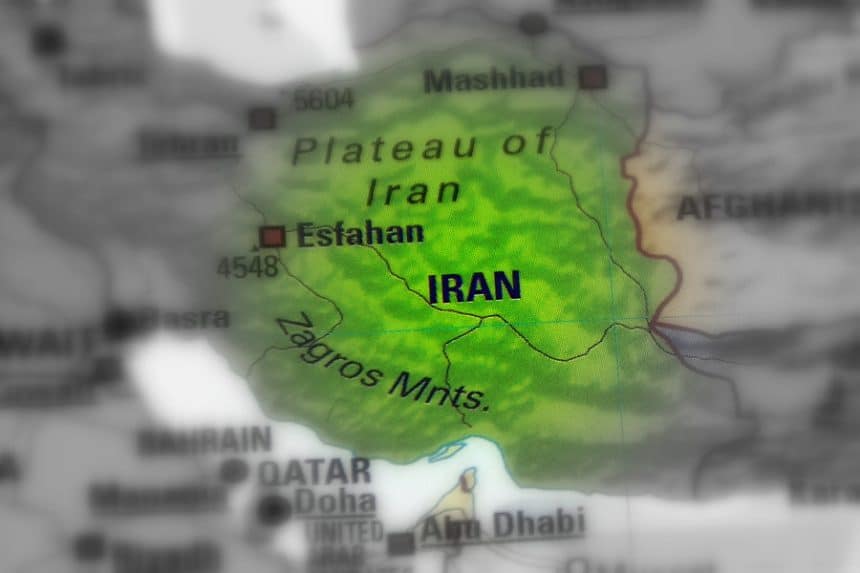
A senior U.S. defense official has revealed that Iran successfully used the window following the April 7 ceasefire to reconstitute neutralized air defense and missile systems along the strategic Strait of Hormuz. Rebuilding highly mobile assets near Qeshm Island and Sirik in Tehran, moving away from vulnerable centralized radar grids to establish resilient “pop-up” surface-to-air missile installations. This clandestine rearmament directly triggered the latest wave of retaliatory U.S. Central Command (CENTCOM) airstrikes after consecutive Iranian drone attacks targeted the commercial vessels M/V Ever Lovely and M/T Kiku. The developments mark a severe escalation, threatening international shipping lanes and casting a shadow over regional diplomatic frameworks.
WASHINGTON, DC – June 28, 2026 (STL.News) A senior U.S. defense official confirmed that Iranian forces have systematically reconstituted their air defense and missile networks along the Strait of Hormuz, successfully exploiting a post-ceasefire lull to rebuild strategic military capabilities that had been neutralized by U.S.-led coalition bombing campaigns earlier this year.
The rapid reconstruction of these defensive and offensive strike nests—focused heavily on tactical coastal chokepoints such as Qeshm Island, Goruk, and Sirik—is now cited by the Pentagon as the primary trigger for the intense wave of renewed U.S. precision airstrikes over the weekend.
Exploiting the Ceasefire Window
According to defense intelligence briefings, the rearmament effort began almost immediately after the April 7 ceasefire took effect. Before that diplomatic pause, a sustained U.S. and allied air campaign had severely shattered Iran’s fixed defense industrial base, knocking out centralized command-and-control hubs and degrading fixed radar installations across the southern Hormozgan province.
However, rather than de-escalating, Tehran executed a highly coordinated, asymmetric rebuilding strategy. Utilizing deep underground storage facilities—frequently referred to as “missile cities”—and drawing from mobile hardware reserves, the Islamic Revolutionary Guard Corps (IRGC) rapidly deployed localized, highly mobile air defense networks.
“They chose to reconstitute rather than de-escalate,” the senior defense official noted, speaking on the condition of anonymity to discuss sensitive intelligence assessments. “Despite the significant damage dealt to their centralized systems earlier in the year, Iranian forces moved assets back into previously targeted sectors, altering their tactical posture to rely on mobile launchers and hidden coastal surveillance units.”
By transitioning from fixed, vulnerable radar grids to resilient, “pop-up” surface-to-air missile (SAM) configurations, Tehran sought to establish a renewed anti-access/area-denial (A2/AD) envelope over the narrow shipping corridor without triggering immediate satellite detection.
The Catalyst for Renewed Conflict
The strategic friction point reached a crisis on June 25, 2026, when an IRGC one-way attack drone targeted and struck the Singapore-flagged cargo vessel M/V Ever Lovely approximately eight nautical miles southeast of Dahit, Oman. The strike sent shockwaves through the maritime industry, forcing the International Maritime Organization (IMO) and Omani authorities to pause a newly established safe-passage shipping transit initiative along the Omani coast.
In immediate retaliation for the Ever Lovely incident, U.S. aircraft executed precision strikes against newly identified Iranian missile and drone storage bunkers. Yet, rather than absorbing the blow, Iran retaliated less than 24 hours later at approximately 4:30 a.m. At 8 p.m. on Saturday, another Iranian one-way strike drone hit the Panama-flagged Very Large Crude Carrier (VLCC) M/T Kiku near the Strait of Hormuz, which was transiting the waterway laden with more than two million barrels of crude oil.
This second direct provocation forced the hand of U.S. Central Command (CENTCOM). Recognizing that Iran’s newly reconstituted positions were actively being used to project lethal force against commercial traffic, CENTCOM launched a massive, multi-axis air assault targeting Iranian military surveillance infrastructure, advanced communication nodes, active air defense batteries, drone storage facilities, and offensive minelayer capabilities on Qeshm Island, Sirik, and the mainland port of Jask.
A High-Stakes Game of Cat-and-Mouse
The revelation that Iran could so quickly restore localized anti-ship and anti-air effectiveness highlights the deep structural challenges facing Western military planners. Intelligence analysts emphasize that while Iran’s capability to mass-produce advanced components on a macro-industrial scale remains heavily degraded from the initial war, their residual inventory of short-range ballistic missiles (under 1,000 kilometers) and solid-propellant attack drones remains vast.
Furthermore, Iran has aggressively weaponized diplomatic rhetoric alongside its military operations. Following the latest round of heavy U.S. strikes, the Iranian Foreign Affairs Ministry issued sharp warnings to neighboring Gulf Cooperation Council (GCC) states, demanding they deny the United States permission to launch offensive operations from bases within their territories. Simultaneously, Iranian forces widened the conflict theater by launching a retaliatory drone strike against U.S. military positions in Bahrain—a critical regional logistics hub housing the U.S. Fifth Fleet.
Global Market and Shipping Ramifications
The fluid situation in the Strait of Hormuz—through which roughly one-fifth of the world’s liquefied natural gas (LNG) and petroleum supplies flow—has injected fresh volatility into global energy markets and maritime logistics.
Real-time vessel-tracking data indicate that multiple commercial tankers approaching the southern entrance of the strait have actively diverted or turned back entirely, refusing to brave the corridor amid the threat of unprovoked drone attacks and the active deployment of Iranian electronic warfare jamming equipment. Maritime insurance syndicates are reportedly reviewing war-risk premiums for the Persian Gulf corridor, a move that could significantly inflate global shipping costs if the kinetic exchanges persist.
While American officials maintain that U.S. forces remain “vigilant, lethal, and ready” to enforce safe passage, the rapid resurrection of Iran’s coastal defenses underscores a grim reality: achieving permanent deterrence in the strategic waterway requires addressing a resilient, deeply buried underground military infrastructure that a single bombing campaign cannot easily erase.



