

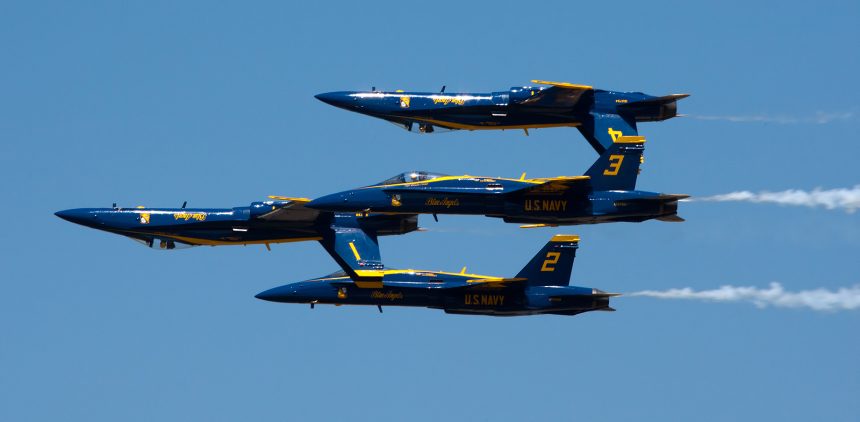
The Spirit of St. Louis Air Show & STEM Expo returns to Chesterfield, Missouri, on June 6-7, 2026, featuring the U.S. Navy Blue Angels, military aircraft demonstrations, aerobatic performers, historic warbirds, and hands-on STEM exhibits designed to inspire future generations of aviators, engineers, and technology professionals.
Previewing the 2026 Spirit of St. Louis Air Show & STEM Expo: A Weekend of Aviation Excellence Returns to Chesterfield
CHESTERFIELD, MO/June 5, 2026 (STL.News) The skies above western St. Louis County are preparing to host one of the region’s most anticipated events of 2026 as the Spirit of St. Louis Air Show & STEM Expo returns to Spirit of St. Louis Airport on Saturday, June 6, and Sunday, June 7.
For aviation enthusiasts, military supporters, families, photographers, and students interested in science and technology, the event represents far more than a traditional air show. It is a celebration of American aviation, military excellence, aerospace innovation, and educational opportunity, all combined into a two-day festival expected to attract tens of thousands of visitors from throughout Missouri, Illinois, and beyond.
The return of the legendary U.S. Navy Blue Angels demonstration team headlines the event. It features a diverse lineup of military aircraft, aerobatic performers, historic warbirds, and interactive STEM exhibits.
Event Dates and Hours
Saturday, June 6, 2026
- Gates Open: 9:00 a.m.
- Opening Ceremonies: Approximately 11:30 a.m.
- Flight Demonstrations: Approximately 11:30 a.m. to 4:00 p.m.
- Grounds Close: 5:00 p.m.
Sunday, June 7, 2026
- Gates Open: 9:00 a.m.
- Opening Ceremonies: Approximately 11:30 a.m.
- Flight Demonstrations: Approximately 11:30 a.m. to 4:00 p.m.
- Grounds Close: 5:00 p.m.
The flying schedule is generally the same on both days. Due to weather conditions, security considerations, and operational requirements, exact performer times are typically not released in advance.
The Blue Angels Return to St. Louis
The headline attraction for the 2026 event is the return of the United States Navy Blue Angels.
Few aviation demonstration teams generate the excitement and anticipation associated with the Blue Angels. Established in 1946, the elite squadron represents the skill, precision, and professionalism of the United States Navy and Marine Corps aviation community.
Flying Boeing F/A-18 Super Hornets, the Blue Angels routinely perform maneuvers separated by mere feet while traveling at speeds approaching 700 miles per hour. Their performances combine precision formation flying with breathtaking solo demonstrations that showcase the remarkable capabilities of modern military aviation.
When the Blue Angels take to the skies over Chesterfield, spectators can expect a dramatic display of synchronized aerobatics, high-speed passes, opposing maneuvers, vertical climbs, and precision formations that have inspired generations of future aviators.
For many attendees, the Blue Angels alone are worth the price of admission.
Modern Military Aviation on Display
The Spirit of St. Louis Air Show has developed a reputation for assembling an impressive collection of military aircraft.
The 2026 performer lineup includes modern combat aircraft that demonstrate the technological advancements shaping air superiority and national defense. These aircraft provide spectators with a firsthand look at the machines that protect American interests around the globe.
Among the expected attractions is the Lockheed Martin F-22 Raptor, one of the most advanced fighter aircraft ever developed. Known for its stealth capabilities, agility, and unmatched performance characteristics, the F-22 remains a crowd favorite wherever it appears.
Visitors will have opportunities to observe aircraft displays up close, speak with military personnel, and learn about aviation careers available through military service.
Historic Warbirds Bring History to Life
One of the most educational aspects of the event is the opportunity to see historic aircraft preserved from previous generations.
Unlike museum exhibits that remain stationary behind barriers, air shows allow visitors to witness these aircraft in their natural environment—flying.
Expected warbird appearances include World War II-era aircraft such as the legendary P-51 Mustang, as well as other historic military aircraft that helped shape aviation history.
These aircraft serve as living reminders of the pilots, mechanics, and crews who served during some of the most consequential periods in American history.
The distinctive sound of a vintage aircraft engine or the sight of a Mustang making a low pass across the runway connects spectators with a chapter of history that textbooks alone cannot fully capture.
Aerobatic Excellence
Beyond military aircraft, attendees will witness some of the world’s top civilian aerobatic performers.
These pilots dedicate thousands of hours to perfecting routines that combine precision, courage, and extraordinary flying skill.
Attendees can expect dramatic maneuvers including vertical climbs, snap rolls, hammerhead turns, high-speed passes, formation aerobatics, and precision aerial choreography.
These demonstrations showcase the remarkable capabilities of both aircraft and pilot while providing nonstop excitement throughout the day.
STEM Expo Inspires the Next Generation
While the aircraft often receives the greatest attention, the STEM Expo has become one of the event’s most important components.
STEM stands for Science, Technology, Engineering, and Mathematics.
The expo was created to inspire young people to explore educational opportunities and career paths in fields that are critical to America’s future economic growth and technological leadership.
Dozens of hands-on STEM activities and exhibits are planned, allowing students to interact directly with educators, engineers, scientists, technology professionals, colleges, universities, museums, and industry representatives.
Visitors will have opportunities to explore aerospace engineering, robotics, aviation technology, computer science, advanced manufacturing, mathematics, scientific research, and emerging technologies.
For parents, the STEM Expo provides a unique opportunity to expose children to careers they may never have previously considered.
Why the Event Matters to the Region
The Spirit of St. Louis Air Show is more than a weekend attraction.
It serves as an important economic and educational asset for the region.
The event attracts visitors who stay in local hotels, dine at area restaurants, purchase fuel, shop at local businesses, and contribute to the regional economy.
Additionally, the event highlights St. Louis’ historic role in aviation and aerospace.
The region has long been recognized as a center for aerospace innovation, aircraft manufacturing, engineering, and military aviation support.
The STEM Expo further strengthens those connections by encouraging future generations to pursue careers that will continue that legacy.
A Family-Friendly Experience
One reason the Spirit of St. Louis Air Show continues to attract large crowds is its appeal across multiple generations.
Children are fascinated by the aircraft.
Parents appreciate the educational opportunities.
Veterans often enjoy seeing military aircraft and demonstrations.
Aviation enthusiasts can spend hours photographing aircraft and studying the details of both modern and historic designs.
The event offers something for virtually everyone.
Visitors are encouraged to bring hearing protection, sunscreen, sunglasses, hats, binoculars, lawn chairs, blankets, and comfortable walking shoes to maximize their experience.
Parking is included with admission, though visitors should be prepared for long walks due to the venue’s size.
What Makes the Spirit of St. Louis Air Show Unique
Many communities host air shows, but few combine military aviation, civilian aerobatics, historical preservation, STEM education, community engagement, and family entertainment as effectively as the Spirit of St. Louis Air Show.
The event’s location at Spirit of St. Louis Airport provides a fitting backdrop for a celebration of aviation.
Named after the aircraft that carried Charles Lindbergh across the Atlantic in 1927, the airport itself represents an important chapter in aviation history.
That historical connection creates an atmosphere uniquely suited for an event focused on honoring aviation’s past while inspiring its future.
Looking Ahead to an Exciting Weekend
As June approaches, excitement continues to build across the St. Louis region.
The return of the Blue Angels, the presence of world-class performers, the educational opportunities offered by the STEM Expo, and the chance to experience military and historic aircraft up close make the 2026 Spirit of St. Louis Air Show one of the premier events of the summer season.
Whether visitors attend for the roar of military jets, the precision of aerobatic performers, the educational exhibits, or simply the opportunity to spend a memorable day outdoors with family and friends, the event promises a weekend filled with inspiration, excitement, and appreciation for aviation’s remarkable achievements.
When the first aircraft lifts off over Chesterfield on June 6, spectators will once again be reminded why the Spirit of St. Louis Air Show remains one of the Midwest’s most celebrated aviation events—a showcase of innovation, history, service, education, and the enduring fascination of flight.