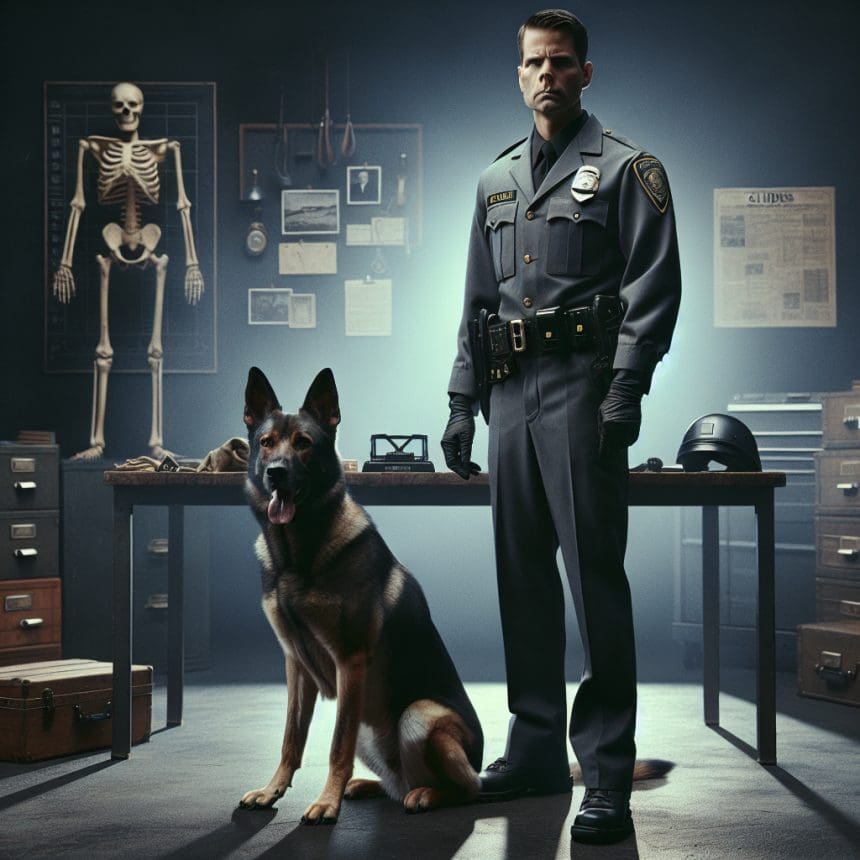
Headline: Retired K9 Officer Advocates for Cadaver Dogs in Guthrie Case
In a recent statement, retired K9 officer John Matthews has expressed strong support for deploying cadaver dogs in the ongoing investigation into the disappearance of Nancy Guthrie, who vanished last month in a rural area of Tennessee. Matthews, a veteran in the field with over two decades of experience, emphasized the unique advantages that these specially trained dogs could bring to the search efforts. His commentary comes as authorities continue to explore various leads in the case in hopes of providing answers to a grieving family and community.
Nancy Guthrie’s case has captured national attention, with residents of her hometown and law enforcement working tirelessly to locate the 42-year-old mother. The urgency has only intensified as weeks have passed without any significant developments. In light of the limited success of traditional search methods, the suggestion to utilize cadaver dogs has sparked renewed interest and debate among both investigators and community members.
The Role of Cadaver Dogs
Cadaver dogs, or forensic dogs, are specifically trained to detect human remains, even those that are buried or submerged. They possess an olfactory capability that far surpasses humans, allowing them to track scents undetectable to the naked eye. Matthews explained that these dogs undergo rigorous training, often honing their skills in various environments. In cases involving missing persons, especially where foul play is suspected, these dogs can play a crucial role in narrowing down search areas.

"Time is of the essence in any missing person’s case," Matthews stated during an exclusive interview. "Cadaver dogs can pinpoint locations that have been overlooked or deemed too difficult to access. Their results can provide leads that otherwise might remain hidden."
Matthews’ Perspective
Matthews is not alone in his belief that cadaver dogs could yield vital information in Guthrie’s case. Law enforcement agencies across the country have employed similar teams in various high-profile investigations, often with significant breakthroughs. The combination of a diligent human-led search and the acute abilities of these dogs may enhance the possibility of recovering crucial evidence.
“Every minute counts. The longer we wait, the harder it becomes to locate someone,” Matthews added, underscoring the growing frustration of the Guthrie family and the community at large. "We must do everything possible to bring Nancy home."
Community Support and Demand for Action
The response from the community has been overwhelming; many residents have rallied behind Matthews’ suggestion. A local petition calling for the use of cadaver dogs in the search efforts has gained traction online, amassing hundreds of signatures in just days. Community members are urging law enforcement to consider this vital resource to bolster their ongoing investigation.
"We want to do whatever it takes to help find Nancy," said Sarah Milton, one of the petition’s organizers. "It’s been too long without any updates, and every second counts when it comes to finding a loved one.”
While some in the community express hope, others have voiced frustration over the lack of actionable steps taken by law enforcement. Criticism has emerged about the current search methods, particularly regarding their limitations without specialized resources like cadaver dogs.
Investigative Challenges
Law enforcement has faced multiple challenges throughout the investigation thus far. Vast wooded areas and rugged terrain have complicated search efforts, making broad sweeps difficult and time-consuming. According to sources within the department, the synthetic scents often generated by human activity in these areas can lead to false leads, creating obstacles in effective searches.
Authorities have stated that they are using every available resource, but as the weeks drag on, the necessity for alternative strategies is increasingly evident to both the public and private citizens involved in the efforts.
"The use of cadaver dogs could improve our chances," said an anonymous law enforcement official. "It’s definitely something we’re considering, but we must also balance that with a thorough examination of current leads.”
Cadaver Dog Success Stories
This isn’t the first time that cadaver dogs have had a substantial impact on similar cases. Numerous successful recoveries of missing persons have been credited to these canine companions. For instance, in a high-profile cold case from 2019, a team of cadaver dogs successfully led police to the remains of a missing woman who had been presumed lost in a dense forest.
"History shows us that cadaver dogs often unearth evidence that can change the trajectory of a case," Matthews explained. "If we can bring just one good lead to the table, it might be the key to solving this mystery.”
The Path Forward
As the search for Nancy Guthrie continues, calls for the use of specialized search teams are mounting. While law enforcement weighs the potential inclusion of cadaver dogs, the support from the community amplifies the urgency of the situation. The hope is that with the right resources, they will soon locate Kathy and bring closure to both her family and the community that has been impacted by her sudden disappearance.
As the investigation moves forward, Matthews remains optimistic about the potential for human-dog collaboration in identifying missing persons. “This is a community-wide effort,” he affirmed. “I know we can make a difference. All it takes is a little hope—and a lot of determination.”
Conclusion
The disappearance of Nancy Guthrie has highlighted not only the challenges faced by law enforcement in rural investigations but also the potential power of canine assistance. As the case unfolds, the spotlight remains on the need for innovative solutions that may lead to a breakthrough in the search. For now, the call for cadaver dogs adds a new dimension to the search for Nancy, driving both public interest and community involvement in what is becoming a modern-day missing persons saga.