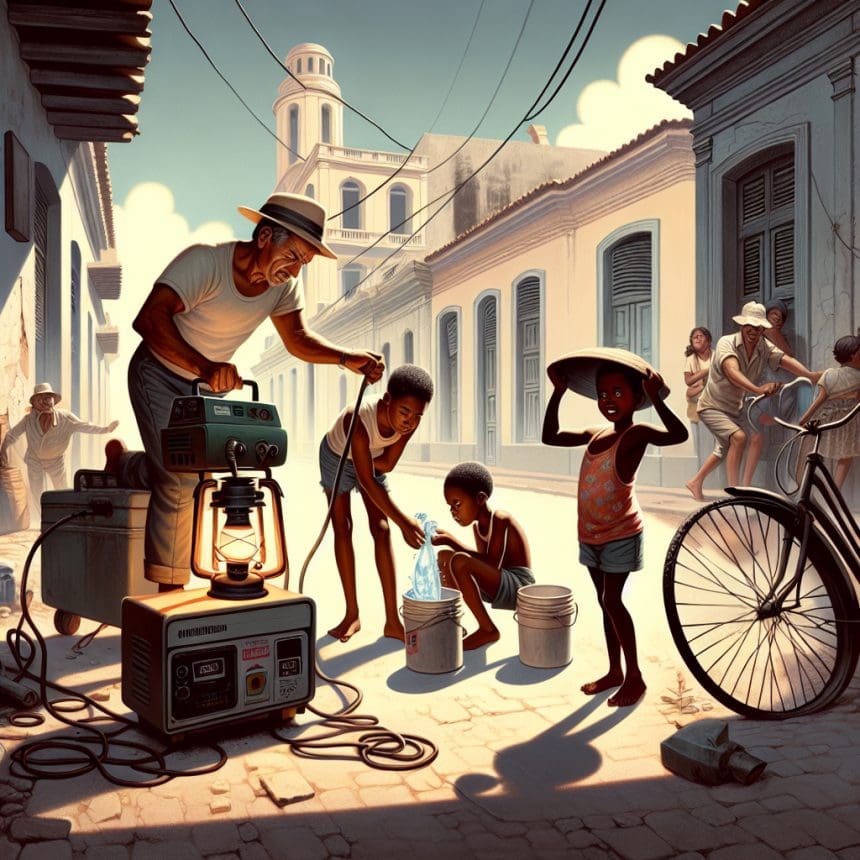
Headline: Cubans Face Daily Struggles Amidst Blackouts and Shortages
The people of Cuba are enduring profound daily hardships as they grapple with crippling blackouts, chronic water shortages, and dwindling fuel supplies. Since earlier this year, citizens across the island, from bustling Havana to rural outskirts, have reported an overwhelming increase in the frequency and duration of power outages, exacerbating an already dire economic situation punctuated by scarcity in essential resources. As citizens seek to navigate their lives amid these challenges, the implications are far-reaching for both personal and communal survival.
Blackouts and Their Impact
Cuba has been facing persistent blackouts that often last for hours or even days, severely disrupting daily life. Residents have shared stories of rising temperatures and rising frustrations as appliances, including fans and refrigerators, stumble due to electricity cuts. Taking to social media platforms, many Cubans have expressed their anger and despair over the government’s inability to resolve these outages. According to the state-run electricity company, the blackouts stem from a combination of aging infrastructure, insufficient fuel for power generation, and ongoing economic sanctions that restrict access to maintenance supplies.
The blackouts are not merely inconvenient; they pose significant health risks. Hospitals struggle to maintain medical equipment and deliver critical services, and residents reliant on power for life-sustaining devices live in constant fear of outages. Furthermore, local businesses suffer, as prolonged power outages hinder economic activity, stifling the already fragile recovery efforts from previous hardships.

Water Shortages: A Growing Concern
Compounding the power crisis is the alarming shortage of potable water available to citizens. Many neighborhoods report intermittent or complete loss of water supply, forcing residents to rely on limited truck deliveries or search for water from alternative sources, which can compromise health. The resonating complaint is clear: access to clean water has morphed from a basic right into a luxury.
Cuban authorities have acknowledged the water crisis, attributing it to drought conditions and inefficient distribution infrastructure. However, many citizens feel that the government’s response has been lacking, leaving communities to fend for themselves. This struggle for water is most pronounced in rural areas, where pipes are outdated and distribution networks are often non-existent.
Fuel Shortages: The Final Straw
As if blackouts and water shortages weren’t enough, many Cubans are also facing severe fuel shortages. With more people relying on private vehicles for commuting, as well as for personal transportation to sell goods in urban markets, the scarcity of fuel compounds the difficulties of daily life. Long lines have formed at gas stations across the country, with many drivers report waiting for hours, only to find that fuel supplies have run out.
The fuel crisis exerts additional pressure on the already strained delivery networks for food and other essential goods. With transportation options limited, the prices of goods in local markets continue to rise sharply. In this environment of scarcity, the cost of living has soared, making basic needs like food and medicine increasingly unaffordable for many families.
The Government’s Response
In response to these ongoing crises, the Cuban government has attempted to implement a series of measures aimed at stabilizing the economy and restoring basic services. Officials have promised investments in infrastructure and maintenance of energy sources, including a focus on renewable energy initiatives. However, many Cubans remain skeptical, citing past promises that have yet to materialize.
The government’s censorship of information surrounding these crises has also drawn ire from citizens frustrated by a lack of transparency and communication regarding support and solutions. This lack of clarity has resulted in a growing sense of disenchantment within the population, as many feel they are left to struggle without adequate government support.
Voices from the Streets
“Every day is a fight just to get by,” says Maria, a local shopkeeper in Havana. “We don’t even know if we’ll have power or water tomorrow. It’s exhausting.” Such sentiments echo throughout the island as families confront the stark reality of daily survival.
While the plight of Cubans has garnered some attention from international media, there are calls for greater awareness and support from the global community. From humanitarian organizations to foreign governments, many are urging assistance measures that could potentially alleviate some of the immediate suffering faced by Cuban citizens.
The Human Cost
The ongoing struggles faced by Cubans daily highlight a larger systemic problem: the intertwining of economic challenges and basic human rights. Access to electricity, clean water, and fuel are foundational to societal stability, and the failure to ensure these resources reflects deep-rooted inefficiencies in governance.
The psychological toll on citizens is also a growing concern. Anxiety and stress related to daily survival challenges can lead to longer-term mental health crises, further complicating the societal landscape. Without adequate access to mental health services, many Cubans feel isolated and powerless in the face of ongoing hardships.
Looking Ahead
As the situation continues to evolve, many wonder what the future holds for Cuba. Will the government effectively address the deep-rooted issues leading to these crises? Can the resilience of the Cuban people endure amidst such adversity? Community organizations and informal networks are slowly emerging to support one another, fostering solidarity in times of need.
Ultimately, as Cubans navigate the complex web of blackouts, water shortages, and fuel scarcity, their collective voices call for not only immediate relief but also systemic change that uplifts the foundational needs of a population yearning for stability and dignity.
Conclusion
Cuba’s ongoing struggles highlight the necessity for swift action, both locally and internationally, to address the pressing issues of basic resource availability and ensure a fundamental standard of living for all citizens. The resilience of the Cuban people may provide hope, but the challenges they face currently make survival a daily concern rather than a promised right. As the world watches, the need for understanding and support has never been more critical.