Head of NHL Player Safety Defends Matthews Hit Suspension
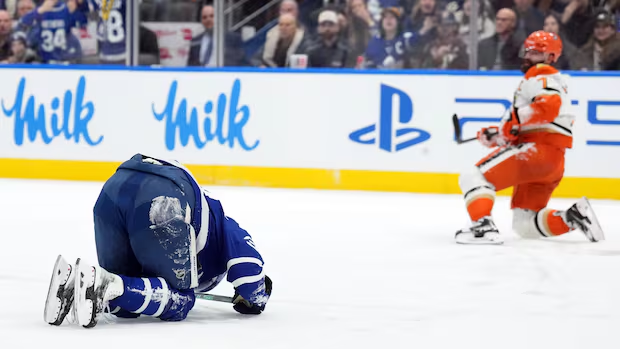
In a press conference earlier this week, George Parros, the NHL’s head of player safety, addressed the league’s controversial decision to suspend Colorado Avalanche forward Gabriel Landeskog for six games following a hit that resulted in Toronto Maple Leafs star Auston Matthews being sidelined for the rest of the season. This incident, which took place during a heated game on March 15, has sparked intense debate among fans, analysts, and players alike regarding the severity of the punishment and its implications for player safety.
Parros, who has been at the forefront of the NHL’s efforts to ensure the safety of its athletes, defended the league’s stance on the hit, emphasizing the importance of player welfare and the consistency of disciplinary measures. "Our goal is to protect players and ensure that they can compete in a safe environment," said Parros. "The decision to suspend Landeskog was based on the nature of the hit and its consequences for Matthews, who is a pillar of our game."
The hit in question has drawn scrutiny for its timing and its impact on the Maple Leafs’ playoff aspirations. Matthews, who had been enjoying a stellar season, was diagnosed with a significant injury that forced him out of action indefinitely. As one of the premier players in the league, his absence is not only felt by his team but also by fans and stakeholders invested in the NHL’s overall health and competitiveness.
Heightened Stakes in Player Safety Measures
The league’s efforts over recent years to evolve its player safety protocols have been met with both praise and criticism. Critics argue that disciplinary actions often appear inconsistent, leading to confusion about what constitutes a suspendable offense. Parros acknowledged these concerns but remained firm in his belief that recent decisions have been fair and transparent.

"The NHL has established clear guidelines for evaluating player hits. Each incident is assessed on a case-by-case basis, taking into account factors like intent, positioning, and the end result of the contact," he noted. "Our approach is designed to consistently uphold the standards we’ve set for player safety."
The Matthews incident is particularly poignant given the league’s ongoing struggle with head injuries and the long-term effects they pose to players. As the NHL grapples with its image, incidents like the Matthews hit could serve as turning points for implementing stricter measures. Parros hinted that future changes could be on the horizon as the league continues to evolve its policies. "We are always looking for ways to improve," he added. "The safety of our players is our foremost responsibility, and we owe it to them to ensure these situations are handled with clarity and purpose."
Player Perspectives
The players themselves have expressed mixed reactions to the hit and its aftermath. Some believe that stricter penalties are needed to deter dangerous play, while others argue that the fast-paced nature of the sport should allow some leeway in physical play. Several veteran players also commented on the need for additional training and awareness for players regarding body contact and timing.
"The game is fast, and sometimes things happen in the blink of an eye," said one anonymous player. "But we also have a responsibility to protect ourselves and our opponents. If that means tougher penalties for hits like the one on Auston, then maybe that’s what we need."
Implications for the Maple Leafs
The impact of Matthews’s injury also raises questions about the Maple Leafs’ prospects for the remainder of the season. As the team gears up for a playoff run, losing a player of Matthews’s caliber undeniably puts them at a disadvantage. Coach Sheldon Keefe expressed his disappointment over the incident, focusing on the broader implications for the team’s dynamics.
"We are dealing with a lot right now, and we can’t afford to lose a player like Auston so suddenly. He’s a cornerstone of this team," Keefe remarked. "We’re hopeful that the league will take the necessary steps to improve how these situations are addressed in the future."
The Bigger Picture
As discussions surrounding Matthews’s injury and Landeskog’s suspension unfold, they highlight the ongoing need for dialogue about player safety in the NHL. With the league at a crucial juncture, stakeholders—including players, coaches, and fans—are actively seeking clarity on the rules governing player conduct.
Should the NHL continue to enforce the existing disciplinary measures, or should it opt for a revamped approach that takes into account the growing concerns about player safety? Add to this the mounting pressure from advocacy groups urging the league to take head injuries seriously, and it becomes clear that the Matthews incident is part of a larger narrative concerning the future of the game.
Looking Ahead
As the playoffs draw closer, the NHL will likely continue to face scrutiny regarding its safety regulations. The way the league navigates the aftermath of the Matthews hit may set a precedent for handling future incidents. Parros, who has been tasked with upholding the integrity of the sport while ensuring player safety, remains steadfast in his commitment to that mission.
"Our aim is to strike a balance between the integrity of the game and the well-being of our players," he concluded. "We are in this together, and our shared objective is to make hockey as safe and exciting as it can be."
As the NHL enters the closing stages of the regular season, all eyes will remain on how the league addresses both the reaction to the Matthews hit and overall player safety initiatives in the realm of professional hockey.