Headline: Settler Violence Escalates in West Bank: Fires and Vandalism
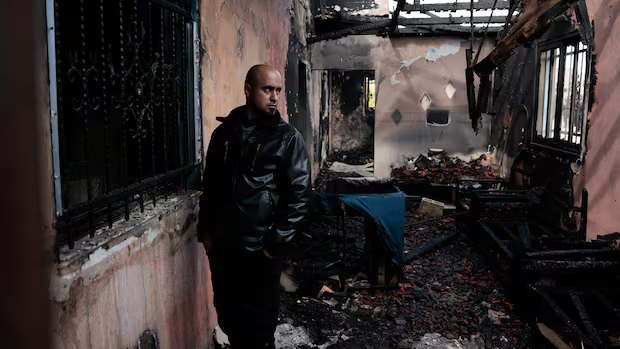
In a distressing escalation of violence, a group of Israeli settlers attacked Palestinian communities in the West Bank on Monday, resulting in property destruction and widespread panic. The incidents occurred in several villages around Nablus, where settlers reportedly set fires to olive groves and vandalized vehicles. Eyewitnesses noted that the attacks were sudden, with many families forced to flee their homes amid threatening confrontations. This latest wave of violence raises serious concerns about the ongoing tensions in the region, particularly as authorities struggle to maintain peace.
Reports indicate that the settlers, driven by claims of land disputes, targeted Palestinian residents in a coordinated effort that has become increasingly common in recent months. Activists on the ground documented the aftermath, showing charred fields and smashed car windows, underscoring the rising animosity between communities. The Israeli Defense Forces (IDF) intervened, but locals argue that protection was insufficient, allowing for the violent outburst to occur unchecked. "We are living in fear," one resident observed. "Every day we worry about another attack."
While the immediate cause of the latest violence remains unclear, experts suggest that the situation is exacerbated by a broader context of political tensions and unresolved issues surrounding land ownership and statehood. The West Bank, home to both Palestinians and Israeli settlers, serves as a flashpoint for ongoing conflicts, making it difficult to forecast any resolution in sight. As international attention focuses on the region, human rights organizations are calling for an urgent reassessment of policies that allow such acts to happen without accountability.
The United Nations and various human rights groups have expressed grave concern regarding the rise of settler violence. They urge the Israeli government to enforce protective measures for Palestinian communities and to take decisive action against the perpetrators of such attacks. "The systematic targeting of Palestinian structures and livelihoods by settlers is intolerable," commented a spokesperson for a prominent human rights organization. "These actions are not merely isolated incidents but part of a larger pattern that undermines peace efforts in the region."

Local leaders have echoed these sentiments, emphasizing the impact on daily life. "Every time there is an attack, it sets us back," said a village chief from the Nablus area. "We are trying to build a future for our children, but how can we do that in this atmosphere of violence and fear?" His words reflect a sentiment shared by many Palestinians who feel their existence is being challenged by ongoing settler encroachment.
During this latest wave of violence, social media platforms saw an uptick in posts documenting the destruction and sharing stories of affected families. Videos circulated showing burnt fields—an essential source of livelihood for many families. The sight of olive trees, symbols of peace and longevity in the region, reduced to ashes has become a poignant emblem of the ongoing struggle.
Amid worsening conditions for Palestinians, the Israeli government has emphasized its commitment to security for all its citizens. However, critics argue that the lack of meaningful action against settler violence reflects a broader failure to address the underlying issues of occupation and settlement expansion. "It is time for the Israeli government to take a stand," said a political analyst. "They need to choose between further entrenchment of violence or a genuine effort towards peace."
International diplomatic efforts aimed at addressing tensions in the West Bank have repeatedly faltered, raising questions about the effectiveness of existing peace initiatives. The recent surge in attacks may further complicate already strained relations between the two communities, hindering potential negotiations. As violence continues to unfold, the cycle of retaliation appears to persist, leaving both Palestinians and Israelis caught in an ongoing cycle of despair.
The United States and other Western nations have urged restraint from both sides in light of the escalating violence. Press Secretary John Smith reiterated the U.S. position: "We encourage all parties to exercise restraint and to engage in dialogue that fosters peace and understanding." However, skepticism endures among Palestinians who have witnessed decades of diplomatic promises followed by continued suffering.
Looking ahead, residents of Palestinian villages anxiously await government intervention to protect their homes and livelihoods. Community leaders are organizing rallies to raise awareness and seek solidarity from international organizations. "We need the world to see what is happening here," stated a local activist holding a recent protest sign that read "End the Occupation."
As the situation remains precarious, the fires in the West Bank serve as a stark reminder of the urgent need for dialogue and intervention to ensure the safety of all residents. Experts warn that failing to address the systemic root causes of violence will only perpetuate the cycle of conflict in the region.
In summary, the violent acts committed by Israeli settlers against Palestinians in the West Bank not only devastate lives and livelihoods but also represent a broader deterioration of peace efforts. As families mourn their destroyed homes and livelihoods, the call for justice and accountability becomes increasingly urgent. Only through concerted action can the specter of violence be lifted, allowing for a renewed focus on reconciliation and stability in the West Bank.
As the sun sets on another day of violence, the hope for a peaceful coexistence remains, albeit dim in the shadow of fear and destruction.