


How Futures Contracts Work—and How Traders Make (or Lose) Money
Educational overview only; not financial advice.
ST. LOUIS, MO (STL.News) Futures are standardized agreements to buy or sell an asset at a set price on a set future date. They trade on regulated exchanges (like CME, ICE) and are used by two broad groups:
- Hedgers: businesses that want to lock in prices (farmers, airlines, manufacturers).
- Speculators: traders who want to profit from price moves without intending to take delivery.
Below is a practical, plain-English guide to the mechanics, profits and losses, and the real risks.
The Building Blocks
Contract specs. Each futures contract defines:
-
Underlying: what it represents (e.g., crude oil, S&P 500 index, U.S. Treasury bonds, gold, wheat, EUR/USD, Bitcoin).
-
Contract size: how much of the underlying one contract controls (e.g., crude oil = 1,000 barrels; corn = 5,000 bushels).
-
Tick size & tick value: the minimum price movement and its dollar value.
-
Example: If crude oil ticks by $0.01 and the contract is 1,000 barrels, each tick = $10.
-
-
Months: tradable expirations (e.g., March, June, September, December).
-
Settlement: physical delivery vs. cash settlement. Most financial futures are cash-settled; many commodities are deliverable (hedgers care, most speculators exit or “roll” before delivery).
Standardization enables the exchange to match buyers and sellers instantly and calculate profits and losses uniformly for everyone.
Margin, Leverage, and Daily “Mark-to-Market”
Futures are leveraged. You don’t pay the full notional value; you post a margin (a performance bond). There are two key levels:
- Initial margin: what you post to open a position.
- Maintenance margin: the minimum equity you must keep. If your equity falls below it, you get a margin call and must add funds.
Every day, your position is marked to market:
- Gains are credited to your account.
- Losses are debited from your account.
- This daily P&L flow is referred to as variation margin.
Example (crude oil):
- Contract size: 1,000 barrels.
- You buy one November contract at $75.00.
-
If the price settles at $76.20, your unrealized gain is:
-
Move = $76.20 – $75.00 = $1.20
-
P&L = $1.20 × 1,000 = +$1,200 (credited that day)
-
-
If instead it settles at $73.50:
-
Move = $73.50 – 75.00 = $1.50
-
P&L = $1.50 x 1,000 = $1,500 (debited that day)
-
Leverage in numbers. If the initial margin is, say, $7,000, you control $75,000 notional ($ 7,000 × 1,000). That’s 10.7× leverage. A 1% underlying move ($0.75) is a ~10.7% change versus your margin. Leverage cuts both ways.
Long vs. Short: How You Make or Lose Money
You can buy (go long) or sell (go short) first. Profits depend on direction:
- Long P&L = (Final futures price- Entry price) × Contract size
- Short P&L = (Entry price ? Final futures price) × Contract size
Because selling first is as easy as buying, traders can profit from downward moves just as readily as they can from upward moves.
Tick-based view. If a contract’s tick value is $12.50 and price moves eight ticks in your favor, that’s 8 × $12.50 = $100 per contract (before fees). The same move against you is a $100 loss.
Pricing Basics: Cost of Carry, Contango, and Backwardation
For deliverable commodities and many financial futures, the fair price reflects today’s spot price plus/minus the cost of carry (financing, storage, insurance, and any income/benefit the asset provides).
- Contango: Futures price above spot. This often happens when storage/financing costs are high relative to the convenience of holding physical assets.
- Backwardation: Futures price below spot. It can occur when near-term demand for the physical is strong or inventories are tight.
Basis = Spot – Futures. Hedgers closely watch the basis because it affects hedge effectiveness and outcomes when positions are closed or rolled.
Settlement and Rollover
- Cash-settled contracts (many index/volatility/crypto futures) pay/collect cash at expiration based on a final settlement price.
- Physically deliverable contracts (many commodities, some bonds) require taking or making delivery if you hold through the delivery period. Speculators usually close or roll (exit the near month and enter a later month) before first notice day (for longs) or last trade day (for shorts).
Rollover introduces roll yield: in contango, rolling long positions can be a headwind; in backwardation, it can be a tailwind.
Who Uses Futures and Why
Hedgers
- Farmers & producers: Lock in selling prices to protect cash flows.
- Airlines & manufacturers: Lock in input costs (jet fuel, metals).
- Exporters/importers: Hedge currency exposure.
- Portfolio managers: Hedge stock or rate risk; equitize cash.
Speculators
- Express directional views (bullish/bearish).
- Trade spreads (calendar spreads, crack/crush spreads, inter-market relationships).
- Pursue arbitrage (e.g., cash-and-carry when futures are rich vs. spot plus carry).
How a Typical Trade Works (Step by Step)
- Choose the market & month. Pick a liquid contract and an expiration that matches your timeframe and (if hedging) your exposure.
- Know the tick value. Understand how every minimum price change affects the profit and loss (P&L) statement.
- Check margin. Confirm your initial/maintenance margin, as well as your available buying power.
- Place the order. Market order for immediacy; limit order for price control.
- Monitor P&L daily. Mark-to-market flows can trigger margin calls.
- Manage risk. Position size, stops, and scenario planning.
- Exit or roll. Close before delivery risk if you’re not hedging the physical.
Concrete Profit/Loss Examples
1) Equity Index Futures (cash-settled)
-
Suppose one contract’s tick value is $12.50, and the index rises 20 ticks after you buy.
-
Profit = 20 × $12.50 = $250 (less fees).
-
If it falls 20 ticks, the loss is $250.
-
2) Corn Futures (5,000 bushels)
-
You sell (short) December corn at $5.10 per bushel; later, you buy back at $4.98.
-
Move = $5.10 – $4.98 = $0.12.
-
P&L = $0.12 × 5,000 = $600 gain (less fees).
-
If corn had risen to $5.22, your loss would be $0.12 × 5,000 = $600.
-
3) Hedging Jet Fuel Using Crude (proxy hedge)
-
An airline expects to purchase 2 million gallons of jet fuel within the next 3 months. It buys crude oil futures as a proxy hedge (since pure jet fuel futures may be less liquid). If crude rises, futures gains can help offset higher fuel costs. If oil falls, futures losses may be offset by lower cash fuel prices. Basis risk remains because of crude? jet fuel.
Common Strategies
Directional
- Go long if you expect prices to rise; short if you expect them to fall.
- Use technical or macro/fundamental analysis for entries/exits.
Calendar spreads
- Buy one month and sell another (e.g., long near-month crude, short a later month) to trade the shape of the curve (contango/backwardation changes)—lower outright risk than a naked long/short, but still meaningful.
Inter-commodity spreads
- Trade relationships (e.g., “crack spread”: long gasoline/diesel vs. short crude to express refinery margin views).
Cash-and-carry (institutional)
- When futures are priced above spot + carry costs, buy the physical and short futures, delivering at expiry to lock in a near-riskless spread (subject to financing, storage, and operational risks).
Portfolio hedging
- Short equity index futures to reduce portfolio beta quickly and efficiently (often cheaper/faster than selling individual stocks).
Risk Management: Where Futures Traders Get Hurt
- Leverage cuts both ways. Small price moves can quickly translate into large percentage gains or losses relative to margin.
- Margin calls & forced liquidation. If your equity falls below maintenance, you must add cash; otherwise, your broker may reduce/close positions.
- Gap risk & limit moves. Markets can jump overnight or hit exchange limits; stop orders may fill at a worse-than-expected price (slippage).
- Rollover costs. In contango, consistently rolling long positions can be a drag (negative roll yield).
- Basis risk. Your hedge may not move in one-for-one proportion to your actual exposure (e.g., hedging jet fuel with crude oil).
- Liquidity. Thin contracts have wider bid/ask spreads and higher slippage.
- Fees. Commissions, exchange/clearing fees, and data fees lower net returns.
- Operational errors. Wrong month, wrong side, or forgetting delivery deadlines.
Practical guardrails
- Define risk per trade (e.g., 0.5–2% of account equity).
- Size positions based on the stop distance and tick value (not from intuition).
- Use contingent orders or alerts; review margin daily.
- Stress-test: “What if the market gaps 2× my stop?”
- Keep a trade journal to avoid repeating mistakes.
How Hedgers “Make Money”
Hedgers aren’t usually trying to “beat the market”; they aim to reduce earnings volatility. A well-designed hedge can:
- Offset adverse price moves in the cash market.
- Lock in margins (sell futures to lock a selling price; buy futures to lock a purchase price).
- Improve planning and budgeting.
A hedge can show a loss on futures and still be successful if the cash side benefits more (and vice versa). The combined result is what matters.
Taxes and Regulation (High-Level)
- Tax treatment varies by country and contract type. In the U.S., many index/FX/commodity futures fall under Section 1256 (a 60/40 long-term/short-term blend), but the rules can be nuanced and subject to change.
- Futures and FCMs are typically overseen by regulators (e.g., CFTC/NFA in the U.S.).
Always consult a qualified professional for your situation.
Popular Contract Types (Overview)
- Equity index: S&P 500, Nasdaq-100, Dow, Russell—cash-settled; used for hedging and speculation.
- Rates: Treasury bonds/notes, Eurodollar/SOFR—used to express rate and curve views or hedge fixed-income books.
- FX: Euro, Yen, Pound, etc.—alternatives to spot/forwards; standardized and exchange-cleared.
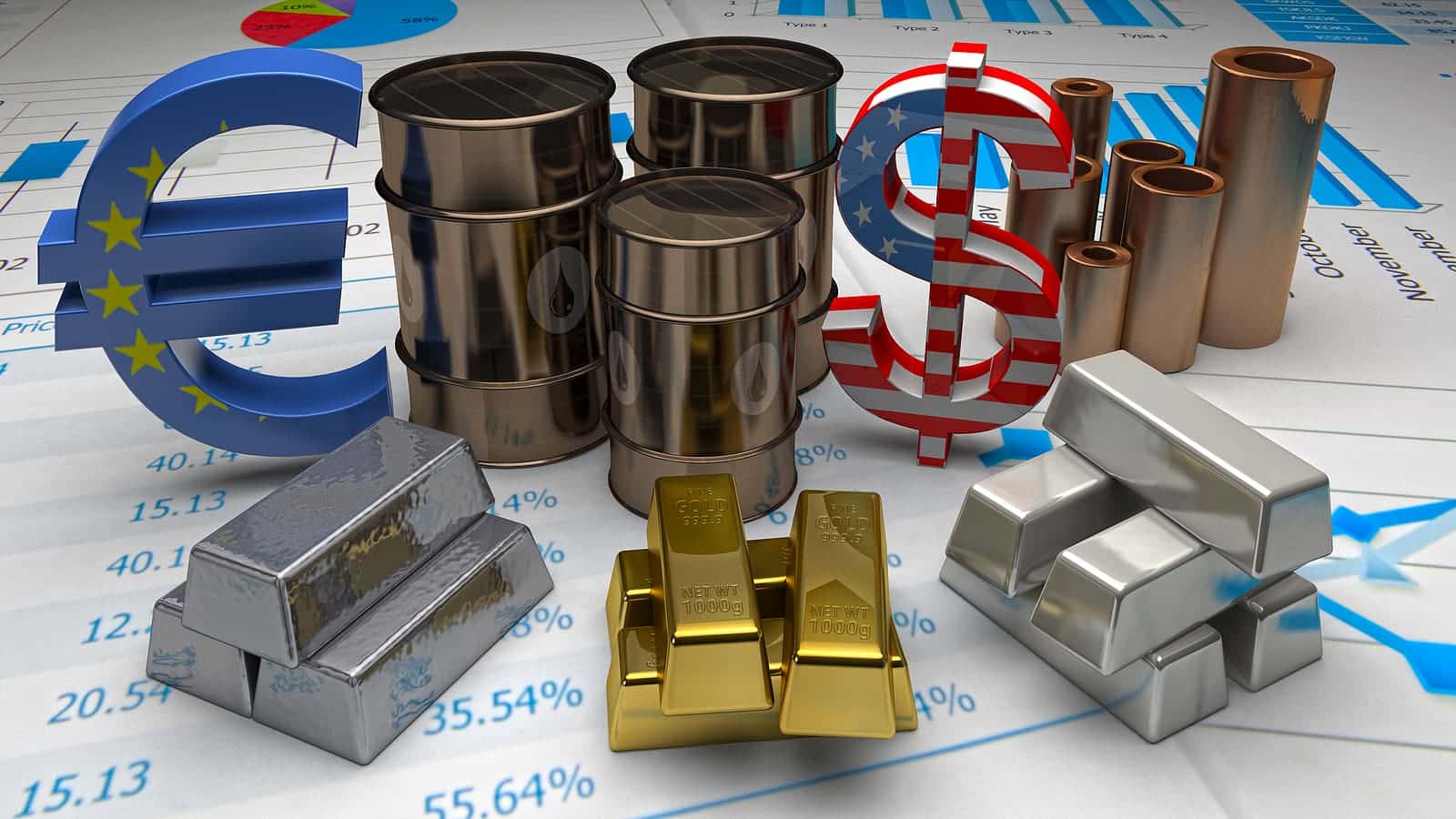
- Commodities: Energy (crude, natural gas), metals (gold, copper), agriculture (corn, soybeans, wheat, coffee, sugar).
- Volatility & crypto: VIX-style and digital-asset futures (risk profiles can be very different; understand specs and liquidity).
Quick Checklist Before You Trade
- Do I understand the contract size, tick value, and expiration?
- What’s my thesis, invalidating level, and target?
- How much can I lose if I’m wrong (including gaps)?
- Does this position align with my overall risk tolerance?
- What’s my exit plan—time-based, signal-based, or risk-based?
- If hedging, is this the right instrument (basis risk)?
- When will I roll or close to avoid delivery?
Bottom Line
Futures are powerful tools:
- You make money when the price moves in your favor between entry and exit, which is magnified by the contract size and leverage.
- You lose money just as quickly when price moves against you; daily mark-to-market means losses must be funded immediately.
- Hedgers use futures to stabilize business results; speculators use them to express views efficiently.
Approach them with respect: know the specs, control position size, and manage risk as if tomorrow could be the worst day of the year—because someday, it will be.
© 2025 STL.News/St. Louis Media, LLC. All Rights Reserved. Content may not be republished or redistributed without express written approval. Portions or all of our content may have been created with the assistance of AI technologies, like Gemini or ChatGPT, and are reviewed by our human editorial team. For the latest news, head to STL.News.



