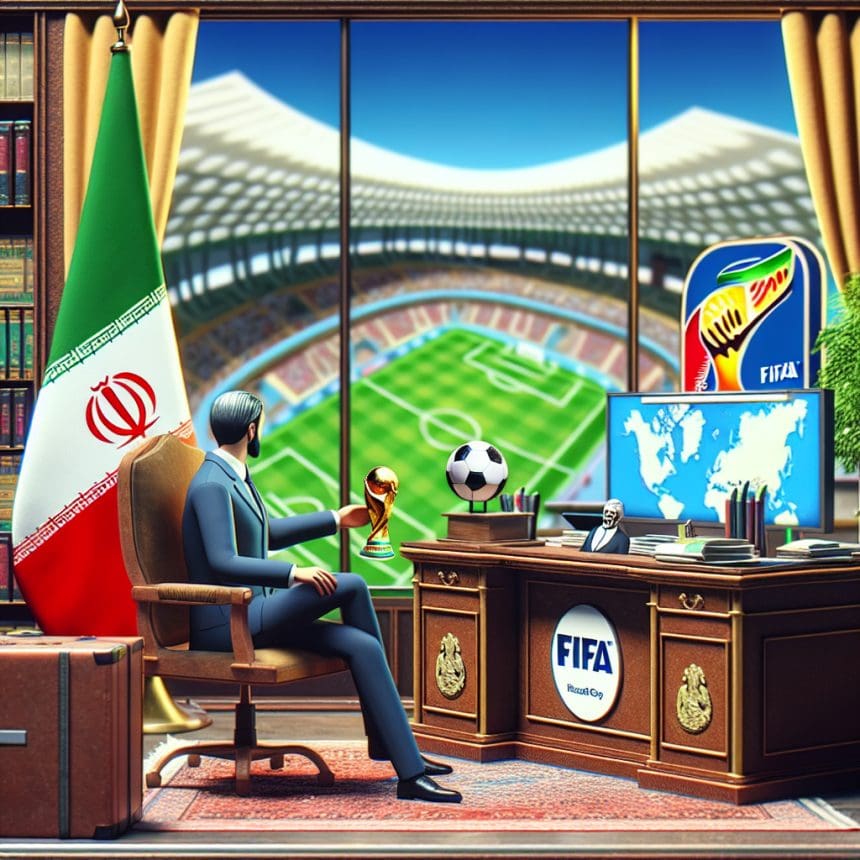
Iran Seeks to Host World Cup Matches in New Negotiations with FIFA
Iran’s embassy in Mexico announced that discussions are underway with FIFA to potentially relocate several World Cup 2026 matches to Iran. This indicates a significant shift in the tournament’s planning, aiming to engage Iranian fans and showcase the country’s rich culture on a global stage. The negotiations come amid ongoing debates about the logistics and scheduling of the tournament, which is set to be co-hosted by the United States, Canada, and Mexico from June to July 2026.
Iran’s proposition follows a landscape of evolving international relations and growing interest in expanding the World Cup experience beyond traditional host nations. With the Middle East recently gaining traction in global sporting events, including the successful hosting of the 2022 FIFA World Cup in Qatar, Iran’s plans represent a significant pivot in world soccer dynamics.
An Unexpected Proposal from Iran
The proposal from Iran is both pioneering and controversial. The Iranian government, known for its complex geopolitical stance, appears to be leveraging the World Cup’s prominence to enhance its global image. While FIFA traditionally confines matches to host nations, exceptions have been made in the past, notably with the introduction of satellite events or fan zones.

Iranian officials believe that hosting World Cup matches could foster cultural exchange and improve diplomatic relations, tapping into the universal language of football. This initiative could provide a unique platform for Iran to present its history, heritage, and hospitality to the world.
Diplomatic Context and Implications
The negotiations come at a time when Iran’s relationship with various nations, particularly the West, is at a crossroads. The country has faced heavy sanctions and diplomatic isolation over its nuclear program and human rights issues. Engaging in such high-stakes international sporting events could be seen as a way for Iran to cultivate a more favorable image and possibly lessen some economic constraints.
Sports diplomacy is a powerful tool; historical examples reveal how events like the Olympics and the FIFA World Cup have acted as catalysts for dialogue between nations. Iran’s attempt to gain a foothold in the World Cup arena could lead to broader discussions about bilateral relations and peace initiatives.
The Potential Benefits of Hosting Matches
Hosting World Cup matches could yield substantial economic benefits for Iran. Sports tourism has been proven to boost local economies, particularly in sectors such as hospitality, transportation, and retail. By drawing international visitors, Iran could showcase its tourist destinations, including breathtaking historical sites and rich cultural offerings.
Furthermore, the World Cup presents an opportunity for Iran to highlight its sporting infrastructure. Although the country faces certain limitations, the government has been investing in sports facilities and training programs. Hosting such internationally recognized matches would not only showcase these developments but also encourage further investments in local sports and infrastructure.
Challenges Ahead
However, the pathway to hosting World Cup matches is fraught with challenges. The Iranian government must address numerous concerns, ranging from security to logistical issues, if it hopes to gain FIFA’s approval. International scrutiny over human rights violations could also pose a significant barrier. FIFA has faced backlash in the past for partnering with nations with questionable records in this area, and Iran is no exception.
Moreover, the feasibility of integrating Iran into a World Cup primarily hosted by the U.S., Canada, and Mexico raises logistical questions. Coordination between diverse regulatory and operational frameworks will be necessary to create a cohesive tournament experience.
The Global Reaction
The international response to Iran’s proposal has been mixed. Many in the soccer community see potential for expanding the World Cup experience to new audiences, while others caution against extending a platform to a country known for its contentious politics. Prominent sports analysts emphasize the need for careful consideration of the implications of such a move, noting that any decision could have lasting effects on FIFA’s reputation and operational credibility.
Fans and players alike have expressed varying levels of enthusiasm regarding the potential for matches in Iran. Enthusiasts see it as an exciting opportunity to explore a new, lesser-known soccer culture, while others remain skeptical, citing political implications and human rights concerns.
The Road Ahead
With negotiations still in early stages, the outcome remains uncertain. FIFA has not yet publicly responded to Iran’s proposition, emphasizing that any decisions will prioritize the tournament’s integrity, fairness, and security.
While many details are yet to be ironed out, the prospect of Iran hosting parts of the World Cup has already ignited discussions about the role of sports as a vehicle for diplomacy and cultural exchange. As the sporting world anticipates the 2026 World Cup, the spotlight is set on Iran, and football fans are eager to see how this story unfolds.
Conclusion
As discussions progress, stakeholders will continue to watch Iran’s negotiations with FIFA closely. The potential relocation of World Cup matches to Iran symbolizes more than just an athletic event; it reflects the interplay between sports and geopolitics. Whether or not the proposal comes to fruition, it undeniably contributes to the rich narrative surrounding the global event, emphasizing that, in the end, thriving on unity might be the most valuable goal of all.
For now, attention turns to the ongoing negotiations, international reactions, and the implications of this bold proposal. Will Iran successfully capture this opportunity, or will the complexities surrounding its geopolitical climate hinder its ambitions? Only time will tell.