


Gas Prices – Record U.S. oil production and falling gasoline prices have not eliminated financial pressure on American households. The economic consequences could extend from Main Street businesses to employment, consumer spending, and recession risk.
ST. LOUIS, MO – November 21, 2026 (STL.News) Gas Prices – The United States is producing historically high quantities of crude oil, gasoline prices are finally declining, and the Trump administration continues to emphasize the strength of the American economy. Yet millions of American households remain financially strained by transportation expenses and the broader cost of living.
That apparent contradiction raises an important economic question: Could elevated gasoline prices, combined with other household expenses, contribute to a major American recession?
The possibility deserves serious examination, especially as businesses that depend on discretionary consumer spending face an increasingly uneven economic environment.
Gasoline prices are more than a transportation expense. They influence how much money households have available for restaurants, retail purchases, entertainment, travel, and other goods and services.
When gasoline becomes substantially more expensive, consumers often reduce spending elsewhere.
When enough consumers make those adjustments at the same time, businesses see weaker revenue. Some respond by reducing employee hours, postponing hiring, limiting investment, or eliminating jobs.
Those decisions can create additional financial pressure on households, potentially reinforcing an economic slowdown.
The central concern is not that high gasoline prices automatically cause recessions. They do not.
Rather, sustained energy costs can contribute to the conditions that make the American economy more vulnerable to a downturn.
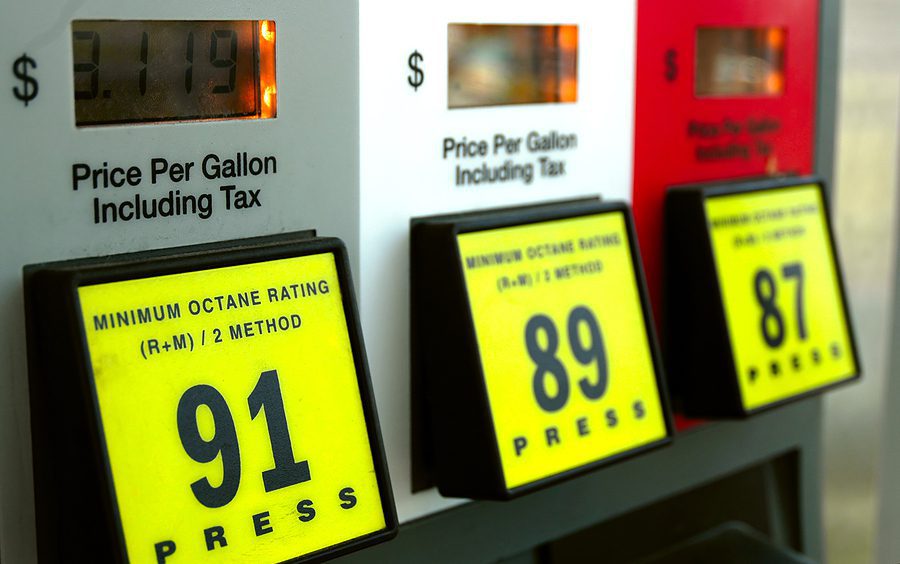
Gas Prices Are Declining, but Remain Elevated
According to AAA, the national average price of regular gasoline was about $3.72 per gallon on November 19, 2026.
That marked a substantial decline from about $4.30 a month earlier.
However, the national average remained approximately 63 cents higher than the corresponding period in November 2025, when gasoline averaged about $3.09 per gallon.
The year-over-year difference represents an increase of approximately 20%.
Missouri households are experiencing similar conditions.
AAA reported a statewide average of approximately $3.42 per gallon on November 19, compared with approximately $2.72 one year earlier.
That represents an increase of nearly 70 cents per gallon, or approximately 26%.
Missouri gasoline prices remain below the national average, but that distinction does not eliminate the financial burden on working households.
Consider a family purchasing 100 gallons of gasoline monthly.
At $2.72 per gallon, the monthly expense would be approximately $272.
At $3.42, the expense increases to approximately $342.
That represents an additional $70 monthly.
If the difference continued for a full year, the household would spend about $840 more on gasoline.
This is an illustrative calculation, not a forecast, but it shows how transportation costs affect disposable income.
For a financially secure household, an additional $70 monthly expense may be manageable.
For a family already struggling with housing, groceries, insurance, utilities, and debt payments, the same increase can require difficult spending decisions.
And when millions of households face similar pressures, the cumulative economic consequences can become substantial.
Gas Prices – Why Record American Oil Production Does Not Mean Cheap Gas
One of the most confusing aspects of the current energy market is the relationship between domestic petroleum production and gasoline prices.
The United States is among the world’s largest crude oil producers.
The U.S. Energy Information Administration projects American crude production will average approximately 13.9 million barrels per day in 2026 and increase to a record 14.3 million barrels per day in 2027.
Those figures demonstrate substantial domestic energy capacity.
However, producing more oil does not automatically guarantee lower gasoline prices.
Crude oil trades in an interconnected international market.
Prices respond to global supply and demand, inventories, transportation costs, and geopolitical developments.
American petroleum producers participate in those markets, and domestic refineries remain exposed to international pricing conditions.
Refineries also require different grades of crude oil, and some facilities depend partly on imported petroleum.
The price consumers ultimately pay for gasoline reflects crude oil costs, refining expenses, transportation, distribution, marketing, and taxes.
A disruption affecting any major component can influence retail prices.
Consequently, the United States can produce record quantities of petroleum while American motorists continue paying elevated gasoline prices.
Strong domestic production can improve supply conditions and energy security, but it cannot fully insulate consumers from international disruptions.
Gas Prices – The Strait of Hormuz and Global Petroleum Markets
The Strait of Hormuz remains one of the world’s most strategically important petroleum transportation corridors.
The narrow waterway connects the Persian Gulf with international shipping routes used to transport crude oil and refined petroleum products.
Disruptions associated with the conflict involving Iran have contributed to uncertainty surrounding petroleum supplies, tanker movements, and transportation expenses.
The Energy Information Administration’s November 2026 outlook identified attacks on oil tankers, constrained shipping capacity, declining inventories, and higher transportation costs as factors driving elevated crude oil prices.
Improving petroleum shipments through the strait can help ease international supply pressure.
However, restoring shipping activity does not automatically return the petroleum market to its previous condition.
Inventories may need to be replenished.
Shipping expenses may remain elevated.
Refineries may continue experiencing supply constraints.
International buyers may also remain concerned about future disruptions.
These conditions help explain why improvements in global petroleum shipments do not necessarily produce immediate, equally large reductions at American gasoline stations.
The EIA expects global petroleum conditions to improve gradually during 2027, although the timing remains uncertain.
Why Gasoline Prices Sometimes Rise Faster Than They Fall
American motorists often wonder why gasoline prices rise quickly when crude oil becomes more expensive but sometimes fall more slowly when petroleum prices drop.
Economists have studied this behavior for decades.
Sometimes described as the “rockets and feathers” phenomenon, the pattern reflects the tendency of retail gasoline prices to rise rapidly following certain wholesale cost increases but adjust more gradually following comparable decreases.
Several factors can contribute.
Gasoline retailers consider wholesale replacement costs, existing inventories, local competition, and expectations about future prices.
Refineries and distributors operate within supply chains that do not adjust instantaneously.
Regional market conditions can also influence how quickly retail prices respond.
In some circumstances, retail profit margins may remain elevated temporarily while wholesale costs decline.
However, this pattern is not universal.
The recent decline in gasoline prices shows that retail prices can fall rapidly.
According to AAA, the national average declined approximately 57 cents per gallon between October 19 and November 19.
That is meaningful relief over a relatively short period.
The larger economic problem is that households cannot recover the money already spent during months of elevated prices.
A family that paid hundreds of extra dollars for gasoline earlier in the year does not automatically get those funds back when prices decline.
The financial effects may continue through reduced savings, accumulated debt, and postponed purchases.
The Household Budget Is Where the Economic Pressure Begins
For millions of Americans, gasoline is a necessity, not an optional purchase.
Workers must travel to their jobs.
Parents must transport children.
Families must purchase groceries, attend medical appointments, and meet everyday responsibilities.
When gasoline becomes more expensive, households cannot always reduce consumption enough to offset the increase.
Instead, they frequently adjust other spending.
A family may reduce restaurant visits.
A household may postpone purchasing furniture or appliances.
Consumers may cancel entertainment activities, delay home improvements, or cut back on travel.
These decisions are understandable responses to financial pressure.
However, when millions of households make similar adjustments, the economic consequences become significant.
Consumer spending accounts for roughly two-thirds of American economic output.
That makes household purchasing power essential to national economic stability.
When consumers cut discretionary spending, businesses that depend on those purchases can face immediate revenue pressure.
The effects become especially serious when households are already struggling with other necessary expenses.
Gas Prices – Why Main Street Businesses Can Struggle in a Strong Economy
National economic statistics provide important information about employment, production, investment, and overall economic activity.
However, those indicators do not necessarily describe the financial circumstances of every household or business.
Economic growth can coexist with financial hardship.
Large corporations may report strong earnings while independent retailers experience declining sales.
Financial markets may perform well while working families struggle with transportation and grocery expenses.
Higher-income households may maintain discretionary spending while lower- and middle-income consumers cut back on purchases.
This divergence can produce dramatically different business conditions.
Restaurants, neighborhood retailers, grocery stores, and service providers depend on customers with money left after paying essential expenses.
When discretionary income declines, businesses can experience fewer customers and smaller transactions.
A restaurant may maintain customer traffic but generate less revenue because diners order fewer items.
Customers may split meals, skip appetizers, eliminate beverages, or choose less expensive menu selections.
Other customers may stop dining out entirely.
Retailers can experience similar patterns as consumers postpone nonessential purchases.
Service businesses may see customers delay maintenance, repairs, or optional appointments.
These changes can be especially damaging when operating expenses remain elevated.
Rent, insurance, utilities, payroll, and debt payments do not automatically decline when sales weaken.
Consequently, even modest revenue reductions can produce significant profitability problems.
Gas Prices – Why High-End Restaurants May Remain Busy
The financial consequences of elevated living expenses are not distributed equally.
Affluent households generally have greater flexibility to absorb increases in gasoline, groceries, and other necessities.
Lower- and middle-income households typically devote larger portions of their income to essential expenses.
When those expenses rise, discretionary spending may decline more sharply among financially constrained consumers.
This can produce an uneven restaurant and retail economy.
Luxury restaurants and high-end retailers may continue attracting customers while moderately priced establishments experience weaker sales.
The difference does not necessarily reflect business quality or management.
It may reflect their customers’ financial circumstances.
An expensive restaurant serving financially secure diners can remain successful while a moderately priced restaurant serving working families struggles.
Both businesses operate within the same national economy.
Yet their economic experiences can differ dramatically.
This is one reason national economic growth does not automatically translate into prosperity across Main Street.
Gas Prices – Diesel Prices Create Additional Economic Pressure
Gasoline receives substantial public attention, but diesel fuel is equally important to many businesses.
Diesel powers much of the nation’s trucking, agricultural, and industrial transportation activity.
It is essential for transporting food, manufactured goods, construction materials, and consumer merchandise.
When diesel prices rise, transportation and distribution costs can increase.
A grocery distributor may pay more to deliver products.
A restaurant supplier may face higher operating costs.
Farmers may spend more on equipment and transportation.
Construction companies may face higher expenses for machinery and materials.
Businesses must decide whether to absorb those costs, increase prices, or reduce expenses elsewhere.
Each option can create economic consequences.
Absorbing higher expenses reduces profitability.
Increasing prices places additional pressure on consumers.
Reducing expenses can involve postponing investment, limiting employee hours, or eliminating positions.
The Energy Information Administration’s November outlook projects an average retail diesel price of approximately $5.03 per gallon in 2027.
That forecast suggests transportation-related expenses could remain an important economic concern even as gasoline prices decline.
Could High Gas Prices Become a Recession Catalyst?
A recession generally involves a significant, widespread decline in economic activity that lasts longer than a brief period.
The National Bureau of Economic Research evaluates multiple indicators when identifying U.S. recessions, including employment, income, production, and spending.
High gasoline prices alone do not establish that a recession is underway.
However, sustained energy-price increases can contribute to conditions that make an economic contraction more likely.
The process begins with reduced household purchasing power.
Consumers spend more on transportation and less on discretionary goods and services.
Businesses that depend on discretionary spending see weaker revenue.
Employers may respond by reducing hiring, employee hours, or investment.
If conditions deteriorate sufficiently, layoffs can follow.
Workers who lose income then reduce their own spending.
That creates additional pressure on businesses.
The process can become self-reinforcing.
Reduced restaurant spending can affect not only restaurants but also food suppliers, distributors, and workers.
Weakness in retail sales can affect wholesalers, manufacturers, and transportation providers.
Eventually, financial pressure that began with higher energy costs can spread to other industries.
However, the severity of the outcome depends on several factors.
Employment conditions, wage growth, household savings, debt levels, and the duration of high energy prices all matter.
Falling gasoline prices can also provide relief before the situation develops into a recession.
The concern is therefore not that a major recession is inevitable.
It is that prolonged energy-related financial pressure can make the economy more vulnerable to a downturn.
Gas Prices – The 2026 Midterm Elections Demonstrated the Political Importance of Affordability
The November 3, 2026, midterm elections demonstrated how strongly household affordability can influence the political environment.
Democrats won control of both the U.S. House of Representatives and Senate.
Voter surveys indicated widespread dissatisfaction with economic conditions.
According to ABC News’ November 5 analysis of its Voter Poll, approximately three-quarters of House voters described the economy as not good or poor.
Gasoline and diesel prices, groceries, healthcare expenses, and utility bills were among the concerns influencing voters.
Associated Press voter polling also found that people expressing serious concern about everyday living expenses strongly favored Democratic candidates in House races.
These findings support the conclusion that energy affordability was an important factor in the 2026 election environment.
However, gasoline prices alone cannot be identified as the sole cause of Republican losses.
Voters also considered other economic conditions, government policies, candidate qualifications, and concerns about political accountability.
The more accurate conclusion is that elevated gasoline prices contributed to a broader affordability problem that created political difficulties for Republicans.
That distinction lets the issue be examined without assigning exclusive responsibility to President Trump or treating international petroleum markets as if one administration controlled them entirely.
The larger political lesson is that voters frequently judge economic conditions through their own financial circumstances.
National production records and positive economic statistics may carry less weight when families believe their purchasing power is declining.
Gas Prices – A Strong Economy Does Not Guarantee Financially Secure Households
Economic growth and household financial hardship can exist simultaneously.
Gross domestic product measures the value of goods and services produced throughout the economy.
It does not directly measure how comfortably every household can pay its bills.
Similarly, rising financial markets may benefit investors without immediately improving the circumstances of households that own few financial assets.
Employment statistics are essential, but having a job does not automatically guarantee sufficient disposable income.
A worker may remain employed while struggling financially because essential expenses have increased faster than earnings.
This helps explain why consumers can describe the economy as weak even when national economic indicators remain positive.
Households evaluate their financial circumstances based on the money left after paying necessary expenses.
If that amount continues shrinking, discretionary spending becomes increasingly difficult.
And because consumer spending is central to American economic activity, widespread financial pressure can eventually affect national growth.
Why Falling Gas Prices May Not Immediately Restore Spending
Lower gasoline prices generally benefit consumers and businesses.
They reduce transportation expenses and free money for other purchases.
However, the economic recovery from an extended period of expensive fuel may not happen immediately.
Some households may have accumulated credit card balances while paying elevated living expenses.
Others may have depleted savings.
When gasoline becomes cheaper, those families may initially use the savings to repay debt or rebuild emergency reserves.
They may not immediately resume restaurant visits, shopping, or entertainment spending.
Businesses can respond similarly.
A restaurant that experienced months of declining revenue may postpone expansion even after customer traffic begins improving.
Retailers may avoid increasing inventory until sales become more predictable.
Employers may delay hiring until they are confident demand will recover.
These adjustments create a delay between lower gasoline prices and stronger economic activity.
The longer households and businesses remain under financial pressure, the harder that recovery may be.
Gas Prices – The 2027 Energy Outlook
The Energy Information Administration’s November 10, 2026, Short-Term Energy Outlook provides an important perspective on future energy costs.
The agency expects U.S. crude oil production to increase to a record 14.3 million barrels per day in 2027.
However, it also forecasts average national retail gasoline prices of approximately $3.73 per gallon next year.
The projected average diesel price is $5.03 per gallon.
The EIA expects international petroleum inventories and shipping conditions to improve gradually.
Nevertheless, its forecast suggests transportation expenses may remain elevated relative to earlier years.
These projections are subject to uncertainty.
International developments, petroleum production decisions, refinery operations, and changes in global demand could alter the outlook.
For American households, gasoline prices will influence disposable income.
For businesses, transportation expenses and consumer purchasing power will remain important considerations.
For the national economy, the cumulative effects could influence spending, employment, and investment.
Gas Prices – What Would Indicate a More Serious Economic Problem?
Gas Prices: Several economic indicators deserve attention when evaluating whether elevated energy costs are contributing to broader weakness.
Inflation-adjusted consumer spending is especially important.
A sustained decline would indicate that households are purchasing fewer goods and services after accounting for price changes.
Employment conditions are another critical measure.
Rising unemployment, reduced employee hours, and weaker hiring could suggest businesses are responding to declining demand.
Real household income can help determine whether wages are keeping pace with living expenses.
Consumer debt delinquencies may reveal increasing financial stress.
Business investment and industrial production can indicate whether weakness is spreading beyond consumer-facing industries.
No single indicator establishes that a recession has begun.
The concern increases when multiple measures deteriorate simultaneously.
Conversely, stable employment, improving real wages, lower energy prices and stronger consumer spending would support a more favorable outlook.
Gas Prices – The Bottom Line: The Danger Extends Beyond the Gas Pump
Gas prices are declining, and that is encouraging news for American motorists.
The United States also continues producing substantial quantities of crude oil, with production expected to reach another record in 2027.
But neither development eliminates the financial consequences of elevated transportation expenses.
American households have spent months absorbing higher gasoline costs while still facing other significant living expenses.
For financially constrained families, those costs can reduce the money available for discretionary purchases.
Restaurants, retailers, and other Main Street businesses may feel the effects through fewer customers, smaller transactions, and weaker profitability.
If those pressures become widespread and start affecting employment, the economic consequences can extend far beyond the gas pump.
The November 2026 midterm elections demonstrated that affordability concerns also have political consequences, although gasoline prices were only one factor influencing the results.
The larger economic concern is more fundamental.
A nation can produce record amounts of energy and report positive economic growth while substantial portions of its population remain financially strained.
The critical question is whether American households have sufficient purchasing power to continue supporting the businesses that employ millions of workers.
High gas prices alone do not guarantee a recession.
But sustained energy expenses, combined with financial pressure from other necessities, can contribute to conditions that make an economic contraction more likely.
America’s economic strength ultimately depends not only on how much energy the country produces, but also on whether its households can afford to participate in the economy.
If household purchasing power continues weakening, the consequences could reach far beyond the gasoline station.
Economic Disclaimer: This article is intended for general news reporting, economic analysis, and public education. It does not constitute financial, investment, or economic forecasting advice. Economic forecasts are uncertain, and no recession outcome is guaranteed. Individuals and businesses should consult qualified professionals regarding financial decisions.
Research Sources: AAA national gasoline price report, November 19, 2026; AAA Missouri gasoline price data, November 19, 2026; U.S. Energy Information Administration, November 2026 Short-Term Energy Outlook; Associated Press Voter Poll reporting, November 4, 2026; ABC News Voter Poll analysis, November 5, 2026; and National Bureau of Economic Research recession methodology.