

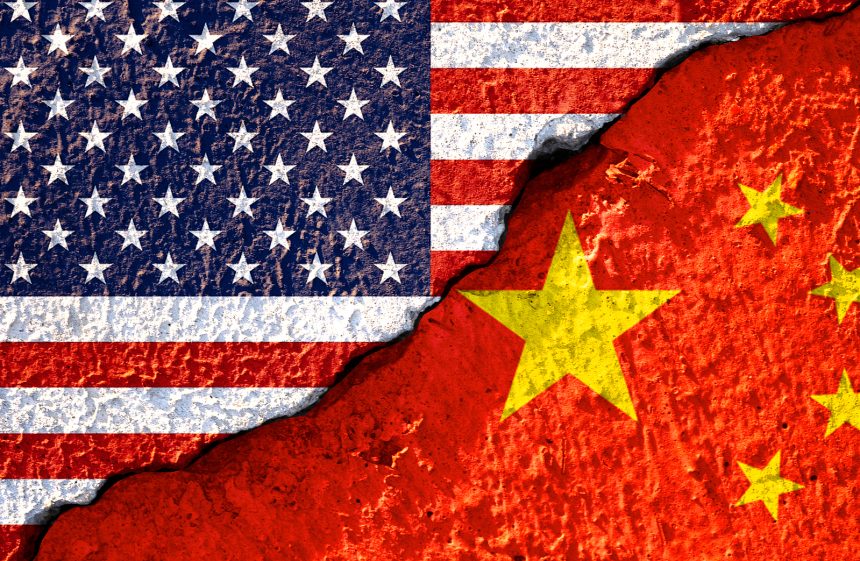
The United States and China are engaged in an intensifying cyber conflict targeting infrastructure, military systems, and economic intelligence.
Experts warn that both nations are positioning for future disruptions that could impact global stability.
The growing cyber battlefield is reshaping national security, business risks, and geopolitical strategy in 2026.
(STL.News) Cyber Warfare – The modern battlefield is no longer defined solely by tanks, missiles, or aircraft carriers. Instead, a quieter but equally consequential conflict is unfolding behind the scenes—one that involves code, networks, and digital systems that power the global economy. The United States and China are at the center of this evolving struggle, engaged in a persistent cyber rivalry that is reshaping national security, economic competition, and global influence.
While headlines often focus on visible geopolitical tensions, the cyber dimension of this rivalry operates largely out of public view. Yet its impact is far-reaching. From critical infrastructure to financial systems, from military communications to corporate innovation, the digital battlefield has become a key front in the competition between the world’s two largest powers.
Cyber Warfare – A New Kind of Cold War
Cyber Warfare: Many analysts now describe the current cyber environment as a form of “digital Cold War.” Unlike traditional conflicts, this one does not rely on confrontation. Instead, it is characterized by continuous probing, intelligence gathering, and strategic positioning.
At the center of this conflict is the desire for advantage. Both nations are seeking to understand each other’s capabilities, identify vulnerabilities, and prepare for scenarios in which cyber operations could play a decisive role. The goal is not necessarily immediate disruption, but rather long-term leverage.
The Cybersecurity and Infrastructure Security Agency has repeatedly warned that nation-state cyber actors are increasingly focused on gaining access to sensitive systems that could be used during times of crisis. These warnings reflect a growing recognition that cyber operations are no longer isolated incidents—they are part of a broader strategic framework.
Cyber Warfare – Critical Infrastructure at Risk
Cyber Warfare: One of the most alarming aspects of the U.S.–China cyber rivalry is the focus on critical infrastructure. This includes systems that are essential to everyday life: power grids, water treatment facilities, transportation networks, telecommunications, and energy pipelines.
Experts believe that some cyber operations are designed not just to gather intelligence, but to establish a foothold within these systems. This concept, often referred to as “pre-positioning,” involves gaining access in advance so that disruption can be carried out quickly if needed.
For example, access to a power grid or port system could allow an attacker to interfere with operations during a crisis. While such actions have not been widely executed at scale, the possibility alone raises serious concerns about national security and public safety.
This shift from espionage to potential disruption marks a significant evolution in cyber strategy. It underscores the idea that future conflicts may involve not just physical attacks but also coordinated efforts to shut down critical systems.
Cyber Warfare – The Battle for Telecommunications Networks
Cyber Warfare: Telecommunications networks have become another major focal point in the cyber rivalry. These networks carry vast amounts of data, including personal communications, corporate information, and government activity.
Gaining access to these systems can provide valuable intelligence. It can reveal patterns of communication, identify key individuals, and offer insights into decision-making processes. In some cases, it may even allow for surveillance of sensitive conversations.
The importance of telecommunications has only increased as the world becomes more connected. From mobile phones to cloud-based services, digital communication is now central to both economic activity and national security.
This makes telecom infrastructure a high-value target. Control over information flow can provide a strategic advantage that extends far beyond traditional espionage.
Cyber Warfare – Military and Defense Implications
Cyber Warfare: Cyber operations also play a critical role in military strategy. Modern armed forces rely heavily on digital systems for communication, navigation, logistics, and intelligence.
Access to these systems can provide insights into troop movements, supply chains, and operational planning. It can also create opportunities to disrupt or degrade capabilities in the event of conflict.
For example, interfering with logistics systems could delay the movement of equipment or supplies. Disrupting communication networks could create confusion during critical operations. These types of actions could have significant consequences, even without direct physical confrontation.
The integration of cyber capabilities into military planning reflects a broader shift in how conflicts are understood. Cyber operations are no longer a separate domain—they are an integral part of modern warfare.
Cyber Warfare – Economic Competition and Intellectual Property
Cyber Warfare: Beyond national security, the cyber rivalry between the United States and China is deeply tied to economic competition. One of the most contentious issues is the theft of intellectual property.
This includes sensitive business information such as product designs, manufacturing processes, research data, and proprietary technologies. Industries ranging from semiconductors to biotechnology have been affected.
For companies, the loss of intellectual property can have serious financial consequences. It can reduce competitiveness, undermine innovation, and lead to a loss of market share. For governments, it raises concerns about economic security and technological leadership.
The stakes are particularly high in emerging fields such as artificial intelligence, renewable energy, and advanced manufacturing. These sectors are expected to shape the future global economy, making them key targets in the cyber competition.
Cyber Warfare – Influence and Information Operations
Cyber Warfare: Another dimension of the cyber rivalry involves influence operations. These efforts are designed to shape public opinion, influence political processes, and create divisions within societies.
This can involve a range of activities, including the spread of misinformation, amplification of controversial topics, and targeting of social media platforms. The goal is often not to promote a specific agenda, but to undermine trust and create uncertainty.
In an increasingly digital world, information itself has become a strategic asset. The ability to influence narratives can significantly impact political stability and public perception.
This aspect of cyber conflict highlights the blurred line between technology and society. It demonstrates how digital tools can be used not just for technical operations, but for broader psychological and social effects.
Cyber Warfare – Financial Systems and Economic Intelligence
Cyber Warfare – Financial systems are another key area of focus. Cyber operations can target banks, payment networks, and financial data to gain insights into economic activity.
This information can be used to understand trade flows, monitor sanctions, and identify vulnerabilities in economic systems. It can also provide an advantage in negotiations or strategic planning.
As global finance becomes more interconnected, the importance of cybersecurity in this sector continues to grow. Disruptions to financial systems could have widespread consequences, affecting markets, businesses, and individuals.
Cyber Warfare – Preparing for Future Conflict
Cyber Warfare: Perhaps the most significant aspect of the U.S.–China cyber rivalry is preparation. Many experts believe that current cyber activities are not just about immediate gains, but about positioning for future scenarios.
This includes gaining access to systems, mapping networks, and identifying potential points of leverage. In a crisis, these capabilities could be used to disrupt operations, gather intelligence, or influence outcomes.
The concept of “gray zone” conflict—activities that fall below the threshold of war—has become increasingly relevant. Cyber operations are a key component of this approach, enabling nations to compete without resorting to confrontation.
Cyber Warfare – The Global Impact
Cyber Warfare: The cyber rivalry between the United States and China is not limited to these two countries. Its effects are felt around the world.
Allies, partners, and businesses are often caught in the middle. Supply chains, communication networks, and financial systems are interconnected, meaning that cyber incidents can have far-reaching consequences.
For smaller countries, navigating this environment can be particularly challenging. They must balance relationships with major powers while protecting their own systems and interests.
The global nature of cyber conflict underscores the need for international cooperation and standards. However, achieving consensus in this area remains difficult.
Cyber Warfare – A Constant and Evolving Threat
Cyber Warfare: Unlike traditional conflicts, cyber warfare lacks a clear beginning or end. It is ongoing, evolving, and often invisible.
New technologies, such as artificial intelligence and quantum computing, are expected to transform the landscape further. These developments could create new opportunities and challenges in the cyber domain.
As a result, cybersecurity has become a critical priority for governments, businesses, and individuals alike. Protecting digital systems is no longer just a technical issue—it is a matter of national and economic security.
Conclusion
Cyber Warfare: The cyber battle between the United States and China represents one of the most significant and complex challenges of the modern era. It is a conflict that extends beyond traditional boundaries, encompassing technology, economics, and global influence.
While much of this activity remains hidden, its implications are profound. From critical infrastructure to financial systems, from military operations to everyday communications, the stakes are high.
As this digital rivalry continues to evolve, it will shape the future of global power in ways that are only beginning to be understood. The question is not whether cyber conflict will play a role in the years ahead—it is how deeply it will influence the world we live in.
Other General News articles published on STL.News:
- Missouri Prosecutors Warn of Expanding Self-Defense Law After Key Court Decision
- Iran War Escalation 2026: Ceasefire Under Pressure as Strait of Hormuz Tensions Surge
- Iran War Update – May 7, 2026 @ 6:41 am CST
- Iran War Update: Tensions Surge in Strait of Hormuz as Ceasefire Remains Fragile
- U.S. Orders 5,000 Troop Withdrawal from Germany
- Latest St. Louis Restaurant News
© 2026 St. Louis Media, LLC d.b.a. STL.News. All rights reserved. No content may be copied, republished, distributed, or used in any form without prior written permission. Unauthorized use may result in legal action. Some content may be created with AI assistance and is reviewed by our editorial team. For official updates, visit STL.News.