


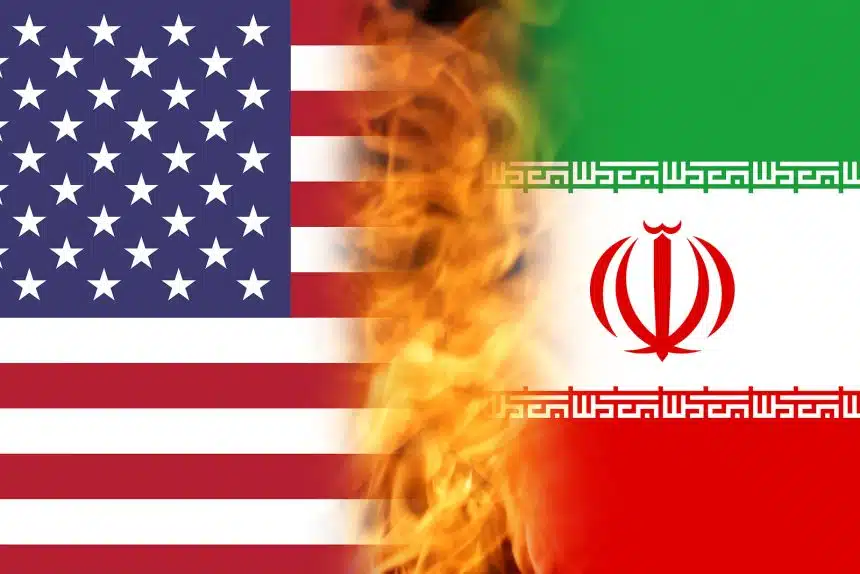
On May 25, 2026, U.S. Central Command conducted self-defense strikes against Iranian missile launch sites and naval vessels near the Strait of Hormuz. The strikes occurred during an active ceasefire and while peace negotiations remained ongoing. The Strait of Hormuz has been closed to commercial shipping since early May, threatening global energy markets.
American forces targeted Iranian missile sites and naval assets near the world’s most critical oil chokepoint on Memorial Day — even as diplomats worked to end a war now entering its fourth month.
IRAN/May 25, 2026 (STL.News) American military forces struck Iranian missile launch sites and small naval vessels near the Strait of Hormuz on Monday in what U.S. Central Command characterized as acts of self-defense, delivering the latest blow to a ceasefire agreement that has shown mounting signs of collapse since it was announced weeks ago. The strikes took place on Memorial Day, a time that drew immediate attention in Washington as the nation paused to honor its fallen service members.
U.S. Central Command said Iranian forces had conducted a series of unprovoked attacks against American warships operating in the strait, including missile launches and drone swarms, before American forces responded. Military officials were careful to frame the response as proportional and restrained, insisting the United States was not seeking to restart a full-scale exchange of fire with Tehran. At the same time, officials acknowledged that active strikes against Iranian territory during a ceasefire represented an extraordinary set of circumstances — one that has put the fragile diplomatic architecture of the current pause under severe strain.
PULL QUOTE: “The United States does not seek escalation — but it will not absorb attacks without response.”
The broader conflict has its roots in late February of this year, when the United States and Israel launched coordinated strikes against Iranian nuclear and military infrastructure in a campaign that had been building in intensity for months. Iran responded swiftly and broadly, launching ballistic missiles and drone attacks at American assets and allied nations across the Middle East, targeting facilities in the United Arab Emirates, Saudi Arabia, Jordan, and beyond. The UAE alone intercepted hundreds of ballistic missiles and thousands of drones in the weeks that followed, while the human cost mounted steadily on all sides.
The Strait of Hormuz — the narrow passage between the Persian Gulf and the Gulf of Oman through which roughly a fifth of the world’s oil supply flows — has been closed to commercial shipping since early May. The closure has sent shockwaves through global energy markets and drawn increasingly urgent calls from European governments for both Washington and Tehran to stand down and restore navigation. French President Emmanuel Macron condemned what he described as unjustified Iranian attacks on civilian shipping infrastructure and called on both parties to lift their respective shipping restrictions immediately.
SIDEBAR — CONFLICT TIMELINE AT A GLANCE:
? February 28, 2026 — U.S. and Israel launch coordinated strikes on Iranian military and nuclear sites
? Late February — Iran retaliates with mass missile and drone attacks across the Middle East
? April 26 — U.S. Navy begins maritime blockade, intercepting Iranian-flagged vessels
? Early May — Strait of Hormuz closes; no commercial transits recorded
? May 7 — U.S. strikes Iranian ports at Qeshm and Bandar Abbas
? May 25 — U.S. conducts self-defense strikes on missile sites and naval assets; ceasefire status in question
For American families, particularly those with loved ones deployed to the region, Monday’s developments were a sobering reminder that the ceasefire — however formally declared — had never fully taken hold on the water. The Strait of Hormuz has become the central theater of a conflict that began in the air over Iran but has since migrated to the sea lanes on which the global economy depends. Each skirmish in those waters carries consequences that ripple far beyond the immediate military exchange.
A Chinese-owned tanker was struck by an Iranian projectile earlier this month in the strait, a development that complicated Beijing’s posture in the conflict and raised the prospect of broader international entanglement. China had significant economic interests in Iranian oil and, to that point, maintained studied neutrality. The strike on a Chinese vessel signaled that no flag offered reliable protection in contested waters — a message that further chilled commercial shipping confidence in the region.
Diplomatic channels remain technically open. Negotiators have been working on the framework of a deal that would formally end hostilities. Still, the details of any agreement — particularly regarding Iran’s nuclear program, the lifting of the maritime blockade, and the question of accountability for the conflict’s opening strikes — remain deeply contested. Each military exchange, even those framed as defensive, consumes political capital that the negotiations need to survive.
The self-defense framing used by American military officials is not without significance. Under international law and the U.S. military’s own rules of engagement, responding to an incoming attack is the most legally straightforward justification for the use of force. But critics of the administration’s handling of the conflict have noted that the line between responding to provocation and sustaining a campaign of pressure has grown increasingly difficult to distinguish as the weeks have passed. When strikes and counter-strikes occur within a declared ceasefire, the word ceasefire begins to lose its meaning.
What is clear is that the Strait of Hormuz will remain the focal point of the coming days. As long as the waterway stays closed, the economic pressure on all parties — including the United States, whose consumers are already absorbing elevated energy costs — will continue to build. The question is whether that pressure accelerates a genuine settlement or raises the stakes for the next exchange of fire.
For now, U.S. forces remain positioned in the region, ready, as Central Command put it, to protect American assets — on a holiday that was supposed to be about remembering the cost of wars already fought.
© 2026 – All Rights Reserved – St. Louis Media LLC dba STL.News