


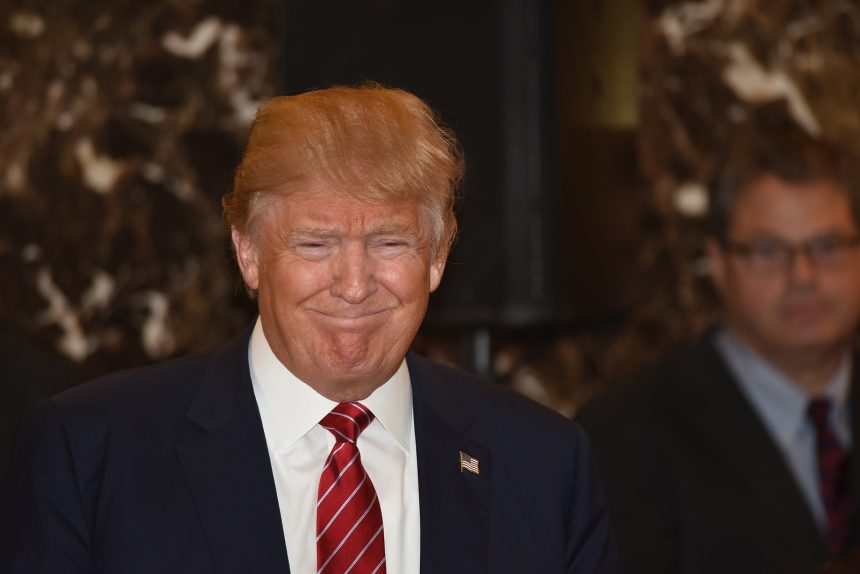
For decades, American leaders embraced globalization and free trade, believing economic integration would create prosperity and peace. Instead, critics argue that the policy accelerated the decline of U.S. manufacturing, weakened national security, and enriched foreign competitors. President Donald Trump’s tariff strategy seeks to reverse that trend by putting American industry first.
ST. LOUIS, MO/June 1, 2026 (STL.News) Tariffs – For more than three decades, American policymakers from both political parties embraced a vision of globalization that promised prosperity, peace, and economic growth. The theory was simple: nations that trade together are less likely to fight one another. Open markets would encourage cooperation, raise living standards, reduce poverty, and create a more interconnected world.
It was an appealing vision.
Unfortunately, many Americans now believe the reality looked very different.
Instead of creating a stronger America, globalization often encouraged corporations to move factories overseas, shift jobs to lower-cost countries, and prioritize short-term profits over long-term national interests. Entire manufacturing communities were hollowed out. Once-thriving industrial towns struggled. Millions of workers saw opportunities disappear while multinational corporations reported record profits.
Today, President Donald Trump‘s tariff policies represent one of the most aggressive attempts in decades to challenge the assumptions that guided American trade policy since the 1990s.
Whether one agrees with every aspect of Trump’s approach or not, the underlying question deserves serious consideration:
What if globalization failed America?
The Promise of Globalization
Supporters of free trade argued that lowering barriers would benefit everyone.
Consumers would enjoy lower prices.
Companies would gain access to larger markets.
Developing nations would experience economic growth.
International cooperation would increase.
The United States would remain the world’s dominant economic power.
Many of these predictions came true—at least partially.
Consumers benefited from inexpensive imported goods.
Large corporations expanded globally.
Investors profited from lower production costs.
International trade volumes surged.
However, another side of the story emerged.
The benefits were often concentrated among corporate executives, investors, and multinational businesses, while many of the costs were borne by American workers and manufacturing communities.
The Manufacturing Decline
For decades, manufacturing formed the backbone of the American middle class.
Factory jobs provided stable incomes, benefits, retirement plans, and opportunities for workers without college degrees.
Those jobs helped build communities across the Midwest, South, and Northeast.
As trade agreements expanded and foreign competition increased, many companies discovered they could significantly reduce labor costs by relocating production overseas.
Factories moved.
Jobs disappeared.
Communities suffered.
Supporters of globalization argued that displaced workers would transition into new industries.
In many cases, that transition never fully occurred.
Some communities recovered.
Many did not.
The result was a growing sense among millions of Americans that political leaders had prioritized global economic theories over the interests of their own citizens.
The China Challenge
No country better illustrates the debate surrounding globalization than China.
For years, American leaders believed increased economic engagement would encourage China to become more open, more democratic, and more integrated into the rules-based international system.
That expectation largely failed.
China became an economic powerhouse while maintaining a political system fundamentally different from that of the United States.
American companies gained access to lower production costs.
Chinese manufacturing expanded dramatically.
Meanwhile, many American industries struggled to compete.
Critics argue that China benefited enormously from access to U.S. markets while protecting key sectors of its own economy and pursuing policies that favored domestic industries.
Whether one agrees entirely with that assessment or not, there is little doubt that the relationship produced significant tensions that continue today.
The National Security Argument
The debate extends beyond economics.
National security has become an increasingly important consideration.
The COVID-19 pandemic exposed vulnerabilities in global supply chains.
Americans suddenly discovered how dependent the nation had become on foreign production for critical goods.
Questions emerged:
Should America rely on foreign nations for pharmaceuticals?
Should strategic technologies be manufactured overseas?
Should critical supply chains depend on countries that may not share American interests?
These concerns helped shift public discussion away from simple arguments about consumer prices and toward broader questions about resilience, security, and self-sufficiency.
Why Tariffs Matter
Trump’s supporters view tariffs as more than a trade tool.
They see tariffs as leverage.
A tariff increases the cost of imported goods, making domestic production more competitive.
Critics argue that tariffs can raise prices.
Supporters counter that decades of cheap imports came with hidden costs that Americans are still paying.
They point to lost factories, declining industrial communities, weakened domestic production, and growing dependence on foreign suppliers.
From this perspective, tariffs are not punishment.
They are correct.
The goal is not to eliminate trade but to encourage production inside the United States and reduce incentives for companies to move jobs overseas.
The Hypocrisy Problem
One of the strongest criticisms of past trade policy involves labor standards.
The United States prohibits child labor and imposes extensive workplace regulations.
Yet American consumers regularly purchase products manufactured in countries where labor standards differ significantly.
Critics argue this creates a contradiction.
If certain labor practices are unacceptable in America, why should companies profit from those same practices abroad?
This issue highlights a broader concern.
Globalization often assumes that economic efficiency should outweigh other considerations.
Many Americans now question that assumption.
America First or Global First?
At its core, the trade debate revolves around priorities.
Should American policymakers primarily focus on maximizing global economic efficiency?
Or should they prioritize American workers, American factories, and American communities?
Trump’s tariff strategy reflects a belief that the government should place domestic interests first.
Supporters argue this approach is not isolationist.
They contend it is practical.
Countries around the world routinely protect strategic industries.
They support domestic manufacturing.
They use industrial policies to strengthen national competitiveness.
The United States, they argue, should do the same.
The Road Ahead
Tariffs alone will not solve every challenge facing American manufacturing.
A comprehensive strategy would also require:
- Workforce development.
- Infrastructure investment.
- Affordable energy.
- Competitive tax policies.
- Regulatory reform.
- Supply-chain security.
- Technological innovation.
However, supporters believe tariffs represent an essential first step.
Without addressing trade imbalances and incentives that encourage offshoring, they argue, other reforms may have limited impact.
Conclusion
The debate over tariffs ultimately reflects a larger debate about America’s future.
Was globalization an overwhelming success that simply requires adjustment?
Or did it produce unintended consequences that weakened American manufacturing, increased dependence on foreign nations, and undermined long-term economic resilience?
President Trump’s supporters believe the answer is clear.
They view tariffs not as an attack on trade but as a defense of American industry.
They argue that a nation cannot remain strong if it no longer produces what it needs, cannot secure critical supply chains, and allows strategic industries to migrate overseas.
Whether history ultimately proves them right remains to be seen.
What is certain is that the conversation about trade, manufacturing, and economic sovereignty is far from over—and its outcome may shape America’s future for decades to come.



