


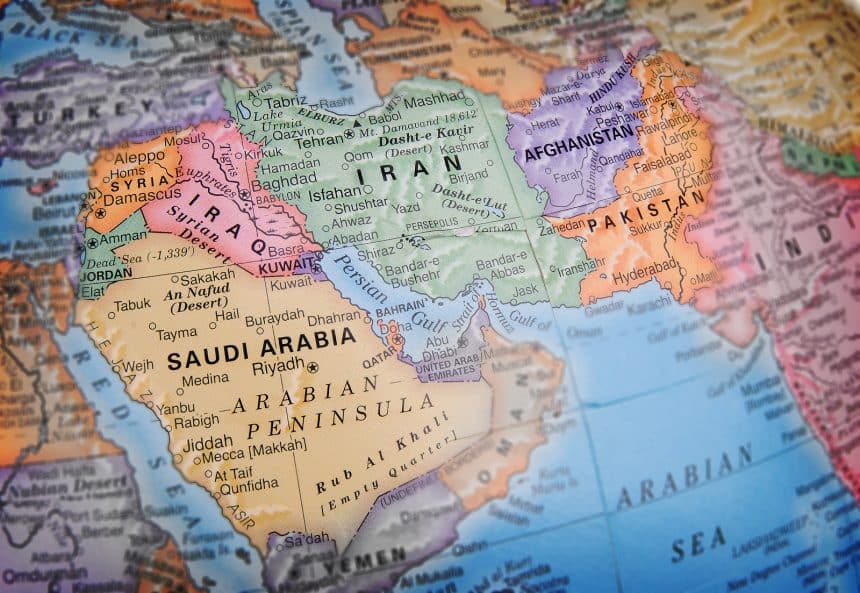
Ancient prophecies mentioning Persia and Elam are being linked to modern Iran.
As tensions rise, interest in these predictions is surging worldwide.
But do these texts actually forecast Iran’s future—or are they being reinterpreted?
Why Interest in Iran Prophecies Is Surging Now
(STL.News) Global attention on Iran has intensified as geopolitical tensions rise, energy markets fluctuate, and uncertainty spreads across international markets. In moments like this, interest in prophecy tends to increase dramatically.
Search trends show a growing number of people asking whether ancient religious texts predicted events involving Iran. The connection is not new—but it is gaining renewed traction as current events unfold.
The Core Question: Do Prophecies Predict Iran’s Fall?
The short answer is: not definitively.
Ancient texts do reference regions that are part of modern-day Iran, particularly Persia and Elam. However, whether those references directly predict the fall of today’s Iranian state is widely debated.
There is a clear difference between:
- Texts that mention a region historically tied to Iran
- Interpretations that apply those texts to modern geopolitics
That distinction is critical.
The Elam Prophecy: A Key Focus
One of the most discussed passages comes from the Book of Jeremiah, which describes judgment against Elam—an ancient civilization located in what is now southwestern Iran.
The prophecy includes:
- Military weakening
- National disruption
- Scattering of people
- Eventual restoration
This has led some modern interpreters to argue that Elam represents present-day Iran and that the prophecy points to a future collapse.
However, historians emphasize that Elam existed thousands of years ago and was later absorbed into larger empires. Many scholars believe the prophecy may have already been fulfilled in ancient times.
Persia in Future Conflict Scenarios
Another frequently cited reference comes from prophetic passages that mention Persia as part of a broader coalition in a future conflict.
Because Persia is the historical name for Iran, some interpret this as evidence that Iran will play a role in future global events.
But there is an important nuance:
- The text describes participation in a conflict
- It does not clearly state that Iran will fall as a nation
This difference is often overlooked in popular discussions.
Why Modern Events Are Fueling These Beliefs
There are several reasons why prophecy and Iran are being linked so strongly right now:
Geopolitical Tension
Rising conflict increases uncertainty, which often leads people to look for deeper explanations.
Historical Identity
Iran’s historical connection to Persia makes it one of the few modern nations directly named in ancient texts.
Psychological Factors
During uncertain times, people naturally seek patterns and meaning in global events.
Digital Amplification
Social media and video platforms rapidly spread interpretations, often without context or historical nuance.
The Missing Piece: Restoration in Prophecy
One of the most overlooked aspects of these prophecies is that they are not solely about destruction.
Many include a second phase:
- Recovery
- Rebuilding
- Restoration of people and influence
This pattern recurs throughout ancient texts and suggests a broader cycle rather than a single catastrophic endpoint.
What Experts and Scholars Say
Across academic and theological communities, there is no unified agreement that ancient prophecies clearly predict the fall of modern Iran.
Most scholars agree on three key points:
- The texts reference real historical regions tied to Iran
- Some prophecies were fulfilled in ancient times
- Applying them directly to modern nations involves interpretation, not certainty
This does not dismiss belief—but it highlights the importance of context.
A Pattern Seen Throughout History
This is not the first time prophecy has been linked to global events.
Similar claims have emerged during:
- Major wars
- Economic crises
- Political upheaval
In many cases, interpretations changed as events unfolded.
This pattern suggests that prophecy is often shaped as much by the present moment as by the original text.
Final Perspective: Interpretation vs. Reality
The idea that ancient prophecy predicts the fall of Iran is compelling—but it is not universally supported.
What is clear:
- Ancient texts mention regions connected to Iran
- These texts describe conflict and transformation
- Interpretations vary widely depending on perspective
What remains uncertain:
- Whether those prophecies apply to modern Iran
- Whether current events align with those predictions
- Whether future developments will confirm or contradict these beliefs
Why This Matters for Readers Today
As global tensions rise, narratives like this can influence:
- Public opinion
- Investor sentiment
- Political discourse
- Social stability
Understanding the difference between historical text, modern interpretation, and verified fact is essential in a rapidly changing world.
© 2026 St. Louis Media, LLC d.b.a. STL.News. All rights reserved. No content may be copied, republished, distributed, or used in any form without prior written permission. Unauthorized use may result in legal action. Some content may be created with AI assistance and is reviewed by our editorial team. For official updates, visit STL.News.



