


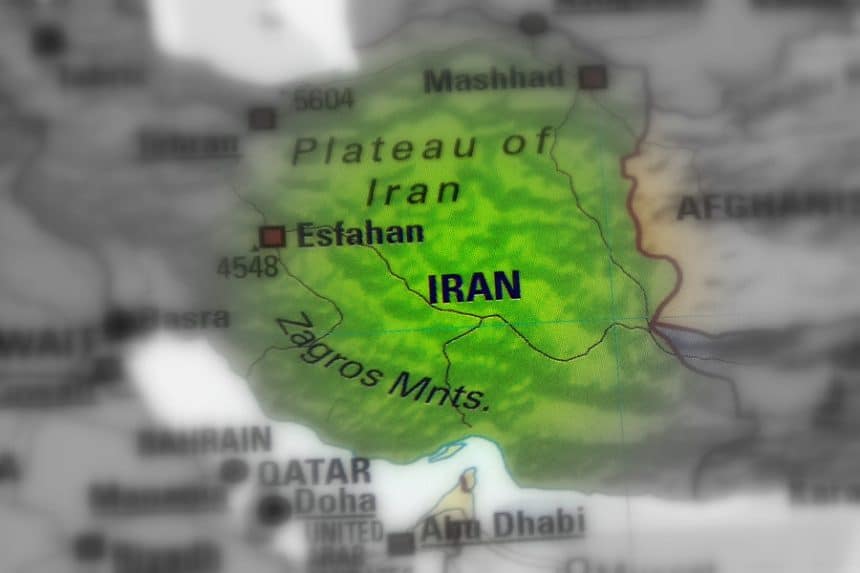
The United States and Iran appear to be moving closer to a possible framework agreement to reduce tensions after months of conflict. While officials from both countries acknowledge progress in negotiations, no final deal has been signed. If an agreement is reached, it could affect global oil markets, inflation, international trade, and geopolitical stability throughout the Middle East.
MIDDLE EAST June 14, 2026 (STL.News) US-Iran Negotiation – As diplomatic efforts continue between Washington and Tehran, the possibility of a framework agreement has become one of the most closely watched developments in international affairs. Reports from multiple news organizations indicate that negotiators have made significant progress toward a potential memorandum of understanding (MOU). However, officials from both governments emphasize that no final agreement has been approved or signed.
The negotiations come after months of heightened tensions that raised concerns about regional stability, energy supplies, and the potential for a broader conflict involving multiple countries throughout the Middle East.
For investors, businesses, policymakers, and consumers around the world, the outcome of these talks could have implications far beyond the region itself.
US-Iran Negotiations – What Has Been Confirmed So Far?
Public statements from both U.S. and Iranian officials indicate that negotiations remain active and that discussions have advanced significantly in recent weeks. However, there are notable differences in how each side has described the current status of the talks.
American officials have expressed optimism that a framework agreement could be reached in the near future. Iranian officials have generally taken a more cautious approach, emphasizing that negotiations remain ongoing and that key decisions still require approval within Iran’s leadership structure.
At this stage, neither government has announced a signed agreement.
What has emerged publicly are reports describing provisions that have reportedly been discussed during negotiations. Neither government has independently confirmed these reported provisions and should be viewed as proposals rather than finalized commitments.
US-Iran Negotiation – Why a Framework Agreement Matters
The agreement reportedly under discussion is not being described as a permanent peace treaty.
Instead, it appears to be a framework intended to reduce immediate tensions while creating a structure for future negotiations. Such agreements are common in international diplomacy when complex issues cannot be resolved in a single round of talks.
If signed, a framework agreement could provide temporary stability while negotiators continue discussions regarding sanctions, regional security concerns, maritime navigation, and Iran’s nuclear program.
The success of any framework agreement would ultimately depend on whether both sides continue to negotiate and comply with their commitments.
US-Iran Negotiations – The Importance of Energy Markets
One reason the negotiations have attracted worldwide attention is the potential impact on energy markets.
The Persian Gulf region remains one of the most important energy-producing areas in the world. Any disruption to oil production or shipping routes can influence global energy prices.
Throughout periods of heightened tension, traders often build a geopolitical risk premium into oil prices. That premium reflects concerns that military action or shipping disruptions could affect global supplies.
If investors conclude that a diplomatic breakthrough reduces those risks, energy markets could react positively.
However, the extent of any market reaction would depend on the specific terms of an agreement and whether those terms are successfully implemented.
US-Iran Negotiations – Could Oil Prices Fall?
One of the most frequently discussed questions is whether a successful agreement could lead to lower oil prices.
The answer is potentially, but not immediately and not necessarily. Numerous factors, including global demand, OPEC production decisions, economic growth, currency movements, inventories, and geopolitical events, influence oil prices.
A reduction in tensions involving Iran could remove some uncertainty from the market. If future agreements eventually result in increased Iranian oil exports, global supplies could increase.
However, energy analysts caution that such developments typically take time and depend on the details of any agreement.
As a result, lower geopolitical risk may influence market sentiment, but it does not guarantee a sustained decline in oil prices.
US-Iran Negotiations – What It Could Mean for Financial Markets
Financial markets generally prefer predictability and stability.
When major geopolitical risks appear to decline, investors often become more willing to invest in equities and other growth-oriented assets. Conversely, uncertainty tends to increase demand for traditional safe-haven investments such as gold and government bonds.
A successful framework agreement could improve investor confidence if market participants believe it reduces the likelihood of further military escalation.
That said, markets are also likely to remain cautious until they see evidence that any agreement is being implemented successfully.
Investors have seen previous diplomatic breakthroughs encounter implementation challenges, making many market participants reluctant to assume long-term success until concrete results emerge.
US-Iran Negotiations – The Nuclear Issue Remains the Biggest Challenge
Although public reports suggest that nuclear-related issues are part of the discussions, the most difficult questions may still lie ahead.
The United States and Iran have disagreed for decades over uranium enrichment, monitoring procedures, verification mechanisms, and broader nuclear policy.
Even if a framework agreement is signed, those issues would likely require additional negotiations.
Many analysts view the current talks as potentially creating an opportunity for future progress rather than delivering a final resolution.
For that reason, any agreement reached in the coming days would likely be considered the beginning of a diplomatic process rather than its conclusion.
US-Iran Negotiations – Potential Economic Benefits for Iran
If negotiations continue successfully and lead to future agreements, Iran could experience significant economic benefits.
Analysts have noted that reduced trade restrictions, improved access to international financial systems, and increased foreign investment could support economic growth.
However, these outcomes would depend on future negotiations and implementation measures that have not yet been finalized.
At present, no comprehensive sanctions-relief agreement has been formally announced.
US-Iran Negotiations – Risks Remain Significant
Despite the optimism surrounding the negotiations, numerous risks remain.
Political opposition exists within both countries. Skeptics on all sides continue to question whether a lasting agreement can be achieved.
Regional security concerns also remain elevated. Events involving other countries and non-state actors throughout the Middle East could complicate negotiations even if Washington and Tehran make progress.
Diplomatic agreements are often vulnerable to unexpected developments, particularly in regions with longstanding geopolitical tensions.
US-Iran Negotiations – What Happens Next?
The next phase will likely determine whether the current negotiations represent a historic breakthrough or simply another step in a long diplomatic process.
If a framework agreement is announced, attention will quickly shift toward implementation, verification, and follow-up negotiations.
Financial markets, energy traders, businesses, and governments around the world will be watching closely for signs that both sides remain committed to the process.
US-Iran Negotiations – The Bottom Line
The United States and Iran appear closer to a diplomatic understanding than they have been in months, but no final agreement has been signed.
Current reporting suggests that negotiators are discussing a framework agreement that could reduce tensions and create a pathway for additional negotiations. However, many details remain uncertain, and the most challenging issues may still require substantial discussion.
If an agreement is reached and successfully implemented, it could reduce geopolitical risks, improve confidence in global markets, and support greater stability in energy markets. Yet those outcomes remain possibilities rather than certainties.
For now, the negotiations represent an important diplomatic development, but the ultimate success of the effort will depend on what happens after any agreement is signed.



