


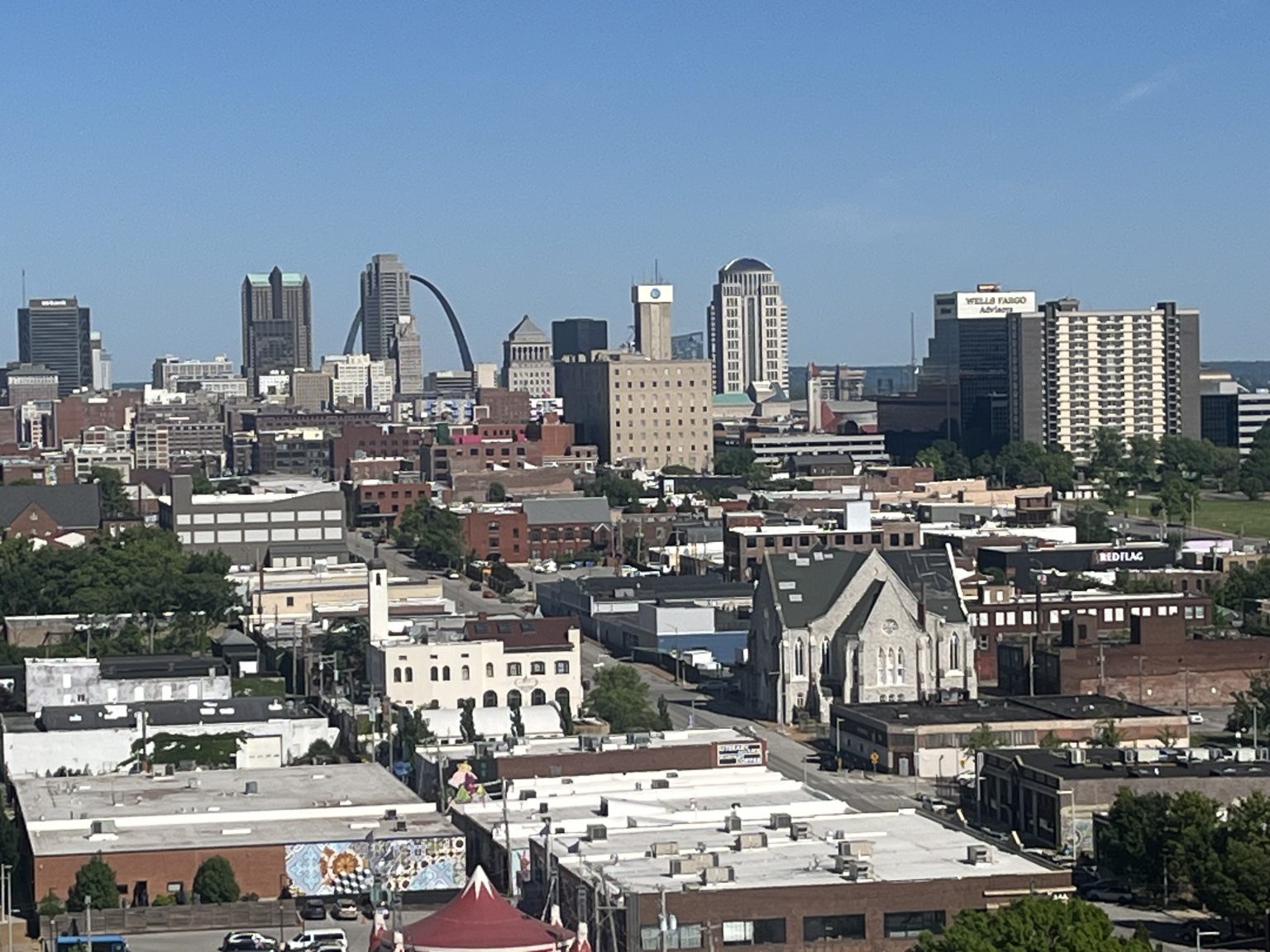
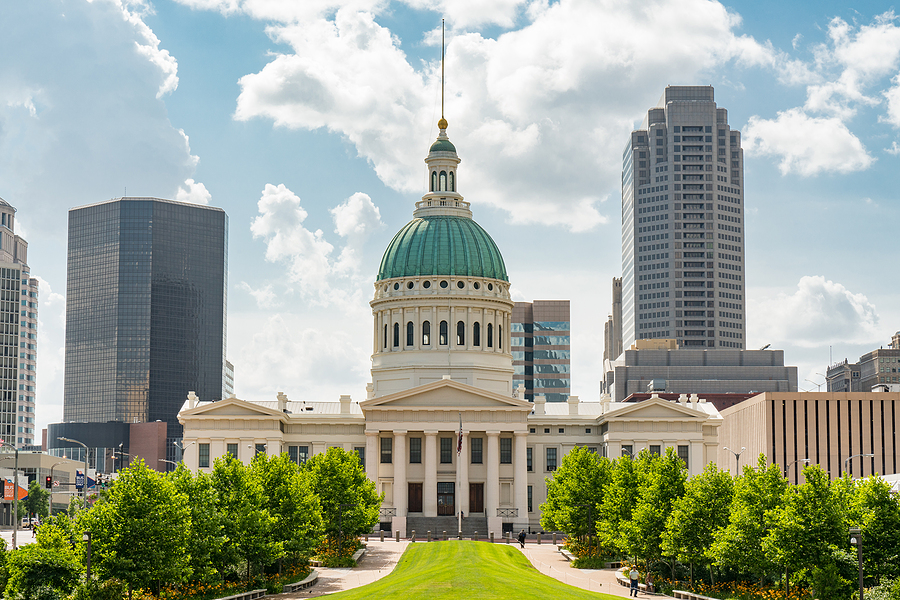
St. Louis, Missouri, was founded in 1764 as a French fur trading settlement along the Mississippi River and later became known as the “Gateway to the West.” This comprehensive history explores the city’s origins, westward expansion, immigration, industrial growth, architecture, transportation, music, sports, neighborhoods, economy, and modern transformation.
Introduction – St. Louis, Missouri
St. Louis, Missouri, aka STL, is one of the most historically significant cities in the United States. Located near the confluence of the Mississippi River and Missouri River, the city developed into a major center for transportation, trade, manufacturing, immigration, and westward expansion. Over more than 260 years, St. Louis evolved from a small colonial trading settlement into one of America’s most important inland cities.
The city earned the nickname “Gateway to the West” because it became the primary departure point for settlers, explorers, traders, and entrepreneurs traveling into western territories during the 19th century. Its location on America’s largest river system made it one of the nation’s leading commercial hubs long before the rise of highways and air transportation.
STL also became known for its influence in brewing, baseball, blues music, aviation, architecture, railroads, and manufacturing. Major events such as the Louisiana Purchase, the Lewis and Clark Expedition, the Civil War, the 1904 World’s Fair, and the construction of the Gateway Arch permanently connected the city to American history.
Today, STL remains one of the Midwest’s largest metropolitan areas and continues serving as a center for healthcare, higher education, research, logistics, tourism, financial services, manufacturing, and culture.
Geography and Strategic Location of St. Louis, Missouri
The geography of STL played a central role in its historical development. The city was established on elevated land west of the Mississippi River, helping protect it from major flooding while providing direct access to one of North America’s most important transportation corridors.
The Mississippi River connected northern and southern trade routes, while the nearby Missouri River opened access to western territories. Before railroads and highways became dominant, rivers were the fastest and most efficient transportation systems in the United States.
Because of its location, St. Louis became a natural center for shipping, trade, warehousing, migration, and transportation. Riverboats, barges, military expeditions, and settlers regularly moved through the city.
The surrounding region also provided fertile farmland, timber, limestone, clay, and other natural resources that supported agriculture, manufacturing, and urban growth.
Indigenous Peoples and Early Civilizations of St. Louis, Missouri
Long before European settlement, the region surrounding present-day STL was home to Indigenous peoples for thousands of years.
The nearby site of Cahokia, located in present-day Illinois east of St. Louis, became the center of the Mississippian culture between approximately 1050 and 1350 AD. Historians and archaeologists generally estimate that Cahokia’s population may have ranged from 10,000 to 20,000 at its peak, making it one of the largest urban settlements north of Mexico during that era.
Cahokia featured massive earthen mounds, ceremonial plazas, trade networks, and organized agricultural systems. Monks Mound remains the largest prehistoric earthen structure in North America.
After the decline of Cahokia, several Indigenous nations occupied or traveled through the region, including the Osage, Illiniwek, Missouri, Sauk, and Fox peoples.
Rivers throughout the region served as transportation routes and trade corridors connecting communities across much of North America.
French Exploration of the Mississippi Valley
French explorers entered the Mississippi River Valley in the 17th century as they expanded trade and colonial influence throughout North America.
French traders recognized the region’s economic potential due to its river systems and strong fur trade opportunities. Trade relationships developed between French settlers and Indigenous tribes across the Mississippi Valley.
The French established settlements, forts, and trading posts throughout the region, gradually expanding their influence southward from Canada into the Louisiana Territory.
French culture strongly influenced the future city of St. Louis through language, religion, architecture, legal traditions, and commerce.
The Founding of St. Louis, Missouri, in 1764
St. Louis, MO, was founded in February 1764 by Pierre Laclède, a French fur trader, and Auguste Chouteau, who helped organize and develop the settlement.
Laclède selected the location because of its strategic commercial position along the Mississippi River and its elevated terrain. The settlement quickly developed into a fur trading center serving both French traders and Indigenous communities.
The city was named after King Louis IX of France, later canonized as Saint Louis.
The original settlement included homes, warehouses, trading facilities, churches, and public gathering areas built in accordance with French colonial traditions.
Although France had transferred the Louisiana Territory to Spain after the Seven Years’ War, many STL residents remained culturally French for generations.
The Spanish Administration Governed St. Louis, MO, Until 1800
Spain officially governed St. Louis from 1769 until 1800.
Spanish authorities generally allowed the settlement to retain much of its French cultural identity. French remained widely spoken, and many local customs continued under Spanish administration.
During this period, STL expanded economically and became more stable politically and militarily. Spanish officials improved defenses and supported trade throughout the Mississippi Valley.
The blending of French and Spanish colonial influences helped create a distinct identity that set St. Louis apart from many eastern American cities.
Return to France and the Louisiana Purchase
In 1800, Spain transferred the Louisiana Territory back to France under the Treaty of San Ildefonso. However, French control lasted only a short period.
In 1803, the United States purchased the Louisiana Territory from France in what became known as the Louisiana Purchase. The acquisition doubled the size of the United States and dramatically expanded the nation westward.
STL immediately became one of the country’s most strategically important frontier cities because of its location and transportation networks.
The Louisiana Purchase permanently connected St. Louis to American expansion and national growth.
The Lewis and Clark Expedition Began in St. Louis, MO
One of the most important expeditions in American history departed from the St. Louis region in 1804.
Meriwether Lewis and William Clark led the Corps of Discovery expedition to explore the newly acquired western territories and seek a route to the Pacific Ocean.
The expedition documented geography, plants, wildlife, rivers, mountains, and Indigenous tribes across large portions of North America.
Because the expedition began near St. Louis, the city later became widely known as the “Gateway to the West.”
Throughout the 19th century, countless settlers, traders, trappers, missionaries, and pioneers passed through STL as they moved westward.
Fur Trade and Frontier Commerce
During the early 1800s, St. Louis became one of North America’s leading fur trading centers.
Merchants and traders traveled into western territories to collect animal pelts, which were shipped back through STL to eastern and international markets.
The city became home to traders, explorers, riverboat operators, and frontier supply businesses.
River commerce expanded rapidly as the population increased and transportation networks improved.
Steamboats and River Transportation
The arrival of steamboats transformed STL economically during the 19th century.
Steamboats allowed goods and passengers to move more efficiently along the Mississippi and Missouri Rivers. Agricultural products, manufactured goods, timber, livestock, and supplies passed through the city in enormous quantities.
The St. Louis riverfront became crowded with warehouses, docks, shipping businesses, and commercial operations.
By the mid-1800s, STL ranked among the nation’s busiest inland ports.
River transportation helped establish the city as one of the Midwest’s largest commercial centers.
Immigration and Population Growth of St. Louis, MO
St. Louis experienced major immigration throughout the 19th century.
German immigrants became one of the city’s most influential ethnic communities. They contributed heavily to brewing, manufacturing, education, journalism, music, and architecture.
Irish immigrants also arrived in large numbers, many of whom worked in transportation, railroads, construction, and industrial labor.
Italian, Jewish, Polish, Czech, and other immigrant groups later contributed to the city’s cultural diversity.
Distinct neighborhoods developed around immigrant communities, shaping the city’s architecture, food traditions, churches, schools, and businesses.
By the late 19th century, St. Louis had become one of the largest cities in the United States.
Railroads and Industrialization of St. Louis, MO
Although river commerce remained important, railroads transformed St. Louis during the second half of the 19th century.
Rail lines connected the city to national markets and accelerated industrial expansion.
Factories, mills, foundries, breweries, warehouses, and manufacturing plants spread throughout the city. STL became known for producing shoes, beer, tobacco products, clothing, chemicals, machinery, and metal goods.
The Eads Bridge, completed in 1874, became the first steel arch bridge across the Mississippi River and represented a major engineering achievement.
Industrial growth created jobs and attracted additional population growth throughout the metropolitan region.
Civil War Era in St. Louis, MO
Missouri occupied a divided position during the Civil War because it was a border state with both Union and Confederate supporters.
St. Louis became strategically important because of its transportation networks, manufacturing facilities, and military position along the Mississippi River.
Union forces secured control of St. Louis early in the war, helping Missouri remain in the Union despite internal political divisions.
German immigrants in the city strongly supported the Union cause.
Military hospitals, supply depots, and industrial operations throughout STL supported Union war efforts.
The war also intensified political and social tensions that continued to affect the region after the conflict ended.
Brewing Industry and Anheuser-Busch
The brewing industry became one of the defining features of St. Louis during the late 19th century.
German immigrants brought brewing traditions that helped establish the city as one of America’s leading beer-producing centers.
Anheuser-Busch grew into one of the nation’s largest breweries and became internationally recognized for brands such as Budweiser.
The company influenced the city economically, culturally, and architecturally. Brewing facilities, beer gardens, warehouses, and distribution systems became major parts of the urban landscape.
Breweries provided employment for thousands of residents and contributed significantly to local economic growth.
Architecture and Urban Design
STL has developed a large collection of historic architecture that reflects different periods of growth and prosperity.
French colonial structures, Victorian homes, Romanesque churches, Beaux-Arts civic buildings, industrial warehouses, Art Deco skyscrapers, and modern towers can all be found throughout the city.
Red brick became especially common because of abundant regional clay deposits.
Historic neighborhoods such as Soulard, Lafayette Square, Benton Park, Compton Heights, and the Central West End preserve important examples of 19th- and early 20th-century architecture.
The city’s architecture reflects both European influence and American industrial expansion.
The 1904 World’s Fair in St. Louis, MO
The Louisiana Purchase Exposition, commonly known as the 1904 World’s Fair, became one of the largest and most important events in St. Louis history.
Held in Forest Park, the fair commemorated the centennial of the Louisiana Purchase and attracted millions of visitors from around the world.
Exhibits featured technological innovation, architecture, art, culture, agriculture, transportation, and manufacturing.
The 1904 Summer Olympics were also held in St. Louis in connection with the exposition.
Several foods and traditions are popularly associated with the fair, although some origin stories remain debated by historians.
The World’s Fair elevated St. Louis’s international profile and reinforced its reputation as one of America’s leading cities during the early 20th century.
Forest Park
Forest Park remains one of the largest urban parks in the United States.
Created in 1876, the park covers more than 1,300 acres and houses major cultural institutions, including the Saint Louis Art Museum, Missouri History Museum, Saint Louis Science Center, The Muny outdoor theater, and the Saint Louis Zoo.
The park continues serving as one of the region’s most important recreational and cultural destinations.
Music and Entertainment
STL played an important role in the development of American music.
Ragtime composer Scott Joplin lived and worked in St. Louis during the late 19th and early 20th centuries, helping popularize ragtime music nationally.
The city later became known for blues, jazz, rhythm and blues, gospel, and rock and roll.
Nightclubs, theaters, dance halls, and entertainment districts supported a thriving music culture throughout much of the 20th century.
STL musicians and performers contributed significantly to American entertainment history.
Sports History
Sports became deeply connected to the identity of St. Louis.
The St. Louis Cardinals developed into one of Major League Baseball’s most successful franchises with multiple championships and generations of loyal fans.
The city also became home to the St. Louis Blues of the National Hockey League.
Sports venues such as Busch Stadium became important landmarks and gathering places throughout the metropolitan region.
Aviation and Aerospace Industry
St. Louis became an important aviation center during the 20th century.
In 1927, Charles Lindbergh completed the first solo nonstop flight across the Atlantic Ocean in the Spirit of St. Louis, financed by STL businessmen.
The achievement brought worldwide recognition to both Lindbergh and the city.
The metropolitan area later developed a major aerospace and defense industry connected to aircraft manufacturing and military technology.
The Gateway Arch, St. Louis, MO
The Gateway Arch is the most recognizable landmark in St. Louis and one of the clearest symbols of the city’s place in American history. Standing 630 feet tall and measuring 630 feet from leg to leg at ground level, the stainless-steel monument rises above the Mississippi River as a tribute to westward expansion, the Louisiana Purchase, and the city’s long identity as the “Gateway to the West.” Its design was selected through a national architectural competition held in 1947 and 1948, with Finnish-American architect Eero Saarinen creating the sweeping modern form that would eventually define the St. Louis skyline. Construction began on February 12, 1963, and the final section was placed on October 28, 1965, creating a monument that was both an engineering achievement and a bold statement of mid-20th-century design. The Arch’s curved shape is often described as a catenary arch, and its clean, reflective exterior gives it a different appearance depending on the weather, sunlight, and season. From a distance, it appears simple and graceful; up close, its scale becomes almost overwhelming, especially when viewed from the riverfront or from the landscaped grounds of Gateway Arch National Park.
The Gateway Arch is more than a photo opportunity. It is part of a national park located near the historic riverfront where St. Louis developed as a fur-trading settlement, river city, and western staging point. The surrounding park grounds, museum, Old Courthouse, walking paths, and riverfront connections help explain why the monument matters beyond its height. It marks a complicated and important chapter in American growth, reflecting exploration, commerce, migration, ambition, and the consequences of expansion. The Museum at the Gateway Arch helps place that history into context by interpreting Native American history, colonial St. Louis, the Louisiana Purchase, Lewis and Clark, river trade, and the movement of people across the continent. Visitors can also ride the tram system to the observation area near the top, where narrow windows provide views of downtown St. Louis, the Mississippi River, Illinois, bridges, stadiums, neighborhoods, and the broader metropolitan landscape. The ride itself is part of the experience, as the tram system was specifically designed to move passengers through the monument’s curved legs.
For St. Louis, the Gateway Arch has become a civic emblem as well as a national attraction. It appears in tourism campaigns, sports broadcasts, business branding, postcards, photographs, documentaries, and local artwork because it instantly communicates the city’s identity. It connects St. Louis to the Mississippi River, reminds visitors of the city’s role in national expansion, and gives the region a visual symbol that few American cities can match. The Arch also helped reshape the downtown riverfront, creating a monumental public space where history, architecture, tourism, and civic pride meet. Its presence influences how people see St. Louis from the outside and how residents understand their own city from within. Whether seen from an airplane, a highway, a riverboat, a downtown street, or the Illinois side of the river, the Gateway Arch remains a defining image of St. Louis and one of the most important monuments in the United States.
Its importance also comes from the way it joins modern design with historic meaning. Saarinen did not create a traditional statue, column, or classical memorial. He created a monument that feels open, forward-looking, and unmistakably tied to motion. That choice fits St. Louis, a city shaped by movement: riverboats, railroads, highways, migration, trade, and westward travel. The Arch’s two legs seem to rise from the ground separately and meet above the city, creating a visual bridge between past and future. It is a memorial to an earlier era, but also a modern architectural achievement that continues to feel contemporary decades after its completion. For that reason, the Gateway Arch remains central to any serious understanding of St. Louis, not only as a destination but as a city whose history, geography, ambition, and identity are inseparable from the river and the American story. The 2018 renovation of the park grounds improved connections between downtown, the monument, and the riverfront, reinforcing the Arch as both a historic memorial and an active public gathering place for the modern city. That balance is why it continues to matter every single day.
Post-World War II Changes
Like many industrial cities, STL experienced major changes after World War II.
Suburbanization accelerated as residents and businesses moved outward into surrounding counties. Manufacturing employment declined due to automation, industrial restructuring, and global competition.
Population loss affected many neighborhoods within the city limits.
Urban renewal projects and highway construction altered sections of the city during the mid-20th century.
Economic inequality, crime, infrastructure issues, and political fragmentation became long-term challenges for the region.
Education and Research Institutions
Education and research became increasingly important parts of the regional economy during the 20th and 21st centuries.
Washington University in St. Louis and Saint Louis University developed into major research institutions.
Hospitals, biotechnology companies, and medical research organizations contributed to advancements in healthcare and science.
Research activity in plant science, medicine, engineering, and technology helped diversify the local economy.
Transportation Infrastructure
Transportation continues playing a major role in the St. Louis economy.
Interstate highways connect the metropolitan area to major national markets.
Lambert-St. Louis International Airport serves domestic and international travelers.
Railroads, freight corridors, river traffic, and logistics operations remain important economic drivers.
Because of its central location within the United States, St. Louis continues functioning as a transportation and distribution hub.
Neighborhoods of St. Louis
STL contains many historically distinct neighborhoods.
Soulard is known for its historic brick homes, restaurants, nightlife, and Mardi Gras celebrations.
The Hill became famous for Italian-American culture and cuisine.
The Central West End contains medical institutions, historic mansions, restaurants, and cultural attractions.
Lafayette Square is recognized for its restored Victorian architecture surrounding Lafayette Park.
Downtown St. Louis serves as the business and tourism center, anchored by Busch Stadium and the Gateway Arch.
Each neighborhood contributes unique architectural and cultural characteristics to the city.
Food and Culinary Traditions
STL developed a distinctive food culture shaped by immigration and local traditions.
Regional specialties include toasted ravioli, gooey butter cake, St. Louis-style pizza, frozen custard, and pork steaks.
Italian, German, Bosnian, Asian, African American, and other culinary influences helped create a diverse restaurant scene throughout the metropolitan area.
Brewing history also remains closely tied to local food and entertainment culture.
Arts and Cultural Institutions
STL maintains a strong arts and cultural community.
Major institutions include the Saint Louis Art Museum, the Missouri History Museum, the Contemporary Art Museum St. Louis, the City Museum, the Fox Theatre, and Powell Hall.
The city supports theater, music, visual arts, festivals, and public cultural programming throughout the year.
Religion and Faith Communities
Religion influenced the development of STL from its earliest years.
Catholicism became especially important because of French and German immigration. Churches, schools, hospitals, and charitable organizations helped shape neighborhoods and social institutions throughout the city.
Jewish, Protestant, Orthodox Christian, Muslim, and other faith communities later expanded the city’s religious diversity.
Historic cathedrals and churches remain important architectural landmarks throughout St. Louis.
Modern Economy
The modern STL economy includes healthcare, biotechnology, financial services, manufacturing, logistics, tourism, education, and professional services.
Major employers include hospitals, universities, financial institutions, manufacturers, transportation companies, and research organizations.
Tourism surrounding sports, the Gateway Arch, museums, music, and entertainment districts also contributes significantly to the regional economy.
Population and Metropolitan Growth
Although the population of St. Louis City declined after the mid-20th century, the metropolitan area continued expanding into surrounding counties in Missouri and Illinois.
Regional population growth shifted toward suburban communities while many historic city neighborhoods experienced periods of redevelopment and reinvestment.
Downtown residential development, entertainment districts, and neighborhood revitalization projects continue to reshape parts of the city today.
The Future of St. Louis
Modern STL continues to balance historic preservation with redevelopment and economic modernization.
Challenges involving crime, education, infrastructure, regional coordination, and population trends remain important issues for civic leaders and residents.
At the same time, investment in technology, healthcare, research, tourism, manufacturing, and entrepreneurship continues to create new opportunities.
Historic architecture, cultural institutions, sports traditions, and transportation advantages remain major strengths for the region.
Conclusion
St. Louis, Missouri, remains one of America’s most historically important cities.
Founded in 1764 as a French fur trading settlement, the city evolved into a major transportation, industrial, and cultural center that helped shape the growth of the United States.
Its connections to westward expansion, river commerce, railroads, immigration, manufacturing, aviation, sports, music, and architecture made St. Louis a central part of American history.
From the Lewis and Clark Expedition and the 1904 World’s Fair to the Gateway Arch and modern research institutions, the city continues to reflect both the achievements and challenges of urban America.
Today, St. Louis stands as a city deeply connected to its past while continuing to evolve for future generations.
© Copyright 2026 – All Rights Reserved – St. Louis Media LLC dba STL.News
