


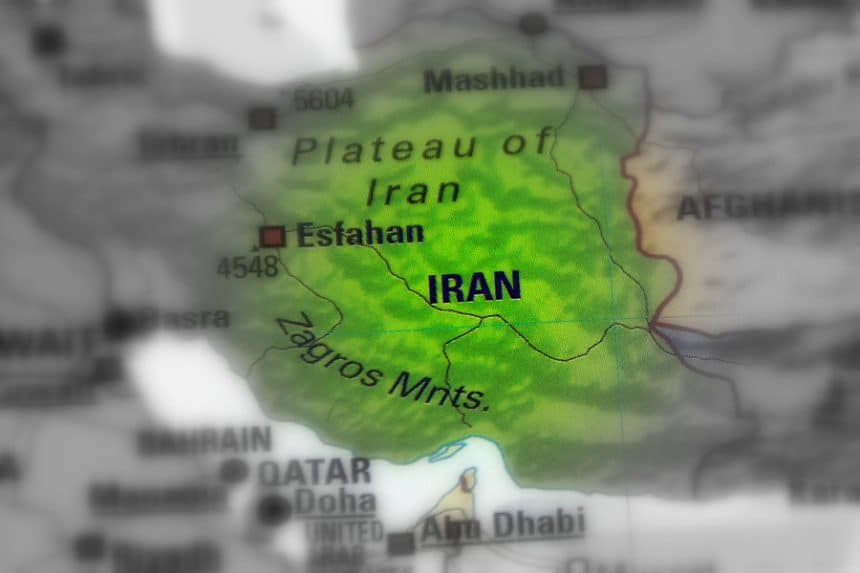
Following the signing of the 14-point Bürgenstock Memorandum of Understanding (MoU), deep contradictions have emerged between Washington and Tehran regarding nuclear monitoring. U.S. President Donald Trump and Vice President J.D. Vance claimed a landmark victory, asserting that Iran has agreed to “the highest level nuclear inspections into infinity” in exchange for a 60-day naval blockade lift and oil sanctions waiver. Conversely, Iranian Foreign Ministry Spokesperson Esmail Baghaei and legislative leaders have flatly denied making new concessions, legally barring IAEA access to targeted enrichment facilities (Fordo, Natanz, Isfahan) destroyed during recent military operations. While a new bilateral political communication channel has been established, structural disagreements over the “Food for Assets” program and verification protocols threaten to collapse the 60-day roadmap mediated by Pakistan and Qatar.
MIDDLE EAST – July 2, 2026 (STL.News) The diplomatic high-water mark achieved at Lake Lucerne has rapidly devolved into a fierce rhetorical conflict. The June 2026 signing of the Bürgenstock Memorandum of Understanding (MoU) between the United States and Iran—the first accord directly signed by both nations’ presidents since the 1979 Islamic Revolution—initially promised to de-escalate the regional war that began on February 28.
However, as the 60-day clock ticks toward turning this fragile interim framework into a permanent treaty, the gulf between American celebratory messaging and Iranian assertions of domestic sovereignty has exposed critical flaws in the verification architecture.
The Anatomy of the Disconnect
The core of the dispute rests on a fundamental disagreement regarding what was actually conceded in Switzerland. The opposing positions highlight how a single text is being translated into two completely incompatible realities:
| Diplomatic Pillar | The Washington Narrative | The Tehran Counter-Stance |
| Inspection Scope & Duration | The White House: Vice President J.D. Vance hailed the deal as a “major milestone” and the first step to permanently ending Iran’s weapons program. President Donald Trump later asserted via social media that Iran had “fully and completely agreed to highest level nuclear inspections long into the future (Infinity!). | Foreign Ministry & Parliament: Spokesperson Esmail Baghaei explicitly countered that Tehran accepted “no new commitments.” Parliament Speaker Mohammad Bagher Qalibaf affirmed that international inspectors will be granted “no access whatsoever” to sites damaged or bombed during the conflict. |
| Asset Liquidation & “Food for Assets” | The U.S. Treasury: Sanctions relief and the unfreezing of assets are tied to a mechanism designed by unofficial adviser Jared Kushner and Qatari mediators. Vance stated funds will be restricted to purchasing U.S. agricultural produce (e.g., soybeans) to benefit Iranian citizens while enriching American farmers. | Iranian Diplomacy: Ambassador to the UN Ali Bahreini rejected any foreign oversight on frozen capital, stating, “Iran is the only country that will decide what to do with its assets.” The Foreign Ministry confirmed talks in Doha are purely to execute the release of funds, not negotiate conditions. |
| Maritime Enforcement | The Pentagon: The U.S. naval blockade on the Strait of Hormuz was lifted as a gesture of temporary relief, but all naval assets remain positioned to immediately reinstitute enforcement if verification fails. | The IRGC: Tehran claims total sovereign jurisdiction over the Strait of Hormuz and maintains that any attempt to restrict shipping or violate the MoU will trigger immediate military retaliation. |
The Impasse at the Destroyed Enclaves
The primary technical logjam focuses on Iran’s highly enriched uranium stockpile, which the International Atomic Energy Agency (IAEA) estimates at 440 kilograms of 60% enriched material—just a short technical step from weapons-grade.
Under the text of the Bürgenstock MoU, Iran committed to a compromise: “down-blending on site” under IAEA supervision rather than exporting the material out of the country. However, implementing this clause has hit a legal and physical wall. International monitors have not had eyes on this material since cooperation was suspended during the June 2025 hostilities. Much of the infrastructure at Fordo, Natanz, and Isfahan was severely damaged or buried underground during subsequent military strikes.
[Bürgenstock MoU Signed] ??? [U.S. Lifts Hormuz Blockade] ??? [60-Day Treaty Clock Begins]
                                                                      ?
                                                                      ?
[IAEA Verification Blocked] ??? [Tehran Denies Access to Sites] ??? [Centrifuges Buried/Damaged]
Tehran’s legal apparatus, directed by the Supreme National Security Council and the Iranian Parliament, argues that no international protocol exists under the Nuclear Non-Proliferation Treaty (NPT) or standard Safeguards Agreements that permits foreign inspectors to survey bombed military or nuclear debris. By drawing a hard perimeter around these disabled facilities, Iran effectively prevents IAEA Chief Rafael Grossi from verifying whether the 60% cascades are being systematically diluted or covertly reassigned to undeclared, hardened subterranean facilities.
Fragmented Channels and Next Steps
Despite the friction, a critical structural development emerged after the high-level Swiss summits concluded. Deputy Foreign Minister Kazem Gharibabadi confirmed the creation of a formal political communication channel between the U.S. State Department and the Iranian Foreign Ministry to preserve the ceasefire. To manage the technical phase of the 60-day roadmap, four distinct working groups have been established:
-
Sanctions Termination
-
Nuclear Affairs
-
Reconstruction and Economic Development
-
Monitoring and Implementation
While mid-level technical experts remain at the Bürgenstock resort to iron out verification rules, the political theater surrounding the deal complicates its survival. With U.S. envoys arriving in Qatar for indirect, mediated discussions on asset releases, the interim agreement remains highly volatile. If the Nuclear Affairs working group cannot find a legal loophole to bypass the Iranian parliament’s inspection bans before the 60-day waiver expires, the region faces an immediate return to naval blockades and active kinetic conflict.
This video analysis details the layout and history of the secluded Swiss resort where these critical, high-stakes negotiations are unfolding: Inside The Secret Swiss Resort Hosting The US-Iran Deal.



