


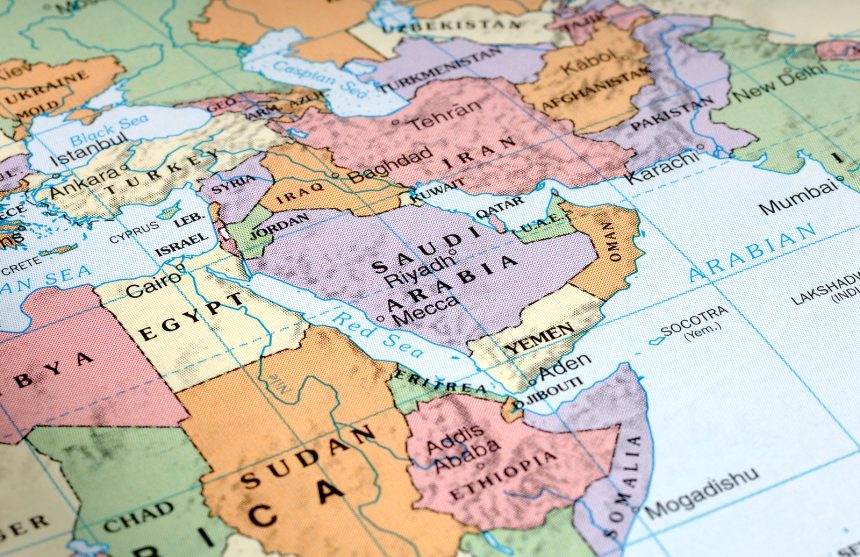
Regional stability in the Middle East faces renewed strain following a surprise ballistic missile barrage launched by Iran’s Islamic Revolutionary Guard Corps (IRGC) targeting U.S. forces. The unexpected offensive disrupted a brief operational lull, resulting in swift defensive interceptions by U.S. Central Command (CENTCOM) and allied forces. As energy markets react to persistent friction in the Strait of Hormuz and coalition assets execute targeted counterstrikes, international diplomats continue urgent efforts to de-escalate the broader conflict.
The Surprise Strike and CENTCOM’s Response – Operation Sentinel
MIDDLE EAST – July 29, 2026 (STL.News) The fragile equilibrium holding parts of the Middle East in check was severely tested when the Iranian military initiated a multi-pronged ballistic missile assault. According to official briefings released by U.S. Central Command (CENTCOM), forces belonging to the Islamic Revolutionary Guard Corps (IRGC) fired multiple ballistic missiles originating deep within Iranian territory. The offensive targeted U.S. military positions throughout the region, focusing specifically on key defense installations and infrastructure in Jordan.
Military analysts monitoring the event noted that the volley was a calculated surprise maneuver, intended to test integrated air defense reaction times and catch coalition personnel off guard. However, regional air defense networks successfully tracked, engaged, and destroyed all incoming threats before they could impact their designated targets.
At 5:45 p.m. ET today, Islamic Revolutionary Guard Corps forces launched multiple ballistic missiles from Iran in an attempted surprise attack on U.S. forces based in the Middle East,” CENTCOM stated. “All Iranian missiles were successfully intercepted. U.S. forces remain vigilant and at a high state of readiness.”
Jordanian defense authorities corroborated the sequence of events, confirming that national air defense units successfully neutralized multiple projectiles over domestic airspace, protecting population centers and vital security installations. State-run media outlets in Tehran subsequently acknowledged the operation, claiming the aerospace division targeted facilities including the Muwaffaq Salti Air Base.
Diplomatic Stall and Regional Fallout
The abrupt resumption of offensive military actions has deeply complicated ongoing diplomatic initiatives. In the days leading up to the incident, international mediators had achieved nominal progress in opening communication channels between Washington and Tehran. High-stakes diplomatic dialogues were actively attempting to craft a durable framework to de-escalate weeks of persistent warfare centered around maritime navigation rights and regional proxy engagements.
The timing of the missile barrage has effectively frozen active back-channel discussions, raising immediate doubts regarding the viability of near-term diplomatic breakthroughs. Observers emphasize that hardline factions within Tehran appear committed to maintaining an aggressive posture, complicating the work of regional facilitators—such as Oman and Qatar—who are striving to secure a lasting stabilization pact.
Flashpoint: The Strategic Strait of Hormuz and Red Sea Security
At the center of the broader confrontation remains the intense geopolitical contest for control over vital global maritime chokepoints, particularly the Strait of Hormuz. Managing roughly 20 percent of worldwide petroleum supplies, the narrow waterway functions as a high-stakes arena for commercial and military shipping.
Since the onset of hostilities, Iran has sought to assert unilateral maritime controls, requiring commercial freighters and crude oil tankers to hug lanes close to its coastline while threatening inspections or tolls. In response, coalition naval forces established extensive overwatch operations, escorting international shipping along alternative southern routes closer to Oman.
Simultaneously, secondary friction points continue to expand the theater of operations. Regional networks—including active elements in Iraq and Yemen—have periodically targeted commercial and energy infrastructure across the Arabian Peninsula. Recent incidents involving attempted drone strikes near petroleum facilities in Saudi Arabia’s eastern region highlight the persistent threat posed by aligned non-state actors seeking to maximize economic leverage.
Coalition Counterstrikes and Economic Aftershocks
The failure of the Iranian missile barrage immediately triggered kinetic pushback from allied forces. Combined air elements from the United States and Saudi Arabia executed precision retaliatory strikes targeting logistics hubs, command nodes, and weapons storage depots linked to Iran-aligned militias across eastern Iraq. Regional monitoring groups reported substantial structural damage to targeted facilities, reinforcing the coalition’s strict deterrence policy against cross-border attacks.
The renewed military exchanges have sent immediate ripples through global economic and energy sectors. On international commodity markets, crude oil futures rebounded sharply following news of the strikes, as traders recalculated risk premiums tied to potential crude supply bottlenecks in the Persian Gulf. Financial analysts warn that persistent instability in regional shipping lanes could inject renewed inflationary volatility into international markets.
Looking Ahead: Strategic Dilemmas and Force Readiness
As the immediate operational dust settles, military planners and defense experts are confronting a complex strategic reality: the considerable financial and logistical toll of maintaining high-intensity air defense operations. Protecting dispersed installations across multiple countries requires the continuous expenditure of scarce, high-end interceptor munitions whose replacement cycles demand extensive manufacturing lead times.
The central challenge facing coalition leadership is preserving regional deterrence without triggering an uncontrolled expansion of the conflict. For the moment, combat readiness across CENTCOM assets remains at peak levels, regional skies are heavily monitored, and international stakeholders watch closely to see if strategic restraint can prevail.
You can also view this article on USPress.Today.
More news articles that you might find interesting on STL.News:
- Oil Tanker Explodes in Strait of Hormuz After Striking Naval Mine, Iranian Media Reports
- US Enforces Iran Naval Blockade: 12 Ships Diverted and Tankers Disabled
- US Completes 12th Consecutive Night of Airstrikes on Iran Amid High-Stakes Standoff Over Strait of Hormuz
- Trump Warns Iran of ’10x Harder’ Nuclear Site Strikes
- US-Iran War Escalates: Strikes Resume as Oil Hits $90



