


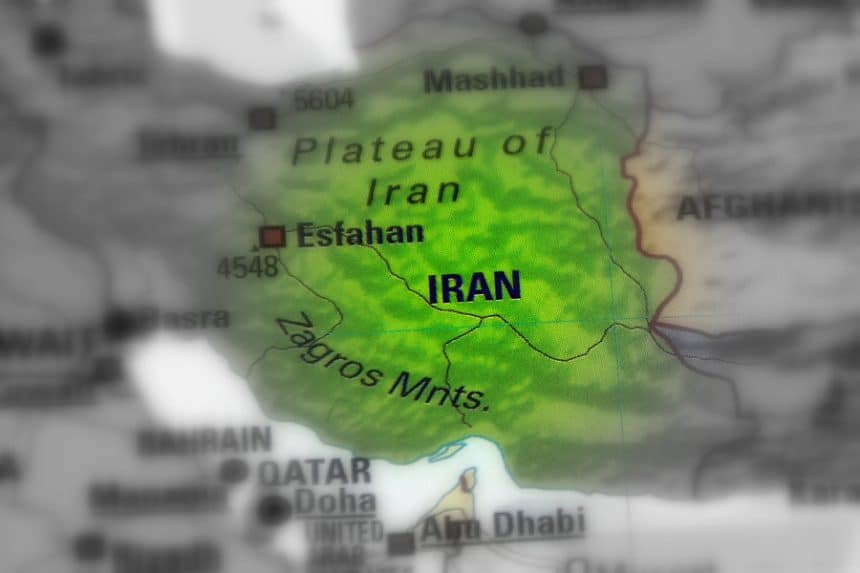
A comprehensive analysis of the fragile U.S.-Iran peace framework following the June 17, 2026, signing of the Islamabad Memorandum. This report investigates the intersection of a week-long state mourning period for the assassinated Supreme Leader Ali Khamenei, the ongoing transition of power to Mojtaba Khamenei, and escalating maritime friction as the Islamic Revolutionary Guard Corps (IRGC) enforces an illegal transit scheme in the Strait of Hormuz.
July 6, 2026 (STL.News) The fragile diplomatic architecture constructed by Washington and Tehran last month faces its most critical test. Signed on June 17, 2026, the Islamabad Memorandum of Understanding (MoU) established a strict, extendable 60-day window to transition from an active regional war into a comprehensive, permanent peace treaty.
However, as the first phase of this high-stakes diplomatic clock runs, the reality on the ground has been fundamentally altered by internal regime changes and aggressive naval posturing. With technical negotiations paused for the multi-day state funeral of assassinated Supreme Leader Ayatollah Ali Khamenei, the gap between backroom diplomacy and frontline military actions is widening.
The Diplomatic Track: Transitioning from War to Paper
The Islamabad Memorandum, mediated by Pakistani Prime Minister Shehbaz Sharif and finalized on June 18, aimed to dismantle a devastating regional conflict that erupted on February 28, 2026, following joint U.S. and Israeli air strikes.
Core Concessions of the MoU
Under the framework, both nations committed to severe, immediate adjustments to their strategic posturing:
- The Blockade and Chokehold: The United States agreed to lift its sweeping naval blockade of Iranian waters, while Iran pledged to reopen the Strait of Hormuz to international commerce.
- Economic Relief and Agriculture: The U.S. Treasury issued a 60-day waiver that exempts secondary sanctions on Iranian crude oil, petrochemicals, and derivatives, primarily to allow exports to resume to China. Concurrently, frozen Iranian assets in Qatari banks are being routed toward purchasing agricultural commodities, specifically soybeans, from American farmers.
- The Verification Dilemma: The framework requires the reintroduction of rigorous International Atomic Energy Agency (IAEA) monitoring across Iranian nuclear facilities, a point of severe friction given the extensive damage sustained by those sites during the spring bombardment.
While regional allies like Egypt, Qatar, and Turkey have publicly defended the memorandum as the only viable mechanism to stave off a global energy and food crisis, Gulf neighbors remain highly skeptical. In recent UN Security Council briefings, representatives from Bahrain and Kuwait detailed hundreds of drone and ballistic missile strikes suffered since February, warning the Council that the peace agreement must not remain mere “ink on paper.”
Power Vacuum in Tehran: The Invisible Succession
The sweeping political vacuum inside Iran has complicated the implementation of the MoU. State funeral processions for Ayatollah Ali Khamenei—who was killed alongside family members during the initial February 28 strikes—commenced on July 4 at the Imam Khomeini Grand Mosalla in Tehran.
The state-mandated mourning period has brought formal government operations to a standstill, pushing the next scheduled round of technical peace talks back to July 11, with Islamabad increasingly favored over Bürgenstock, Switzerland, as the venue.
The Mojtaba Absence
A significant point of domestic and international anxiety is the status of the newly appointed Supreme Leader, Mojtaba Khamenei. While his brothers Mostafa, Meysam, and Masoud appeared prominently behind the coffins in Tehran, Mojtaba has remained completely hidden from public view since assuming office in March.
Analysts attribute this total absence to severe assassination threats and ongoing security clampdowns. To project institutional stability, the Supreme Leader’s representative to the Islamic Revolutionary Guard Corps (IRGC) recently issued a formal letter to military commanders, reinforcing that Mojtaba’s explicit support of the Islamabad MoU remains the absolute, final directive for the armed forces. Yet, internal fracture lines remain visible as mourning crowds across Tehran continue to chant for military revenge rather than diplomatic compromise.
Maritime Brinkmanship: The Fight for the Strait
The most immediate threat to the peace agreement is unfolding in the waters of the Persian Gulf. Despite committing to open maritime transit, the IRGC is actively exploiting the Strait of Hormuz as leverage to dictate terms to Washington.
Between July 2 and July 3, maritime tracking data indicated that at least eight commercial vessels attempted to exit the Persian Gulf by bypassing Iranian waters entirely, opting instead for the International Maritime Organization (IMO)-approved route along the Omani coast.
[Persian Gulf] ---> [Strait of Hormuz: IRGC Forced Traffic Scheme] ---> [Gulf of Oman]
                         ^
                         |--- (Vessels forced back from Oman Bypass Route)
Iranian naval assets utilized aggressive maneuvers and direct threats of force to intercept these vessels, compelling them to reverse course and enter Iran’s unilateral traffic separation scheme. By forcing commercial shipping through its directly controlled sectors, Tehran maintains an effective veto over global energy distribution.
This aggressive posturing was reinforced on July 4 by Major General Yahya Rahim Safavi, military adviser to the Supreme Leader. Safavi publicly warned that Iran retains the capability to weaponize both the Strait of Hormuz and—via Houthi forces—the Bab al-Mandeb Strait in the Red Sea the moment the United States alters its compliance with the memorandum.
Technical Progress Amid Friction
Despite the volatile posturing, the economic necessity of the ceasefire has forced minor logistical breakthroughs. Shipping data reveals that a fleet of ten Japan-linked vessels—including six Very Large Crude Carriers (VLCCs) holding approximately 12 million barrels of Middle Eastern crude—successfully exited the Strait of Hormuz on July 6. These ships, alongside supertankers carrying Saudi crude, had been physically stranded inside the Gulf for months due to active wartime hostilities.
The departure of these vessels provides a brief proof of concept for the commercial relief promised by the Islamabad agreement. However, with Turkey accusing external actors of trying to “dynamite” the peace deal and the IRGC pursuing an aggressive, independent policy on the water, the July 11 technical talks will determine whether the Islamabad Memorandum survives its 60-day window or collapses back into regional conflict.
The week-long state mourning period inside Iran has drawn international media attention, showcasing the deep societal divisions between diplomatic recovery and hardline military posturing. To see how these events are unfolding on the ground in Tehran, you can watch this coverage of the Massive Funeral Crowds Gathering for Ali Khamenei, which details the public mourning and the heavy security presence accompanying the leadership transition.



