


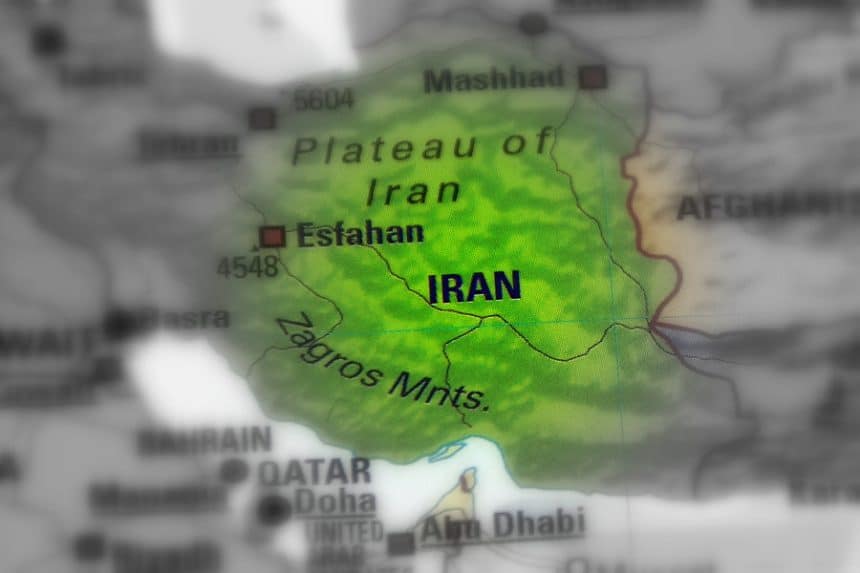
Iranian military commanders and parliament officials have issued sharp new warnings to the United States and commercial shipping in the Strait of Hormuz. Following the volatile aftermath of the 2026 conflict and the signing of the Islamabad Memorandum of Understanding (MoU), Tehran is enforcing strict transit lanes and threatening “proportionate actions” and a forceful response against vessels that bypass its maritime oversight.
TEHRAN / WASHINGTON – July 5, 2026 (STL.News) — The fragile interim peace agreement stabilizing the Middle East faces an immediate test as senior Iranian military leaders and political figures issued a series of explicit threats directed at the United States and international shipping protocols in the Persian Gulf.
The escalations threaten to disrupt global energy markets just weeks after a tentative ceasefire was brokered under the auspices of the Islamabad Memorandum of Understanding (MoU).
Hardline Rhetoric and the Strait of Hormuz Chokepoint
The latest friction centers on the Strait of Hormuz, a narrow waterway through which roughly one-fifth of the world’s petroleum liquids pass. Following a recent maritime security summit hosted by U.S. Central Command (CENTCOM) in Bahrain—aimed at maintaining the “free flow of commerce”—Tehran has aggressively pushed back against Western attempts to circumvent its oversight.
According to intelligence and maritime tracking data compiled by the Institute for the Study of War (ISW) and Bloomberg, at least eight commercial vessels recently attempted to alter their exit routes from the Persian Gulf, tracking closer to the Omani coast to avoid Iranian naval forces. However, these vessels were forced to reverse course and return to Iran’s designated traffic separation schemes following direct threats of military intervention from Iranian authorities.
“Forceful and Immediate Response”
The Khatam al-Anbiya Central Headquarters, Iran’s primary operational command structure, stated the state-aligned Tasnim News Agency, signaling that it will tolerate zero deviation from its maritime protocols:
“Any failure to comply with and depart from the designated route or disregard for the navigation protocols of the Islamic Republic of Iran in the Strait of Hormuz will be met with an immediate and forceful response from the armed forces.”
Strategic Context: The Post-Conflict Brinkmanship of 2026
The current wave of threats represents a critical inflection point following the direct U.S.-Iran hostilities that erupted earlier this year on February 28, 2026. While an interim agreement was reached to freeze large-scale kinetic exchanges, the battle has shifted into a geopolitical game of leverage.
| Key Variable | Current Operational Status |
| Strait of Hormuz Traffic | Operating at a fraction of pre-war capacity; restricted by Iranian enforcement. |
| Diplomatic Status | 60-day Phase 2 window of the Islamabad MoU; currently in a scheduled negotiation pause. |
| Primary Leverage Points | Iran signaling coordinated disruption capabilities across both the Strait of Hormuz and the Bab al-Mandeb Strait via Houthi alignments. |
Major General Yahya Rahim Safavi, top military affairs adviser to the Supreme Leader, openly confirmed that Tehran views absolute control over these maritime choke points as its primary strategic shield against Washington.
Simultaneously, political pressure within Iran has intensified. On July 3, Iranian Parliament Speaker Mohammad Bagher Ghalibaf warned that the armed forces are prepared to “resume proportionate actions” if the United States and its regional allies fail to fulfill their obligations—specifically citing unresolved stabilization requirements in southern Lebanon.
Information Gain: Factional Friction and the Path Ahead
For global markets and international observers, the real story lies within the internal political dynamics currently playing out in Tehran. A sharp divide has emerged between pragmatic elements trying to preserve the diplomatic track of the Islamabad MoU and ultra-hardline military factions who view any concession to Washington as strategic vulnerability.
The Critical Threats Project reports that senior regime officials are actively moving to contain these factional disputes, trying to prevent hardline elements within the Islamic Revolutionary Guard Corps (IRGC) and the Basij militia from framing the ceasefire as institutional disloyalty.
With formal negotiations paused until mid-July, the lack of an active, independent enforcement body on the water leaves a dangerous vacuum. As long as commercial shipping remains caught in the crosshairs of bilateral brinkmanship, the risk of a tactical miscalculation in the Strait of Hormuz remains dangerously high.



