


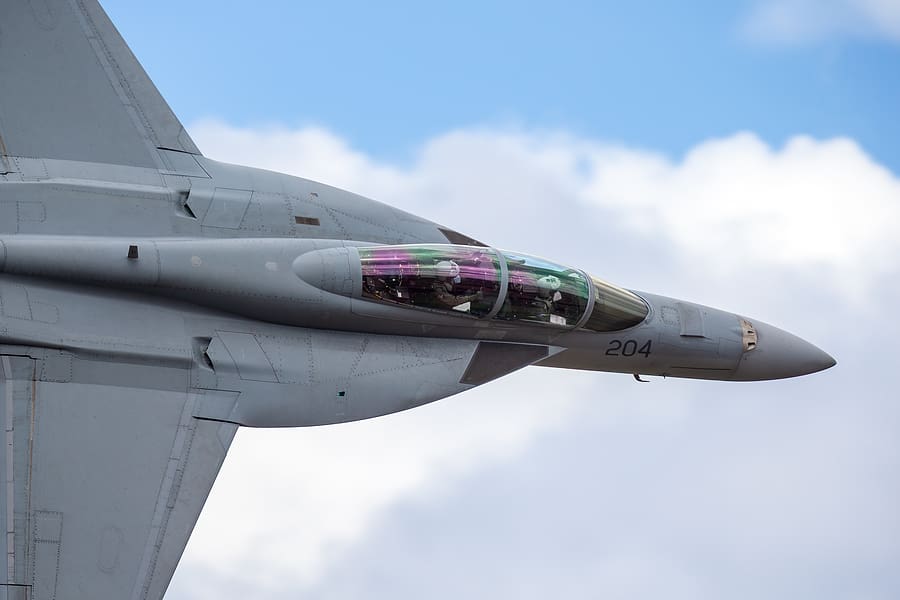
The Boeing F-47 NGAD: America’s Secret Weapon That Could Redefine Air Superiority
ST. LOUIS, MO (STL.News) Boeing F-47 — America’s race to dominate the skies in the sixth-generation fighter era has entered a decisive new phase, and one of the most talked-about contenders is the Boeing F-47. This next-generation air-superiority fighter, some defense analysts believe, could eclipse every other 6th-generation design currently in development. A viral video titled “The Boeing F-47 NGAD: America’s Secret Weapon That Will Completely Dominate Every 6th Gen Fighter” has reignited public curiosity about what might be one of the most secretive military projects in modern aviation history.
While the official details of the F-47 remain classified, the growing speculation surrounding its technology, mission profile, and potential role in the Next Generation Air Dominance (NGAD) program underscores America’s determination to stay ahead of global competitors such as China and Russia in the race for technological superiority.
Boeing F-47 – The NGAD Program: Shaping the Future of Air Combat
The Next Generation Air Dominance (NGAD) initiative is the United States Air Force’s ambitious effort to develop a family of systems to replace the aging F-22 Raptor and complement the F-35 Lightning II. Rather than creating a single airframe, NGAD focuses on building an ecosystem — a “system-of-systems” that integrates advanced sensors, stealth, networking, and autonomous capabilities.
Within this ecosystem, the F-47 reportedly represents the manned centerpiece — a hyper-stealth platform designed to achieve total dominance over enemy airspace through speed, agility, sensor fusion, and electronic warfare integration. Industry insiders describe NGAD as less of a single aircraft and more of a combat network, combining manned fighters with autonomous wingmen, drones, and advanced surveillance and strike capabilities.
If these reports are accurate, the F-47 would act as the command node — a flying data hub linking artificial intelligence (AI), hypersonic weapons, and unmanned systems into a seamless digital battlefield.
Boeing’s Legacy and the Strategic Advantage of Experience
Boeing’s deep roots in military aviation make it a logical and powerful contender for NGAD. Headquartered in St. Louis, Missouri — a city with a rich aerospace heritage — Boeing Defense, Space & Security has built some of the most iconic aircraft in U.S. history, including the F-15 Eagle, F/A-18 Super Hornet, and the EA-18G Growler.
Each of these aircraft set benchmarks in air superiority, multirole performance, and electronic warfare. The F-47, if indeed under Boeing’s leadership, would represent the culmination of decades of iterative design — blending stealth lessons from the F-22, networked systems from the F-35, and modular adaptability pioneered in the F-15EX program.
Boeing’s experience also gives it an advantage in systems integration, a crucial capability for a 6th-generation fighter. Modern warfare is increasingly defined not by who can fly the fastest but by who can process, share, and act on information first. The F-47’s rumored capability to integrate real-time data from satellites, drones, and ground assets would provide pilots with unparalleled situational awareness — a game-changing advantage in modern combat.
Key Features Rumored About the Boeing F-47 NGAD
Though official specifications remain undisclosed, various defense analyses and enthusiast reports suggest the F-47 will likely include the following next-generation capabilities:
1. Adaptive Cycle Engines
The F-47 is expected to feature adaptive cycle engines, allowing the jet to switch between fuel-efficient and high-thrust modes mid-flight. This innovation extends range while delivering unmatched acceleration when needed — critical in high-threat engagements.
2. Artificial Intelligence and Mission Autonomy
AI integration could make the F-47 the most autonomous manned fighter ever created. Pilots may act more as mission commanders, with onboard AI managing navigation, weapons targeting, and threat detection. This autonomy would reduce pilot workload and dramatically improve reaction times in multi-vector combat environments.
3. Stealth Beyond Radar
Stealth in the 6th-generation era goes far beyond radar evasion. The F-47 is believed to employ multi-spectrum stealth, reducing its infrared, visual, and electromagnetic signatures. This next-level stealth aims to render the aircraft nearly invisible to even advanced enemy detection systems.
4. Loyal Wingman Integration
The F-47 may operate alongside autonomous “loyal wingman” drones — unmanned aircraft designed to perform reconnaissance, electronic jamming, or even direct attacks. This human-machine teaming could redefine aerial warfare, enabling the F-47 pilot to control multiple AI-powered support units from the cockpit.
5. Directed-Energy and Hypersonic Weapon Compatibility
The F-47’s weapon systems are rumored to include directed-energy (laser) weapons for missile defense and hypersonic missile compatibility for offensive operations. If accurate, this would give the aircraft the ability to engage threats almost instantly while maintaining long-range strike dominance.
America’s Race for Technological Superiority
The F-47 NGAD emerges amid intensifying global competition. China’s Chengdu J-20 and Russia’s Su-57 Felon have already entered limited service, signaling a shift toward advanced stealth platforms across rival nations. However, U.S. defense officials emphasize that the NGAD initiative — and by extension, aircraft like the F-47 — are designed to leapfrog existing technologies rather than merely compete with them.
Reports suggest that the F-47 may have modular architecture, enabling it to evolve continuously as new weapons and sensors are developed. This design philosophy could extend its relevance for decades, much as the F-15 continues to thrive 50 years after its first flight.
Suppose America can operationalize this level of adaptability. In that case, the F-47 might not only dominate enemy fighters but also reshape the entire economics of air combat, reducing long-term development and maintenance costs.
The St. Louis Connection: A Symbol of American Innovation
For Boeing and the city of St. Louis, the F-47 represents far more than an aircraft. It is a symbol of continuity — a testament to the region’s decades-long contribution to U.S. defense. Since the early days of McDonnell Douglas, the St. Louis aerospace industry has been central to American air power. The city’s skilled workforce, advanced manufacturing facilities, and deep military partnership make it an ideal hub for NGAD-related production.
If the F-47 indeed moves from concept to production, it could sustain thousands of high-tech jobs and cement Missouri’s place at the heart of the next defense revolution. Moreover, Boeing’s ongoing collaboration with the U.S. Air Force and other contractors ensures that the project’s benefits will ripple through supply chains nationwide.
The Broader Impact: A Catalyst for U.S. Defense Modernization
The implications of a successful F-47 program go far beyond air superiority. Such a platform could transform joint-force operations, enabling the Army, Navy, and Space Force to share real-time intelligence and coordinate missions with unprecedented precision. The F-47’s role as an airborne command node would be especially critical in environments where communication satellites or GPS systems are under attack.
Additionally, advancements pioneered in the F-47 could filter down into commercial aviation and civilian aerospace applications — from adaptive propulsion systems to autonomous flight control algorithms. Historically, technologies developed for the military often fuel innovation in the private sector, enhancing America’s global competitiveness.
A Global Perspective: The Strategic Message Behind the F-47
From a geopolitical standpoint, the emergence of the F-47 sends a clear message: the United States intends to maintain uncontested air dominance well into the mid-21st century. This message has both deterrent and diplomatic effects. In regions like the Indo-Pacific — where tensions with China continue to rise — such a capability could serve as a stabilizing factor, dissuading aggression through undeniable technological superiority.
At the same time, the secrecy surrounding NGAD and the F-47 reflects a deliberate strategy. By keeping adversaries uncertain about the platform’s true capabilities, the U.S. Air Force preserves its element of surprise — a potent psychological weapon in modern deterrence.
How the Boeing F-47 Fits into America’s Broader Military Transformation
The development of 6th-generation fighters like the F-47 aligns with a broader shift in U.S. military doctrine toward network-centric warfare. Future conflicts are expected to unfold across multiple domains simultaneously — land, sea, air, cyber, and space. To prevail, America’s defense infrastructure must operate as a unified digital organism rather than a collection of separate assets.
In this context, the F-47 is not just a fighter jet — it is a data node, a mobile sensor-fusion engine capable of connecting to satellites, naval vessels, ground units, and unmanned systems in real time. This level of integration would allow the United States to conduct coordinated strikes across vast distances, responding to threats faster than any adversary can react.
Boeing F-47 – Economic and Industrial Significance
From an industrial perspective, the F-47 program could stimulate a new wave of defense-sector growth. Boeing’s partnerships with hundreds of American subcontractors — from avionics specialists to advanced-materials manufacturers — mean that every stage of development will support skilled jobs, technological innovation, and domestic production capacity.
Furthermore, the project could influence export policy and allied defense cooperation. Although the NGAD program is expected to remain U.S.-exclusive for now, derivative technologies may be shared with trusted allies, such as the United Kingdom, Australia, and Japan, under joint development agreements. Such partnerships would not only strengthen alliances but also reinforce global security networks built around American technology.
The Public Fascination with “The Boeing F-47 NGAD” Video
The recent viral video “The Boeing F-47 NGAD: America’s Secret Weapon That Will Completely Dominate Every 6th Gen Fighter” has captured worldwide attention, offering speculative visuals and detailed commentary on what the F-47 might look like and how it could perform. While the video’s contents remain unverified, it serves an essential public-relations purpose: reminding audiences that U.S. aerospace innovation remains unmatched.
However, it is essential to note that STL.News has not independently verified the information presented in the video. The claims made should be viewed as educational and speculative, not as confirmed facts. The actual capabilities, design, and mission profile of the F-47 remain classified, and until official disclosures are made, all discussions about its performance are hypothetical.
The Human Element: Pilots, AI, and the Future of Decision-Making
One of the most intriguing aspects of the F-47 program is how it redefines the relationship between human pilots and artificial intelligence. In earlier generations, pilots manually controlled every aspect of flight and combat. In the F-47 era, AI may handle most of the technical workload, allowing pilots to focus on strategic decision-making.
This evolution raises profound questions: How much autonomy should AI be allowed in lethal operations? What ethical safeguards must be in place to prevent unintended consequences? The F-47 will likely serve as the testing ground for these questions, setting the stage for how future militaries balance human judgment with machine precision.
Boeing F-47 – Challenges Ahead
Despite its promise, the F-47 program faces significant challenges. Developing and integrating new technologies — especially adaptive propulsion and AI-driven control systems — is both technically complex and financially demanding. Cost overruns have historically plagued advanced fighter projects, and budget constraints could limit production numbers.
Moreover, as adversaries develop counter-stealth radar and hypersonic defense systems, maintaining technological superiority will require constant innovation. The race to dominate the sixth-generation battlefield will be a moving target, demanding agility not only from engineers but also from policymakers and defense strategists.
A Vision of the Future: The F-47 in 2040 and Beyond
If Boeing and the U.S. Air Force succeed, the F-47 could enter operational service by the early 2030s, with full deployment by 2040. By then, it may no longer be a traditional fighter but rather an intelligent combat system — capable of operating autonomously, directing drone squadrons, and even predicting enemy movements through AI-driven analytics.
This evolution would mark a turning point in aviation history — a transition from the pilot-centric dogfights of the past to networked aerial ecosystems of the future. And once again, American innovation, much of it rooted in the factories and design labs of St. Louis, may lead the way.
Conclusion and Disclaimer
The Boeing F-47 NGAD represents the next frontier in U.S. air dominance — a blend of stealth, artificial intelligence, and digital warfare that could secure American superiority for decades to come. Although much remains speculative, the project highlights the relentless pace of aerospace innovation and the vital role of U.S. industry in defending global stability.
The video “The Boeing F-47 NGAD: America’s Secret Weapon That Will Completely Dominate Every 6th Gen Fighter” offers an exciting look at what might be coming. Still, readers should treat its content as educational material only.
Disclaimer: STL.News does NOT guarantee the accuracy of any information contained in or derived from the referenced video. The video’s claims have not been independently verified, and any specifications, imagery, or details discussed are speculative. This article is provided solely for informational and educational purposes and should not be interpreted as confirmed military data.
In a world where air dominance defines national security, the potential of the F-47 underscores one enduring truth — innovation remains America’s greatest weapon.
Other articles published about the Boeing F-47:
- America’s New F-47 Fighter Jet: A Stealth Powerhouse
- F-47 Fighter Jet: Video Library & Future Watch Timeline
© 2025 STL.News/St. Louis Media, LLC. All Rights Reserved. Content may not be republished or redistributed without express written approval. Portions or all of our content may have been created with the assistance of AI technologies, like Gemini or ChatGPT, and are reviewed by our human editorial team. For the latest news, head to STL.News.




