


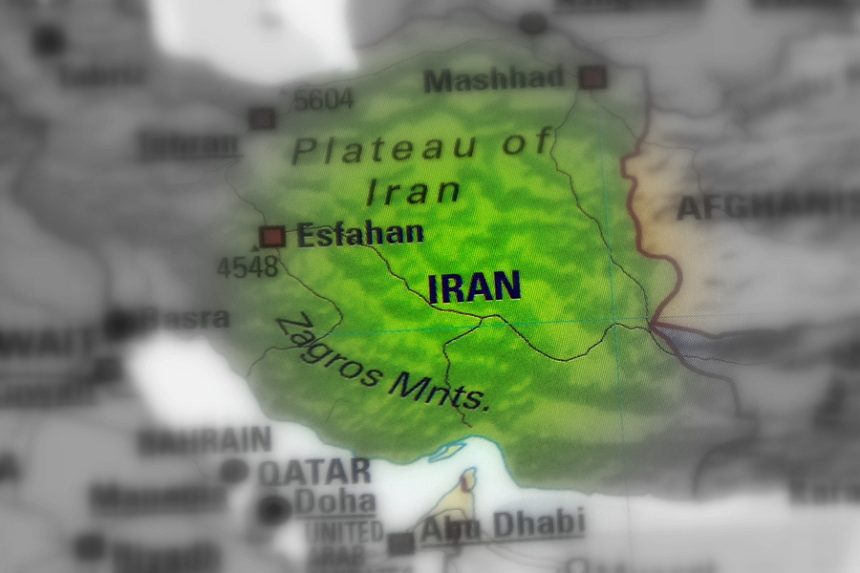
US Airstrikes – Following an escalation in maritime skirmishes and collapsed diplomatic agreements, the United States military has finalized its twelfth straight night of precision airstrikes against Iranian infrastructure. At the same time, Washington and Tehran lock horns over control and navigation of the vital global energy corridor.
MIDDLE EAST – July 23, 2026 (STL.News) The United States military has concluded its twelfth consecutive night of heavy airstrikes targeting strategic military installations across Iran. Authorized by President Donald Trump, the intensifying campaign represents a dramatic escalation in a conflict centered squarely on freedom of navigation through the Strait of Hormuz—a critical global trade chokepoint through which a substantial portion of the world’s petroleum transits.
According to official updates released by U.S. Central Command (CENTCOM), the latest multi-hour wave of overnight operations systematically targeted key military capabilities, including coastal surveillance radar, maritime assets, drone storage facilities, missile launch sites, and air defense infrastructure. Washington maintains that these continuous operations are vital to protecting commercial mariners and international cargo vessels from ongoing threats and disruptions enforced by Iranian forces.
Background of the Renewed Hostilities
The current military chapter follows the sudden collapse of a fragile memorandum of understanding signed earlier this summer. That diplomatic framework, intended to de-escalate hostilities and fully reopen the strategic waterway, broke down after renewed maritime skirmishes and disputes regarding transit rights, naval escorts, and regional security measures.
Since hostilities resumed at an intensive tempo, the back-and-forth military actions have expanded beyond direct U.S.-Iran exchanges. Iranian state media and regional authorities reported multiple explosions and air defense activations across several Iranian provinces, including areas near Ahvaz, Ramshir, and Andimeshk, as well as sites close to vital industrial and transport infrastructure. Meanwhile, the conflict’s ripple effects have extended outward, with neighboring Gulf nations and regional partners registering defensive intercepts and dealing with the regional fallout of persistent missile and drone activity.
Escalating Rhetoric and Infrastructure Threats
The confrontation has taken a particularly fierce turn regarding civilian and economic infrastructure. President Trump issued an uncompromising warning via social media, stating that any future Iranian attacks utilizing missiles, rockets, or drones against shipping vessels in the Strait of Hormuz will trigger immediate retaliatory strikes targeting specific Iranian infrastructure, explicitly naming bridges and power plants.
These threats have drawn sharp scrutiny from international legal analysts and organizations tracking the humanitarian footprint of the conflict. Iranian health authorities report that weeks of continuous strikes have resulted in dozens of fatalities and hundreds of injuries, alongside localized damage to municipal water systems and logistical nodes.
In response to Washington’s ultimatums, high-ranking Iranian officials and parliamentary leadership have adopted a defiant posture. State-aligned spokespersons and military commanders warned that if U.S. forces or regional allies execute infrastructure-targeted threats, retaliatory measures will focus heavily on regional energy facilities, oil production platforms, and economic assets across the wider Persian Gulf. Tehran continues to assert its sovereign right to manage traffic, oversee maritime security frameworks, and regulate passage within the southern approaches of the Gulf.
Global Economic and Energy Market Impact
The prolonged closure and ongoing military contest within the Strait of Hormuz continue to reverberate across global financial and commodity markets. Energy traders have reacted swiftly to the dozen consecutive nights of American air campaigns and corresponding threats to regional production facilities. International benchmark Brent crude prices climbed past $92 to $93 per barrel, marking a sharp ascent from early-month baselines.
The disruption has similarly driven up retail fuel expenses and injected fresh volatility into global supply chains. Shipping logistics firms report that cargo volumes moving through the corridor remain severely depressed compared to peacetime averages, as commercial carriers weigh the insurance risks and physical dangers of navigating waters caught in the crossfire.
International Diplomatic Stalls and Outlook
Global bodies, including the United Nations and various European and Asian diplomatic missions, have repeatedly called for immediate restraint, strict adherence to international humanitarian law, and a return to structured negotiations. However, those appeals have found little traction on the ground. Defense officials in Washington have defended the necessity of maintaining the naval blockade and sustained air campaign to keep international trade lanes open by force. At the same time, Tehran insists its defensive posture will not yield to external military pressure.
As the U.S. military completes its twelfth straight night of operations, the trajectory of the conflict points toward a protracted war of attrition. With billions expended on military readiness, mounting regional casualties, and energy markets remaining hypersensitive to every development, both nations remain locked in a high-stakes struggle where any miscalculation risks triggering an even wider conflagration across the Middle East.



