


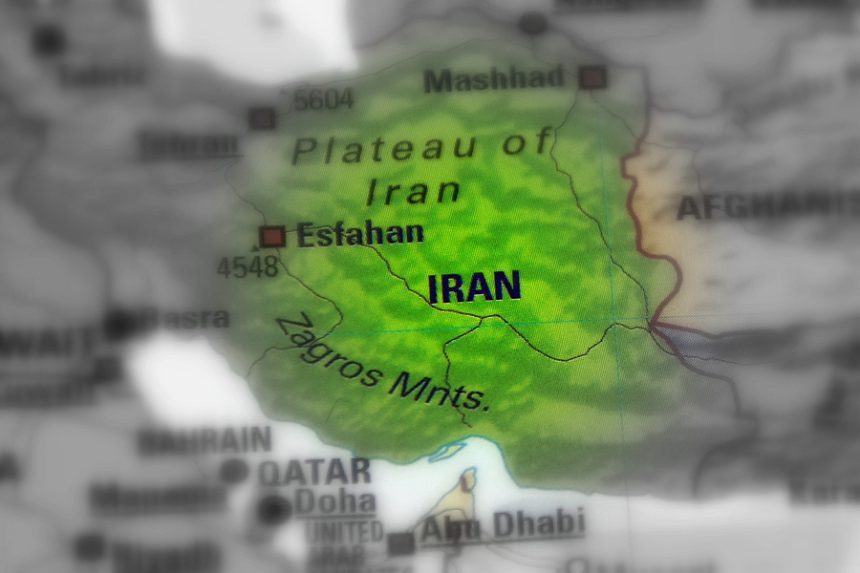
MIDDLE EAST – July 18, 2026 (STL.News) The United States has launched its seventh consecutive night of airstrikes against military targets inside Iran following the total collapse of last month’s temporary ceasefire. U.S. Central Command confirmed the operations targeted vital infrastructure, including radar sites, underground weapons depots, and coastal transit networks, in an ongoing effort to break Tehran’s maritime blockade of the Strait of Hormuz. Iran retaliated with widespread missile attacks across the region, striking critical infrastructure in Kuwait and forcing air defense interceptions over Jordan and Qatar.
The conflict between the United States and Iran has intensified significantly, marked by sustained, heavy aerial bombardments. Following the collapse of last month’s brief interim ceasefire, American forces have executed a week-long nightly air campaign designed to degrade Iran’s offensive capabilities and force a resolution to the ongoing shipping blockade.
U.S. Central Command (CENTCOM) confirmed that the primary objective of these precision strikes remains breaking Tehran’s chokehold on the Strait of Hormuz—a narrow waterway responsible for the transit of roughly 20% of the world’s petroleum supply.
Precision Strikes Target Iranian Logistics and Command Centers
The latest wave of U.S. airstrikes heavily targeted military logistics networks, coastal surveillance centers, and underground weapons storage sites in southern Iran. This followed intense daytime operations that struck critical transport hubs in the coastal Hormozgan province, including strategic highway and railway bridges used for military transport.
Additionally, precision munitions hit a command and control tower at the commercial port of Chabahar on the Gulf of Oman, which intelligence officials say was being used to coordinate regional maritime interdictions.
Iranian state media reported that the attacks on transport infrastructure resulted in civilian casualties, stating that the total death toll from the seven-day campaign has surpassed 38 people, with hundreds more wounded. The bombardment has also damaged regional utility networks. Iran’s Energy Ministry issued an urgent directive calling for immediate electricity conservation in southern provinces, where structural grid damage has coincided with seasonal high temperatures.
Retaliatory Missiles Strike Allied Infrastructure
In immediate retaliation for the nightly bombardments, the Islamic Revolutionary Guard Corps (IRGC) launched a barrage of ballistic missiles and long-range drones targeting U.S. allies and assets across the Persian Gulf.
- Kuwait: Government officials confirmed a second major strike on a dual-purpose power generation and water desalination plant. The attack caused significant structural fires and triggered rolling power cuts across several districts.
- Jordan: The Jordanian military reported that its air defense systems successfully intercepted at least 10 inbound missiles traversing its airspace.
- Qatar: Air defenses active over Qatar intercepted multiple threats, though local authorities noted that falling debris from the mid-air explosions caused minor injuries to a child on the ground.
Global Market and Diplomatic Ramifications
The ongoing disruption in the Strait of Hormuz has sent shockwaves through global energy markets, forcing oil tankers to reroute around Africa and driving crude prices upward.
The White House has reiterated its stance of maximum military pressure, warning that Iranian energy infrastructure could face direct targeting if the maritime blockade is not unconditionally dismantled. International diplomats continue to push for an emergency UN Security Council session, though prospects for a rapid diplomatic climbdown remain low as both nations dig in for a prolonged conflict.